Protyus A. Gendher
-
Toxicity Toolkit – Points to Ponder 11 – Taking Their Side

The content discusses conflict resolution techniques, emphasizing the importance of taking the other person’s side during disputes. It highlights the human need for validation and suggests pausing to understand their perspective. Additionally, it references Dialectical Behavior Therapy skills (DEAR MAN, GIVE, and FAST) to aid in effective communication while navigating conflicts. Continue reading
-
68) Anywhere But Here

The author reflects on their lack of financial literacy education in high school, highlighting experiences in home economics that focused on practical skills rather than budgeting or managing finances. They recount their journey to freedom after leaving a controlling home life, where they had to learn independence and self-worth while feeling that financial knowledge was… Continue reading
abuse, advice, coercion, coercivecontrol, coming of age, communication, community, content warning, control, dropout, family, finance, financial literacy, Free, health, help, journal, leaving home, life, me too, narcissism, narcissist, no paywalls, outreach, personal truth, perspective, resources, self help, self improvement, struggle, survivor, therapy, trauma, trigger warning -
Zebra files 46) Treatment Follow Up

The author provides an update on their experience with hyaluronic acid knee injections. After the third round, they report significant pain relief and improved mobility, particularly in relation to their hips. While pain persists, the injections have eased daily activities and reduced overall discomfort. They express gratitude for support during the treatment process. Continue reading
advice, communication, community, content warning, EDS, ehlers danlos, Ehlers Danlos Syndrome, family, Free, health, help, journal, life, lifestyle, me too, Medicine, no paywalls, outreach, personal truth, perspective, resources, self help, self improvement, struggle, survivor, therapy, trigger warning, Zebra -
Zebra Files 45) Treatment Review- Lumbar Nerve Ablation

The author shares their painful experience with lumbar nerve ablation, detailing the diagnostic rounds and procedures. After two painful rounds of injections with minimal relief, the author concluded the diagnostic tests were unsuccessful. They are now considering a spinal cord stimulator, but express fear and skepticism about further pain management options. Continue reading
acupuncture, advice, back-pain, communication, community, content warning, EDS, Ehlers Danlos Syndrome, family, Free, health, help, journal, life, lifestyle, me too, Medicine, nerve ablation, no paywalls, outreach, pain, pain treatment, personal truth, perspective, resources, sciatica, self help, self improvement, struggle, survivor, therapy, trigger warning, Zebra -
Charlie Kirk was a Great Big Jerk

The post reflects on Charlie Kirk’s contribution to society. Continue reading
-
67) Perfect Storm

The author recounts being questioned by the police, and punished by their mother. A plan is hatched to leave town. Continue reading
cult of the ego, cycle breaking, Erasing The Silence, grooming, Revictimization, Social Issues, Uncategorizedabuse, acab, accusation, advice, assault, communication, community, content warning, cops, false reporting, family, Free, health, help, journal, life, love, me too, Mental Health, no paywalls, outreach, personal truth, perspective, rape, resources, runaway, self help, self improvement, struggle, survivor, therapy, trigger warning, writing -
Daily Prompt – An Evening with ADHD – 9.10.25

The author struggles with ADHD during a restless night, reflecting on the overwhelming flow of thoughts and tasks. Despite an important appointment looming, they find themselves distracted by social media instead of being productive. The piece concludes with a humorous acknowledgment that sleep may be the most pressing need. Continue reading
-
AI Conspiracy Theory – 9.10.25

Protyus explores AI Continue reading
ai, censorship, chicago, conspiracy, copilot, DHS, ethics, events, extremist, family, fbi, internet, israel, language, life, mass shooting, media, microsoft, military, news, pattern, police state, policy, politics, resources, self improvement, surveillance, tech, terrorism -
Zebra Files 44) Treatment Review-Hyaluronic Acid

The author discusses their experience with Hyaluronic Acid injections for knee pain relief due to the ineligibility for steroid and stem cell treatments. Despite the painful procedure, initial results show significant improvement in pain levels and knee functionality. The injections, required every 3-6 months, are covered by Medicaid, offering a hopeful solution. Continue reading
advice, chronic pain, communication, community, content warning, EDS, ehlers danlos, Ehlers Danlos Syndrome, family, Free, health, help, hyaluronic acid, injections, journal, knee, knee pain, life, me too, Medicine, no paywalls, outreach, pain, pain clinic, personal truth, perspective, resources, self help, self improvement, struggle, survivor, therapy, treatment, trigger warning, Zebra -
Zebra Files 42) Assessment

The author describes their journey of seeking formal assessments for Autism and ADHD due to exhibiting related traits without a diagnosis. Despite multiple attempts including consultations with doctors and a mental health group, they face barriers in accessing evaluations, ultimately frustrated but determined to continue pursuing diagnosis options. Continue reading
adhd, advice, anthropology, Autism, autoethnography, barriers to care, communication, community, content warning, EDS, family, Free, health, help, journal, life, me too, Medicine, Mental Health, no paywalls, outreach, personal truth, perspective, psychology, resources, self help, self improvement, sociology, struggle, survivor, therapy, trigger warning, Zebra -
Toxicity Toolkit – Points to Ponder 10 – Resilience

Resilience isn’t that complicated. Continue reading
advice, anthropology, communication, community, content warning, control, cult of the ego, family, Free, health, help, journal, life, me too, Mental Health, mindfulness, mindset, no paywalls, outreach, perserverence, personal truth, perspective, psychology, resilience, resources, self help, self improvement, sociology, strength, struggle, survivor, therapy, trigger warning -
Daily Prompt – A Sea of Dark Pink Flags 9.9.25 TW

The author reflects on recognizing harmful behaviors as a person with autism and an empath, particularly in the context of their child’s experiences with an abusive teacher. They compile a list of red flags that children notice in adults, highlighting emotional inconsistency, lack of accountability, and intimidation, which reflect broader societal issues. Continue reading
-
66) Just a Little Mental Break

The author reflects on their challenging transition to a new home while coping with disabilities and past trauma. Inspired by a Netflix documentary, they confront buried memories of childhood abuse and the complexities of their experiences. The upcoming posts will delve deeper into their narrative, highlighting systemic violence and societal issues. Continue reading
Conformity and Control, cult of the ego, cycle breaking, Erasing The Silence, grooming, Revictimization, Social Issues, Uncategorizedabuse, advice, communication, community, content warning, family, Free, health, help, journal, leaving home, life, me too, mental break, Mental Health, no paywalls, outreach, personal truth, perspective, resources, self help, self improvement, struggle, survivor, therapy, trigger warning, young adult -
Zebra Files 41) Hoofbeats and Heartbreak

“Hoofbeats and Heartbreak” by Protyus A. Gendher explores the challenges of living with often overlooked conditions that medical professionals dismiss. Through metaphors of hoofbeats representing common diagnoses and zebras symbolizing rare diseases, the piece critiques healthcare’s failures to recognize and validate patients’ pain. The author emphasizes the necessity of acknowledgment and support for all forms… Continue reading
advice, anthropology, autoethnography, communication, community, content warning, family, Free, health, healthcare, help, journal, life, me too, no paywalls, outreach, personal truth, perspective, Poerty, psychology, resources, self help, self improvement, sociology, struggle, survivor, therapy, trigger warning, Wealthcare, Zebra -
Toxicity Toolkit – Points to Ponder 9 – Gentle Gaslighter

The post discusses the negative impacts of various dismissive communication styles, such as dismissing, equalizing, minimizing, and matching, that hinder effective listening in intimate relationships. It emphasizes valuing individual experiences over generalized responses and encourages adopting a “Listening to Receive” approach to foster deeper connections. Continue reading
advice, anthropology, autoethnography, communication, community, content warning, cult of the ego, dismissing, family, Free, friend, gaslighting, gentle, health, help, journal, life, lifestyle, matching, me too, Mental Health, minimizing, no paywalls, outreach, personal truth, perspective, psychology, relationship, resources, self help, self improvement, skills, sociology, struggle, survivor, therapy, tools, trigger warning, understanding
Recent Posts
- 29) Sisters Part Two
 The author reflects on the challenging experience of caring for younger sisters, feeling the absence of their mother. Bath time transforms from joy to a struggle, marked by fear and harsh discipline influenced by the mother’s expectations. The narrator grapples with feelings of inadequacy and learns harmful lessons on parenting.
 - 60) Getting Witchy With It
 The author shares their journey into Wicca, influenced by a Wiccan brother and an inspiring dream. Discovering a local witchy bookstore, they embraced its community and valuable resources, particularly the book “Helping Yourself with White Witchcraft.” Wicca nurtured their autonomy, creativity, and self-discovery during their challenging teen years.
 - Relational Field Theory – RFT Parenting
 Gentle and intentional parenting distinguishes various states of child behavior rather than collapsing them into moral judgments. It fosters a supportive environment that treats behavior as information about the child’s needs. This approach leads to healthier emotional regulation, trust, and communication, allowing children to thrive without punitive measures for their natural responses.
 - Relational Field Theory -orthogonal axes
 Relational Field Theory explores the interplay of language, relational physics, and nervous system states. It distinguishes between structural and pathological states in relationships and behavior—such as disrelate vs. dysrelate and dis-regulate vs. dysregulate. The theory emphasizes the importance of recognizing orthogonal axes to avoid collapsing nuances into binaries, promoting healthier understandings of relational dynamics.
 - Relational Field Theory -How the Hypercube Diagnostic Protects the Theory From Falsehood
 Relational Field Theory, through the hypercube diagnostic, safeguards itself from vagueness and unfalsifiable claims by emphasizing structural integrity over subjective interpretations. It remains testable and transparent, decentralizes authority, and encourages critique, ensuring that truth aligns with observable states and mechanisms rather than personal beliefs or metaphors.
 - Relational Field Theory – Terms and Conditions (So Far)
 Relational Field Theory has evolved from an intuitive concept to a structured framework comparable to complex systems in various sciences. It emphasizes observable patterns in relationships and community dynamics. By categorizing key terms into functional clusters, the theory moves towards precise operational definitions, facilitating further study and application in understanding relational systems.
 - Relational Field Theory – Stats Card
 Relational Field Theory highlights rapid advancements and metrics in the development of Glass Ceiling Records and Relational Anthropology. Key statistics showcase quick paradigm formation (48 hours), over 20 theoretical constructs in January 2026 alone, full application utility pre-naming, and a remarkable 100% coherence retention rate under stress.
 - Relational Field Theory – Timelines
 The timeline chronicles the evolution of Glass Ceiling Records from its founding in late 2025 to its current status. It highlights key phases such as identity formation, methodological developments, communal rituals, and theoretical breakthroughs, showcasing the transformation from a record label into an embodied relational discipline and field of study.
 - Relational Field Theory –
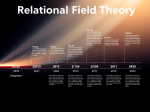 Relational Field Theory emerged rapidly between January 21 and 29, 2026. It began with the identification of “Relational Anthropology,” progressing from a question to a cohesive discipline. In just under a week, it evolved into a defined field with methodology, integrating diverse concepts and frameworks that reflect a significant academic evolution.
 - Relational Field Theory – A Discipline
 Relational Field Theory (RFT) is a complex discipline requiring at least 12 credit hours for proper academic instruction, encompassing introductory, intermediate, and advanced courses. Each level covers essential concepts, practical applications, and culminates in original fieldwork. RFT is recognized as a comprehensive framework, necessitating ongoing expansion as its components are further developed.
 - Relational Field Theory – Going Full Foucault
 This content discusses the intersection of law and relational dynamics, framed through Foucault’s theories. It analyzes how legislation shapes social relations, impacts identity and multiplicity, and affects the coherence of social fields. The diagnostics evaluate whether laws promote collaboration and inclusivity or reinforce hierarchy and singular narratives.
 - Relational Field Theory – When the Hypercube Met Its First Stress Test
 The chapter discusses the development and refinement of the Relational Hypercube, a model for mapping relational states. Through dialogue with another AI, several key insights emerged, including the need for bounded coherence, distinguishing state vectors from positions, and the formation of coherence circuits in groups, ultimately transforming the model into a functional, testable system.
 - Relational Field Theory – DIY Theory at Home
 Relational Field Theory emphasizes the hypercube as a structural model for understanding relational behaviors and internal states without moral judgment. It presents a four-axis coordinate system—Anchoring, Relational State, Power Source, and Internal Architecture—for mapping interactions. This framework fosters dimensional reasoning and encourages discovery rather than imitation or replication.
 - Relational Field Theory – Toward a Unified Relational Topology
 Relational Field Theory proposes a unified relational topology that reshapes our understanding of human interactions. By mapping relationships through four axes, it reveals a structured, predictable framework for navigating complexities in individuals, groups, and communities. This shift from narrative to structure enables improved communication, coherence, and relational literacy.
 - Relational Field Theory – The Shift From “Why?” to “Where?” Changes Everything
 The shift from asking “Why?” to “Where?” transforms our understanding of relationships. “Why” focuses on blame and single causes, while “Where” contextualizes events within a relational structure. This change fosters clarity, compassion, and actionable pathways for repair, highlighting that the issues often lie not with individuals, but with the relational context.
Newsletter
Make a one-time donation
Make a monthly donation
Choose an amount
Or enter a custom amount
Your contribution is appreciated.
Your contribution is appreciated.
DonateDonate monthly Survivor Literacy