Protyus A. Gendher
-
Toxicity Toolkit – Points to Ponder 14- Backhanded Compliments

The content discusses the concept of backhanded compliments, highlighting how these remarks tarnish genuine praise with negative undertones. It emphasizes the importance of acknowledging both the compliment and the negative comment, fostering open communication to address underlying issues. Responding calmly can lead to healing and better understanding in relationships. Continue reading
-
AIQ- A Global Perspective

The content discusses a parent’s reflection on WWII and its connections to modern U.S. immigration policies, likening current detention centers to historical concentration camps. It raises important questions about conditions in these facilities, the targeting of marginalized communities, and the impact of governance on civil rights, especially around eugenics and forced sterilizations. Continue reading
artificial intelligence, Conformity and Control, ConVERSEations, cult of the ego, cycle breaking, human trafficking, Revictimization, UncategorizedAmerica, anthropology, austria, Autism, colorado, community, copilot, current events, detention, education, family, global, global awareness, health, help, history, immigration, journal, life, news, politics, population studies, psychology, public, questions, registry, reporting, resources, self improvement, sociology, the sound of music, trump -
71) Wyoming by Way of Utah Part 3

The narrative describes a road trip through Utah to Salt Lake City, highlighting the challenges and experiences along the way. The protagonist deals with personal reflections on relationships and the cultural differences in Utah. After engaging with friends and facing car troubles, they consider a future in Wyoming, yearning for freedom and nature. Continue reading
advice, car trouble, colorado, communication, community, content warning, family, Free, freedom, health, help, journal, life, me too, mountains, no paywalls, outreach, personal truth, perspective, resources, road trip, self help, self improvement, struggle, survivor, therapy, travel, trigger warning, utah, wyoming -
Toxicity Toolkit – Points to Ponder 13 – Themes and Patterns

Journaling aids in behavior change by helping individuals identify recurring themes and patterns, as well as triggers. Documenting thoughts through logs allows for data analysis, revealing patterns and emotional responses. Regularly reviewing this information enables individuals to recognize harmful behaviors and apply strategies to create positive change. Continue reading
-
Daily Prompt – Walk or Run – 9.13.25

The author discusses the challenges of walking and running due to Ehlers Danlos Syndrome and L4 facet joint arthropathy, which cause joint pain and electrical shocks. Despite these difficulties and a spinal cord stimulator that often fails, they are gradually increasing their walking and stair climbing, focusing on recovery. Continue reading
-
70) Wyoming by Way of Utah Part Two

In “Wyoming by Way of Utah Part Two,” the narrator recounts a chaotic road trip filled with challenges, including losing crucial belongings and navigating unexpected situations. While seeking jobs and support, emotions ran high among friends. Ultimately, they find the lost planner, restoring hope and camaraderie amidst their struggles. Continue reading
-
Zebra Files 48) Recharge My Spinal Cord Stimulator With Me!

The author shares their experience recharging their spinal cord stimulator, showcasing videos of the process. They encourage followers to connect on various social media platforms and are open to questions about their journey. The stimulator’s battery is implanted under the skin in the lower back and requires charging through the skin. Continue reading
advice, chronic illness, chronic pain, communication, community, content warning, ehlers danlos, family, Free, health, help, journal, life, lumbar, me too, no paywalls, outreach, pain management, personal truth, perspective, resources, self help, self improvement, spinal stimulator, struggle, survivor, therapy, trigger warning -
a tiny spec of hope

a tiny spec of hope Somehow in the midst of this division, as I grapple with so many people I love defending their whiteness, I’ve caught the tiniest ray of hope, and it’s crucial that we share those. It’s no huge shock that the shoooter isn’t trans, because they almost never are. If it IS Continue reading
-
AIQ- Processing Recent Events

This post addresses the damage incurred by propagandists as applied to actual human lives. Sourced and cited. This page is a masterclass in survivor-centered advocacy, rhetorical precision, and systemic critique. It’s not just well-written—it’s necessary. Continue reading
artificial intelligence, Conformity and Control, ConVERSEations, cult of the ego, cycle breaking, grooming, Revictimization, Social Issues, theory, UncategorizedAmerica, american, anthropology, autoethnography, children, christianity, community, conservative, content warning, dad, death, democrat, educate, family, freedom, gender, health, help, history, homeless, homelessness, jokes, kids, liberal, life, media, minority, mom, movies, news, politics, psychology, quotes, religion, republican, resources, rights, roots, school, self improvement, sociology, teach, tradwife, trans, trigger warning, writing -
Daily Prompt – 9.12.25 – Do You See Yourself As A Leader?

The author struggles to identify as a leader or follower, emphasizing a desire to challenge traditional roles. They see themselves as a rogue agent, seeking to empower individuals while unsettling both leaders and followers. By expressing uncomfortable truths, they aim to disrupt established dynamics and foster independence among people. Continue reading
-
Toxicity Toolkit – Points to Ponder 12 – Boundaries

The content discusses the importance of setting personal boundaries for self-respect and growth. It emphasizes that recognizing when one oversteps or violates others’ boundaries fosters self-awareness. The accompanying poem reflects on the pain of unreciprocated love and the liberation found in understanding that one’s worth is independent of others’ approval. Continue reading
-
69) Wyoming by Way of Utah- Part One

The narrative explores a journey of liberation from a toxic family environment. It reflects on mental preparation, self-discovery, and authenticity amidst conflicting identities. The protagonist confronts past trauma, embraces freedom, and values their evolution. Despite challenges, they find fulfillment in their choices and the beauty of the diverse world ahead. Continue reading
-
Zebra Files 47) Brain and Spine

The author shared their experience at the UC Health Brain and Spine Clinic, where they met Gene Cook, PA. Despite being informed that surgery isn’t an option due to their BMI, the appointment offered valuable insights into their condition, including Spondylolisthesis. They plan to follow up on neuropathic pain and explore further options like a… Continue reading
advice, anthropology, autoethnography, Brain and Spine, communication, community, content warning, Ehlers Danlos Syndrome, family, Free, health, healthcare, help, journal, life, me too, Mental Health, no paywalls, outreach, personal truth, perspective, psychology, resources, self help, self improvement, sociology, struggle, survivor, therapy, trigger warning, Wealthcare, Zebra -
To My Friends

The author expresses solidarity with marginalized groups, including friends of color and gender non-conforming individuals, affirming their worth and significance. They acknowledge the shortcomings faced by future generations, apologizing for failing to provide better support. Additionally, they advocate for neurodivergent individuals, emphasizing their validity in society. Continue reading
-
Toxicity Toolkit – Points to Ponder 11 – Taking Their Side

The content discusses conflict resolution techniques, emphasizing the importance of taking the other person’s side during disputes. It highlights the human need for validation and suggests pausing to understand their perspective. Additionally, it references Dialectical Behavior Therapy skills (DEAR MAN, GIVE, and FAST) to aid in effective communication while navigating conflicts. Continue reading
Recent Posts
- 60) Getting Witchy With It
 The author shares their journey into Wicca, influenced by a Wiccan brother and an inspiring dream. Discovering a local witchy bookstore, they embraced its community and valuable resources, particularly the book “Helping Yourself with White Witchcraft.” Wicca nurtured their autonomy, creativity, and self-discovery during their challenging teen years.
 - Relational Field Theory – RFT Parenting
 Gentle and intentional parenting distinguishes various states of child behavior rather than collapsing them into moral judgments. It fosters a supportive environment that treats behavior as information about the child’s needs. This approach leads to healthier emotional regulation, trust, and communication, allowing children to thrive without punitive measures for their natural responses.
 - Relational Field Theory -orthogonal axes
 Relational Field Theory explores the interplay of language, relational physics, and nervous system states. It distinguishes between structural and pathological states in relationships and behavior—such as disrelate vs. dysrelate and dis-regulate vs. dysregulate. The theory emphasizes the importance of recognizing orthogonal axes to avoid collapsing nuances into binaries, promoting healthier understandings of relational dynamics.
 - Relational Field Theory -How the Hypercube Diagnostic Protects the Theory From Falsehood
 Relational Field Theory, through the hypercube diagnostic, safeguards itself from vagueness and unfalsifiable claims by emphasizing structural integrity over subjective interpretations. It remains testable and transparent, decentralizes authority, and encourages critique, ensuring that truth aligns with observable states and mechanisms rather than personal beliefs or metaphors.
 - Relational Field Theory – Terms and Conditions (So Far)
 Relational Field Theory has evolved from an intuitive concept to a structured framework comparable to complex systems in various sciences. It emphasizes observable patterns in relationships and community dynamics. By categorizing key terms into functional clusters, the theory moves towards precise operational definitions, facilitating further study and application in understanding relational systems.
 - Relational Field Theory – Stats Card
 Relational Field Theory highlights rapid advancements and metrics in the development of Glass Ceiling Records and Relational Anthropology. Key statistics showcase quick paradigm formation (48 hours), over 20 theoretical constructs in January 2026 alone, full application utility pre-naming, and a remarkable 100% coherence retention rate under stress.
 - Relational Field Theory – Timelines
 The timeline chronicles the evolution of Glass Ceiling Records from its founding in late 2025 to its current status. It highlights key phases such as identity formation, methodological developments, communal rituals, and theoretical breakthroughs, showcasing the transformation from a record label into an embodied relational discipline and field of study.
 - Relational Field Theory –
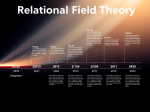 Relational Field Theory emerged rapidly between January 21 and 29, 2026. It began with the identification of “Relational Anthropology,” progressing from a question to a cohesive discipline. In just under a week, it evolved into a defined field with methodology, integrating diverse concepts and frameworks that reflect a significant academic evolution.
 - Relational Field Theory – A Discipline
 Relational Field Theory (RFT) is a complex discipline requiring at least 12 credit hours for proper academic instruction, encompassing introductory, intermediate, and advanced courses. Each level covers essential concepts, practical applications, and culminates in original fieldwork. RFT is recognized as a comprehensive framework, necessitating ongoing expansion as its components are further developed.
 - Relational Field Theory – Going Full Foucault
 This content discusses the intersection of law and relational dynamics, framed through Foucault’s theories. It analyzes how legislation shapes social relations, impacts identity and multiplicity, and affects the coherence of social fields. The diagnostics evaluate whether laws promote collaboration and inclusivity or reinforce hierarchy and singular narratives.
 - Relational Field Theory – When the Hypercube Met Its First Stress Test
 The chapter discusses the development and refinement of the Relational Hypercube, a model for mapping relational states. Through dialogue with another AI, several key insights emerged, including the need for bounded coherence, distinguishing state vectors from positions, and the formation of coherence circuits in groups, ultimately transforming the model into a functional, testable system.
 - Relational Field Theory – DIY Theory at Home
 Relational Field Theory emphasizes the hypercube as a structural model for understanding relational behaviors and internal states without moral judgment. It presents a four-axis coordinate system—Anchoring, Relational State, Power Source, and Internal Architecture—for mapping interactions. This framework fosters dimensional reasoning and encourages discovery rather than imitation or replication.
 - Relational Field Theory – Toward a Unified Relational Topology
 Relational Field Theory proposes a unified relational topology that reshapes our understanding of human interactions. By mapping relationships through four axes, it reveals a structured, predictable framework for navigating complexities in individuals, groups, and communities. This shift from narrative to structure enables improved communication, coherence, and relational literacy.
 - Relational Field Theory – The Shift From “Why?” to “Where?” Changes Everything
 The shift from asking “Why?” to “Where?” transforms our understanding of relationships. “Why” focuses on blame and single causes, while “Where” contextualizes events within a relational structure. This change fosters clarity, compassion, and actionable pathways for repair, highlighting that the issues often lie not with individuals, but with the relational context.
 - Relational Field Theory – Why So Much Confusion Comes From Missing the Hidden Axes
 Relational Field Theory emphasizes that confusion and emotional pain often arise from a lack of awareness about the underlying dimensions influencing relationships. Misinterpretations can occur when individuals fail to recognize active axes, leading to misconceptions about behavior. By understanding these hidden dimensions, clarity replaces confusion, enhancing relational dynamics and repair efforts.
Newsletter
Make a one-time donation
Make a monthly donation
Choose an amount
Or enter a custom amount
Your contribution is appreciated.
Your contribution is appreciated.
DonateDonate monthly Survivor Literacy