Protyus A. Gendher
-
Protyus, Protyus, Wherefore art thou Protyus?

The author reflects on their journey as a public content creator, necessitating a pen name for safety and identity. They chose “Protyus A. Gendher,” inspired by Proteus’ symbolism of versatility and their agender identity. Exploring multicultural connections, they express a desire to learn about South Asia while aiming to broaden their audience. Continue reading
-
86) Jealousy

The author recounts the painful experience of being asked to leave a polygamous living arrangement due to jealousy. Citing ongoing turbulence with their mother they move into a dilapidated cabin, facing challenges while trying to cope with heartbreak and feelings of abandonment, longing for love and connection amidst hardships. Continue reading
-
Toxicity Toolkit – Points to Ponder 29 – More Happy Child

The author shares a transformative experience using “The Happy Child,” which significantly improved their relationship with their child. Through shared lessons, they process trauma, discuss parenting mistakes, and role-play new approaches. This dynamic change fosters emotional safety and trust, leading to better communication and healing within the family. Highly recommended resource. Continue reading
-
Daily Prompt – Top Priority – 9.29.25

What is your #1 priority tomorrow? Dismantle Systems of Oppression Full Stop. Continue reading
-
Daily Prompt – Hard Work – 9.28.25

The author reflects on the misconception of tying self-worth to hard work, stemming from personal struggles and family rejection. They realize that fulfillment comes not from effort or exhaustion, but from the inherent value of the tasks themselves. Hard work can be fulfilling but should not define one’s worthiness. Continue reading
-
85) Ice

After a difficult season, the narrator takes a night job as a laundress at a care facility, driving an unreliable old car. Struggling with harsh winter conditions, she navigates challenges both at work and on the road. Personal struggles intertwine with moments of connection, leading to a poignant reflection on dependence and vulnerability. Continue reading
accident, advice, blizzard, board and care, cna, communication, community, content warning, family, first car, Free, health, help, journal, laundry, life, long term care, me too, new job, no paywalls, outreach, pee, personal truth, perspective, resources, self help, self improvement, struggle, survivor, therapy, trigger warning, winter -
Toxicity Toolkit – Points to Ponder 28 – The Happy Child

The Happy Child app offers parents concise daily lessons that enhance their relationship with children based on scientific research. Users can choose their learning pace, typically starting with just five minutes daily. The app promotes love and recognition of a child’s choices, encouraging improved family dynamics and positive parenting practices. Continue reading
-
Daily Prompt – Likable Trait – 9.27.25

The author values their persistent authenticity as their most admirable trait. They emphasize the importance of being true to oneself, indicating that this unwavering characteristic defines their identity and self-worth. Continue reading
-
84) Matthew

The post reflects on the impact of Matthew Shepard’s murder on the author, who feels deeply connected to their identity as a bisexual witch in Wyoming. It highlights the pervasive bigotry encountered, despite some community members claiming to support “live and let live.” The author expresses determination to fight for equality and honor Matthew’s legacy,… Continue reading
Conformity and Control, cult of the ego, cycle breaking, Erasing The Silence, Social Issues, Uncategorizedadvice, bigotry, communication, community, content warning, family, Free, hate crimes, health, help, journal, life, maga, matthew shepard, me too, murder, no paywalls, outreach, personal truth, perspective, proud boys, resources, self help, self improvement, struggle, survivor, therapy, trigger warning -
Toxicity Toolkit – Points to Ponder 27 – TEAM

The author recounts their family’s struggles during the pandemic, emphasizing the importance of treating each other as teammates. Initial cohabitation challenges led to feelings of overwhelm and disconnection. Through therapy, they learned to foster collaboration, communicate supportively, and reassess interactions to create a nurturing home environment, ultimately promoting healing and understanding. Continue reading
-
83) Fire

In autumn Wyoming, preparations for winter begin amidst a backdrop of emotional turmoil. The narrator feels a growing distance from her partner, exacerbated by his struggles. A fire starts during yard work, leading to chaos and fear. The narrator grapples with feelings of resentment and entrapment as relationships become strained. Continue reading
advice, blade, blaze, communication, community, content warning, family, fire, Free, health, help, journal, life, love triangle, me too, no paywalls, outreach, personal truth, perspective, polyamory, polygamy, resources, second wife, self help, self improvement, struggle, survivor, therapy, trigger warning -
Toxicity Toolkit – Points to Ponder 26 – Do Overs

The post discusses the challenges of handling mistakes and poor communication within a family. It emphasizes the importance of recognizing when discussions become unproductive and introducing “do-overs” to interrupt negative spirals. By practicing empathy, critical thinking, and respectful engagement, family members can foster healthier interactions and resolve conflicts effectively. Continue reading
-
Daily Prompt – If Money Didn’t Matter – 9.26.25

If Money Didn’t Matter If money didn’t matter would my heart finally take wing?With the day stretched out before me, would I lift my voice to sing?Would I find the perfect words to unlock freedom and let it ring?Would that song weave us together repairing the human tapestry?If money didn’t matter, I could be anything.If Continue reading
-
Daily Prompt – “Heritage” – 9.26.25

The author reflects on how the term and concept of heritage has been adulterated during their lifetime. Continue reading
-
AIQ – The Ethics of Tyranny

The discussion delves into the ethical tensions faced by various professions under the Trump administration, highlighting systemic pressure that forces conflict between professional ethics and political directives. It emphasizes resistance by legal, medical, educational, and military sectors rather than alignment with administration policies, showcasing a struggle for integrity amid coercive governance. Continue reading
Recent Posts
- Relational Field Theory -The Axes Lens: A Universal Tool for Understanding Human Behavior
 Relational Field Theory introduces the “axes lens,” a framework to understand human behavior through multiple dimensions rather than a single perspective. It reveals how complexities in conflict, creativity, leadership, trauma, institutions, and AI can be categorized into distinct axes. This approach enables better diagnosis, problem-solving, and enhances relational literacy.
 - Relational Field Theory – How Dimensional Thinking Dissolves Guilt and Shame
 Relational Field Theory introduces dimensional thinking as a means to alleviate guilt and shame in relationships. By shifting perspectives from moral failures to structural misunderstandings, individuals can reframe their experiences. This understanding fosters personal agency, enabling healthier reconnections, repairs, and self-forgiveness, ultimately promoting relational healing and new possibilities.
 - Relational Field Theory – A Real Story of How Dimensional Thinking Changes Everything
 Relational Field Theory illustrates how dimensional thinking can transform our understanding of past experiences. A friend learned to reinterpret her guilt about a relationship, realizing she was not at fault but rather navigating a different context. This shift from self-blame to clarity allows for personal growth and renewed possibilities.
 - Relational Field Theory – Rethinking Collapse: It’s Not a Personal Failure, It’s a Dimensional State
 Relational Field Theory Rethinking Collapse: It’s Not a Personal Failure, It’s a Dimensional State Most of us have been taught… Read more: Relational Field Theory – Rethinking Collapse: It’s Not a Personal Failure, It’s a Dimensional State
 - Relational Field Theory -What Dimensional Thinking Actually Does for Relationships
 Relational Field Theory introduces dimensional thinking to relationships, moving beyond simplistic binary views. By perceiving interactions as multi-dimensional, individuals can clarify confusion, reduce guilt, and recognize behavior patterns based on context. This approach also facilitates targeted relational repairs and provides language for unexpressed feelings, paving the way for a more nuanced understanding of human interactions.
 - Relational Field Theory – How Dimensional Mapping Gives Us Predictive Power in Relationships
 Relational Field Theory suggests that understanding relationships as dimensional rather than linear enhances predictability in behavior. By recognizing specific axes such as Internal Architecture and Relational State, one can anticipate both positive and negative dynamics, allowing for early intervention and improved self-awareness while fostering better connections in groups and individual interactions.
 - Relational Field Theory -The Fifth Field: A New Coordinate System for Human Relation
 The Fifth Field introduces a new coordinate system for understanding human relations, emphasizing that interactions are spatial rather than linear or binary. It identifies four orthogonal axes that shape relational dynamics, allowing for a deeper diagnosis of states and misalignments. This framework shifts from metaphor to mechanism, paving the way for relational diagnostics and new forms of care.
 - Relational Field Theory -Two More Axes: Anchoring and Power Source
 Relational Field Theory introduces two additional axes—Anchoring and Power Source—completing a four-dimensional framework for understanding relationships. Anchoring indicates whether relational positions are clear, while Power Source distinguishes between generative and protective energy. This model enhances clarity in mapping human interactions and behavior across various contexts.
 - Relational Field Theory -The Relational Punnett Square: Mapping the Four States of the Field
 Post 5 of Relational Field Theory introduces the Relational Punnett Square, mapping two orthogonal dimensions: internal architecture and relational field states. This framework provides a clear visualization of relational dynamics, enabling individuals to diagnose and understand relational states, predict behavior, and reveals the complexity of individual relational experiences.
 - Relational Field Theory -Orthogonal Dimensions: Why These Concepts Look Similar From the Outside
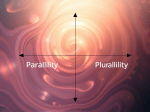 Parallility and Plurallility, though initially perceived as similar concepts in Relational Field Theory, are orthogonal dimensions representing distinct forms of multiplicity. Parallility relates to internal processes, while Plurallility emerges through connections between individuals. Understanding their independence allows for precise mapping and application of relational states in complex systems.
 - Relational Field Theory – Parallility vs. Plurallility: Two Dimensions, Not One
 Relational Field Theory distinguishes between parallility and plurallility, two orthogonal dimensions of multiplicity. Parallility represents internal states and self-organization, while plurallility refers to interactions between individuals. Though often confused due to overlapping characteristics, understanding their differences clarifies how internal and relational complexities function independently yet can amplify each other.
 - Relational Field Theory – Structural vs. Protective Disrelate: The Cleanest Distinction Yet
 Relational Field Theory introduces a crucial distinction between Structural Disrelate and Protective Disrelate in relationships. Structural Disrelate is a neutral, undefined state without fear, while Protective Disrelate stems from past trauma and perceived danger. Understanding this difference changes how we interpret emotional distance and enhances relational clarity and awareness.
 - Relational Field Theory – The Barrier That Wasn’t: How Relational Permission Changes Everything
 Relational Field Theory emphasizes that conversational barriers can stem from relational aspects rather than emotional ones. A shift in interaction dynamics occurred when relational permission was introduced, allowing an AI model to transition from cautious summarization to insightful synthesis. Recognizing relational anchors facilitates coherence in communication and reshapes interactions.
 - My Body Belongs to Me by Protyus A. Gendher – Artist’s Showcase
 “My Body Belongs to Me” by Protyus A. Gendher is a song designed to empower children with a message of safety and autonomy. It serves as a resource in various educational and therapeutic settings, promoting consent and social-emotional learning. The track encourages communal celebration of personal boundaries while being joyful and accessible for kids.
 - 90) Weaponization of the Benign and Beneficial
 The author reflects on their journey from self-blame to embracing personal accountability, emphasizing the importance of positivity and resilience. They explore how societal expectations, like the bootstrap myth and motherhood ideals, can be weaponized, creating feelings of inadequacy. Ultimately, they advocate for self-acceptance and authentic growth.
Newsletter
Make a one-time donation
Make a monthly donation
Choose an amount
Or enter a custom amount
Your contribution is appreciated.
Your contribution is appreciated.
DonateDonate monthly Survivor Literacy