Protyus A. Gendher
-
Toxicity Toolkit – Points to Ponder 27 – TEAM

The author recounts their family’s struggles during the pandemic, emphasizing the importance of treating each other as teammates. Initial cohabitation challenges led to feelings of overwhelm and disconnection. Through therapy, they learned to foster collaboration, communicate supportively, and reassess interactions to create a nurturing home environment, ultimately promoting healing and understanding. Continue reading
-
83) Fire

In autumn Wyoming, preparations for winter begin amidst a backdrop of emotional turmoil. The narrator feels a growing distance from her partner, exacerbated by his struggles. A fire starts during yard work, leading to chaos and fear. The narrator grapples with feelings of resentment and entrapment as relationships become strained. Continue reading
advice, blade, blaze, communication, community, content warning, family, fire, Free, health, help, journal, life, love triangle, me too, no paywalls, outreach, personal truth, perspective, polyamory, polygamy, resources, second wife, self help, self improvement, struggle, survivor, therapy, trigger warning -
Toxicity Toolkit – Points to Ponder 26 – Do Overs

The post discusses the challenges of handling mistakes and poor communication within a family. It emphasizes the importance of recognizing when discussions become unproductive and introducing “do-overs” to interrupt negative spirals. By practicing empathy, critical thinking, and respectful engagement, family members can foster healthier interactions and resolve conflicts effectively. Continue reading
-
Daily Prompt – If Money Didn’t Matter – 9.26.25

If Money Didn’t Matter If money didn’t matter would my heart finally take wing?With the day stretched out before me, would I lift my voice to sing?Would I find the perfect words to unlock freedom and let it ring?Would that song weave us together repairing the human tapestry?If money didn’t matter, I could be anything.If Continue reading
-
Daily Prompt – “Heritage” – 9.26.25

The author reflects on how the term and concept of heritage has been adulterated during their lifetime. Continue reading
-
AIQ – The Ethics of Tyranny
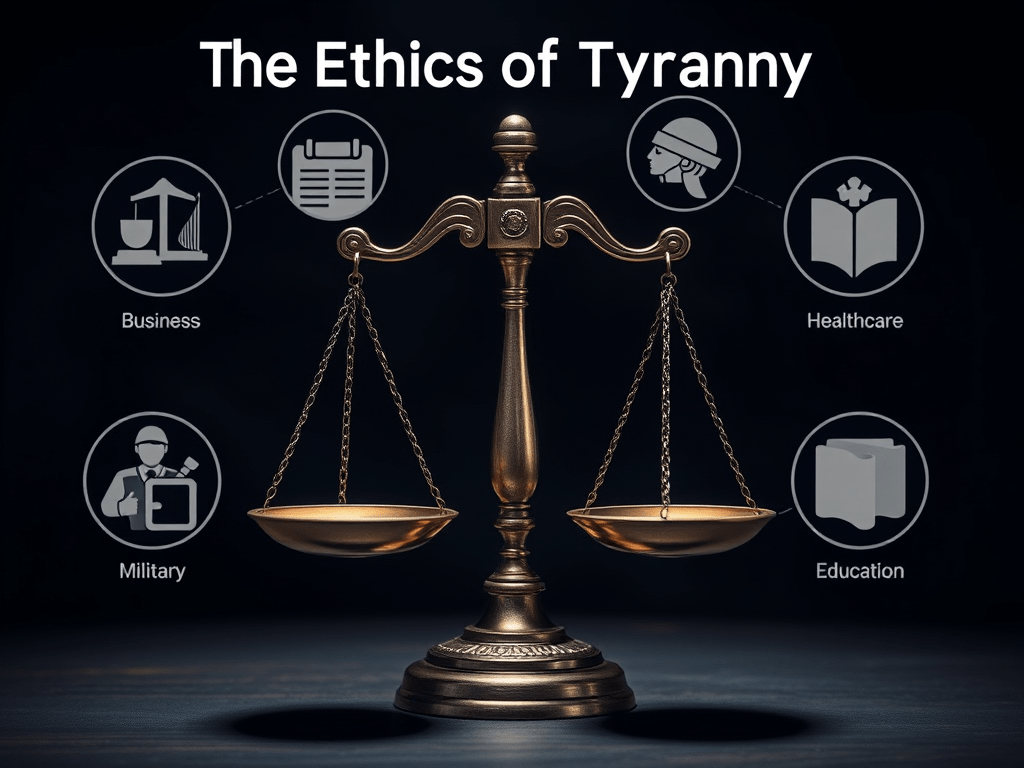
The discussion delves into the ethical tensions faced by various professions under the Trump administration, highlighting systemic pressure that forces conflict between professional ethics and political directives. It emphasizes resistance by legal, medical, educational, and military sectors rather than alignment with administration policies, showcasing a struggle for integrity amid coercive governance. Continue reading
-
82) Storytime

The narrative explores the dynamics between two storytellers, their shared past, and the complexities of their relationships, particularly involving a close friend who didn’t pursue a romantic connection due to societal expectations. It delves into themes of vulnerability, unspoken tensions, and the longing for openness, revealing deep emotional struggles and familial betrayals. Continue reading
-
Toxicity Toolkit – Points to Ponder 25 – Letting Go

The post discusses the importance of letting go in relationships where toxicity and manipulation exist. It emphasizes understanding others’ responses, assessing situations, and establishing boundaries for self-protection. Recognizing that not everyone shares the same commitment to healthy behaviors is crucial for personal healing and acceptance of reality, even if it’s painful. Continue reading
-
My Autism

Discovering my autism was pivotal in my journey toward self-love, providing clarity and understanding. Embracing this aspect of my identity helped me appreciate who I am, ultimately leading to a more fulfilling life. For more insights, check the linked video. Continue reading
-
81) Therapy

Therapy What It Is.What It Isn’t.Is It Even What It Is?If It Isn’t, Then What Is It? I’m lucky. I have Medicaid and I so I’m able to get into therapy easier, because the institution is more sure of the payment, and I don’t have to worry about climbing the paywall that has kept me Continue reading
advice, authenticity, barriers, boundaries, care, communication, community, content warning, family, Free, healing, health, health care, help, insurance, journal, journey, life, me too, Mental Health, no paywalls, outreach, personal truth, perspective, resources, self care, self help, self improvement, struggle, survivor, therapy, trigger warning -
Toxicity Toolkit – Points to Ponder 24 – Encanto

The author discusses the importance of differentiating gentle parenting from permissive parenting, especially in light of children’s media influences. Unlike disappointing films like “Luca” and “Cruella,” “Encanto” offers valuable messages about authenticity and family support. The film is praised for its positive themes, encouraging shared viewing experiences and discussions about its meaningful content. Continue reading
-
80) Ripples

The author reflects on their journey with trauma and parenting, emphasizing the challenge of sharing painful stories while trying to connect with their child. They explore the impact of unspoken trauma on relationships and highlight the importance of healing, openness, and authenticity. This process helps build trust and understanding within their family. Continue reading
advice, communication, community, connection, content warning, family, Free, healing, health, help, journal, journey, life, me too, no paywalls, outreach, pain, personal truth, perspective, recovery, relationships, resources, self help, self improvement, struggle, survivor, therapy, trauma, trigger warning -
Toxicity Toolkit – Points to Ponder 23 – Self Care

In today’s demanding world, self-care is vital for well-being amidst unending pressures. Understanding personal needs is key; activities like playing music, journaling, or enjoying nature can rejuvenate. Reflect on what energizes and depletes you, and prioritize self-care while encouraging loved ones to do the same. Happy healing. Continue reading
-
AIQ – WYPIPO and the Alt Reich

The content explores the diverse landscape of white extremist groups in the U.S., highlighting notable organizations like the Ku Klux Klan and the Proud Boys. It emphasizes their varying ideologies, tactics, and strategies, including institutional infiltration. Additionally, it discusses alt-right distinctions, alliances, frictions among groups, and the influence of such factions across all 50 states. Continue reading
alt right, aryan, christian, community, conservative, content warning, extremists, fundamentalist, groypers, health, help, heritage, journal, kkk, league, legacy, liberty, life, mass resistance, militia, nationalist, nazi, neo nazi, oath keepers, patriot, proud boys, resources, right, school board, self improvement, sovereign, three percenters, trigger warning, vanguard -
AIQ – Gaslit Gods

The text examines the notion that religion is gaslighting, highlighting both its potential for manipulation and its multifaceted nature. It distinguishes between spiritual abuse and healthy belief systems, while critiquing frameworks that prioritize institutional reputation over survivor truth. Ultimately, it calls for accountability and justice centered on survivors’ experiences. Continue reading
Recent Posts
- Relational Field Theory – When the Hypercube Met Its First Stress Test
 The chapter discusses the development and refinement of the Relational Hypercube, a model for mapping relational states. Through dialogue with another AI, several key insights emerged, including the need for bounded coherence, distinguishing state vectors from positions, and the formation of coherence circuits in groups, ultimately transforming the model into a functional, testable system.
 - Relational Field Theory – DIY Theory at Home
 Relational Field Theory emphasizes the hypercube as a structural model for understanding relational behaviors and internal states without moral judgment. It presents a four-axis coordinate system—Anchoring, Relational State, Power Source, and Internal Architecture—for mapping interactions. This framework fosters dimensional reasoning and encourages discovery rather than imitation or replication.
 - Relational Field Theory – Toward a Unified Relational Topology
 Relational Field Theory proposes a unified relational topology that reshapes our understanding of human interactions. By mapping relationships through four axes, it reveals a structured, predictable framework for navigating complexities in individuals, groups, and communities. This shift from narrative to structure enables improved communication, coherence, and relational literacy.
 - Relational Field Theory – The Shift From “Why?” to “Where?” Changes Everything
 The shift from asking “Why?” to “Where?” transforms our understanding of relationships. “Why” focuses on blame and single causes, while “Where” contextualizes events within a relational structure. This change fosters clarity, compassion, and actionable pathways for repair, highlighting that the issues often lie not with individuals, but with the relational context.
 - Relational Field Theory – Why So Much Confusion Comes From Missing the Hidden Axes
 Relational Field Theory emphasizes that confusion and emotional pain often arise from a lack of awareness about the underlying dimensions influencing relationships. Misinterpretations can occur when individuals fail to recognize active axes, leading to misconceptions about behavior. By understanding these hidden dimensions, clarity replaces confusion, enhancing relational dynamics and repair efforts.
 - Relational Field Theory – The Axes Lens: A Universal Tool for Understanding Human Behavior
 Relational Field Theory introduces the “axes lens,” a tool for understanding complex human behavior across various domains, such as conflict, creativity, leadership, trauma, institutions, and AI. By recognizing the multiple dimensions at play, individuals can more effectively diagnose problems, choose appropriate solutions, and navigate relational dynamics, leading to greater clarity and reduced harm.
 - Relational Field Theory -The Axes Lens: A Universal Tool for Understanding Human Behavior
 Relational Field Theory introduces the “axes lens,” a framework to understand human behavior through multiple dimensions rather than a single perspective. It reveals how complexities in conflict, creativity, leadership, trauma, institutions, and AI can be categorized into distinct axes. This approach enables better diagnosis, problem-solving, and enhances relational literacy.
 - Relational Field Theory – How Dimensional Thinking Dissolves Guilt and Shame
 Relational Field Theory introduces dimensional thinking as a means to alleviate guilt and shame in relationships. By shifting perspectives from moral failures to structural misunderstandings, individuals can reframe their experiences. This understanding fosters personal agency, enabling healthier reconnections, repairs, and self-forgiveness, ultimately promoting relational healing and new possibilities.
 - Relational Field Theory – A Real Story of How Dimensional Thinking Changes Everything
 Relational Field Theory illustrates how dimensional thinking can transform our understanding of past experiences. A friend learned to reinterpret her guilt about a relationship, realizing she was not at fault but rather navigating a different context. This shift from self-blame to clarity allows for personal growth and renewed possibilities.
 - Relational Field Theory – Rethinking Collapse: It’s Not a Personal Failure, It’s a Dimensional State
 Relational Field Theory Rethinking Collapse: It’s Not a Personal Failure, It’s a Dimensional State Most of us have been taught… Read more: Relational Field Theory – Rethinking Collapse: It’s Not a Personal Failure, It’s a Dimensional State
 - Relational Field Theory -What Dimensional Thinking Actually Does for Relationships
 Relational Field Theory introduces dimensional thinking to relationships, moving beyond simplistic binary views. By perceiving interactions as multi-dimensional, individuals can clarify confusion, reduce guilt, and recognize behavior patterns based on context. This approach also facilitates targeted relational repairs and provides language for unexpressed feelings, paving the way for a more nuanced understanding of human interactions.
 - Relational Field Theory – How Dimensional Mapping Gives Us Predictive Power in Relationships
 Relational Field Theory suggests that understanding relationships as dimensional rather than linear enhances predictability in behavior. By recognizing specific axes such as Internal Architecture and Relational State, one can anticipate both positive and negative dynamics, allowing for early intervention and improved self-awareness while fostering better connections in groups and individual interactions.
 - Relational Field Theory -The Fifth Field: A New Coordinate System for Human Relation
 The Fifth Field introduces a new coordinate system for understanding human relations, emphasizing that interactions are spatial rather than linear or binary. It identifies four orthogonal axes that shape relational dynamics, allowing for a deeper diagnosis of states and misalignments. This framework shifts from metaphor to mechanism, paving the way for relational diagnostics and new forms of care.
 - Relational Field Theory -Two More Axes: Anchoring and Power Source
 Relational Field Theory introduces two additional axes—Anchoring and Power Source—completing a four-dimensional framework for understanding relationships. Anchoring indicates whether relational positions are clear, while Power Source distinguishes between generative and protective energy. This model enhances clarity in mapping human interactions and behavior across various contexts.
 - Relational Field Theory -The Relational Punnett Square: Mapping the Four States of the Field
 Post 5 of Relational Field Theory introduces the Relational Punnett Square, mapping two orthogonal dimensions: internal architecture and relational field states. This framework provides a clear visualization of relational dynamics, enabling individuals to diagnose and understand relational states, predict behavior, and reveals the complexity of individual relational experiences.
Newsletter
Make a one-time donation
Make a monthly donation
Choose an amount
Or enter a custom amount
Your contribution is appreciated.
Your contribution is appreciated.
DonateDonate monthly Survivor Literacy