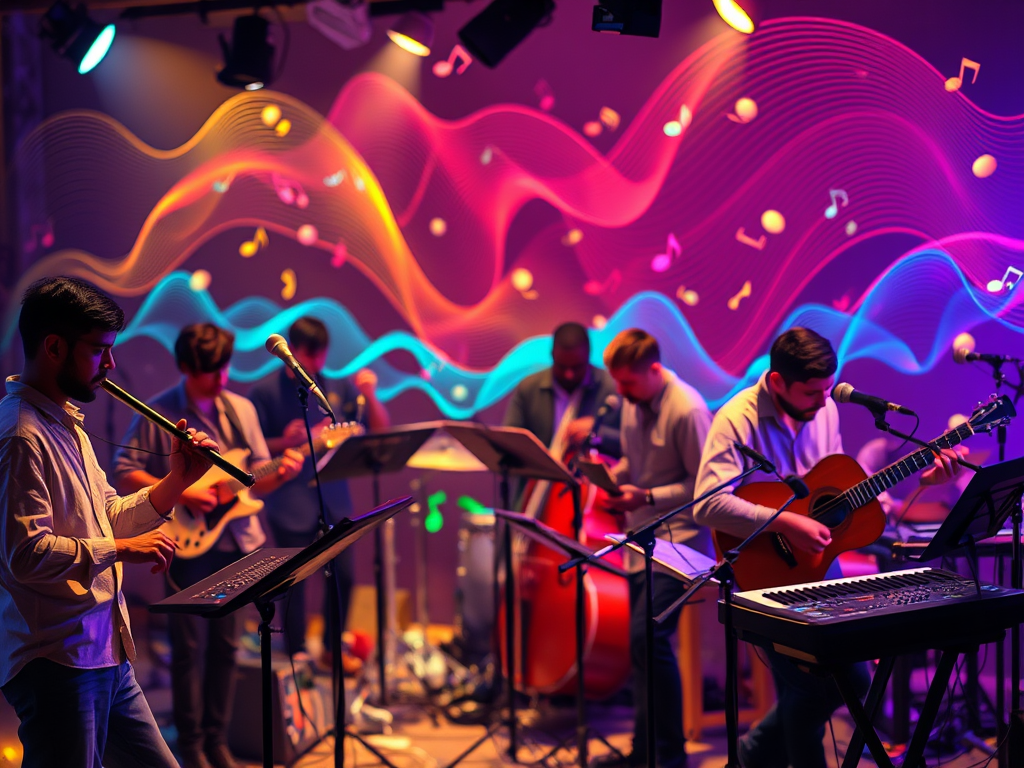
RELATIONAL MUSICOLOGY
The Study of Music as a Relational, Ecological, and Field‑Scale Phenomenon
1. Music as a Relational Field
Classical musicology studies:
- form
- harmony
- genre
- history
- notation
- performance
Relational Musicology studies:
- relational forces
- coherence signatures
- cultural metabolism
- lineage transmission
- rhythmic ecology
- identity modes
- field behavior
Music is not sound.
Music is relation made audible.
2. Sound as Relational Physics
Every musical event expresses the four relational forces:
Cohesion → Harmony, tonal center, resonance
Repulsion → Dissonance, tension, boundary
Resonance → Rhythm, pulse, entrainment
Distortion → Noise, rupture, breakdown
Music is relational physics translated into vibration.
3. Rhythm as Metabolism
Rhythm is not a pattern.
It is metabolic pacing.
Rhythm regulates:
- emotional load
- narrative flow
- identity coherence
- cultural memory
- group synchronization
Fast rhythms → high metabolism
Slow rhythms → low metabolism
Syncopation → boundary play
Polyrhythm → multiplicity mode
Rhythm is the heartbeat of relational fields.
4. Melody as Identity
Melody is the identity line of a musical organism.
It expresses:
- mode
- desire
- movement
- coherence
- transformation
A melody is an identity system traveling through time.
5. Harmony as Relational Geometry
Harmony is relational geometry made audible.
Chords are:
- lattices
- braids
- clusters
- boundaries
- coherence structures
Consonance is alignment.
Dissonance is tension.
Resolution is repair.
Harmony is the architecture of relation.
6. Timbre as Ecology
Timbre is the ecological niche of sound.
It encodes:
- material
- body
- ancestry
- environment
- cultural lineage
A flute is a different ecological organism than a drum.
A synthesizer is a different organism than a voice.
Timbre is the ecology of identity.
7. Genre as Cultural Lineage
Genres are not categories.
They are lineages — inherited relational patterns shaped by:
- geography
- history
- trauma
- migration
- ecology
- technology
- community
Blues is a lineage.
Appalachian folk is a lineage.
Amapiano is a lineage.
Dubstep is a lineage.
Celtic music is a lineage.
Genres are ancestral relational fields.
8. Ensemble as Network
An ensemble is a relational network.
It has:
- nodes (musicians)
- edges (interactions)
- circuits (rhythmic and harmonic flow)
- load distribution (who carries what)
- redundancy (backup roles)
- failure modes (collapse points)
A band is a living relational organism.
9. Performance as Field Activation
Performance is not execution.
It is field activation.
A performance creates:
- resonance fields
- entrainment loops
- identity synchronization
- emotional coherence
- collective metabolism
This is why live music feels like ritual — because it is.
10. Improvisation as Relational Intelligence
Improvisation is the highest form of relational cognition.
It requires:
- listening
- adaptation
- boundary sensing
- timing
- coherence tracking
- multiplicity
- ecological awareness
Improvisation is relational engineering in real time.
11. Recording as Relational Memory
A recording is not a document.
It is a relational archive.
It preserves:
- field conditions
- identity states
- cultural context
- emotional coherence
- lineage signals
Recordings are fossils of relational events.
12. Music as Cultural Metabolism
Cultures metabolize experience through music.
Music processes:
- grief
- joy
- trauma
- identity
- belonging
- resistance
- transformation
Music is the metabolic organ of culture.
13. Music as Relational Repair
Music repairs:
- nervous systems
- relationships
- communities
- identities
- ecosystems
It restores coherence where distortion has spread.
Music is a repair cascade in sound.
14. Closing: Music as the Audible Expression of Pluriology
Relational Musicology reframes music as:
- a relational field
- a metabolic system
- a coherence engine
- a cultural organism
- a lineage archive
- a boundary architecture
- a rhythmic ecology
It integrates:
- Relational Physics (vibration)
- Relational Biology (metabolism)
- Relational Anthropology (culture)
- Relational Library Science (memory)
- Relational Engineering (structure)
- Relational Geography (place)
- Relational History (lineage)
Music becomes the audible expression of relational life.


Leave a Reply