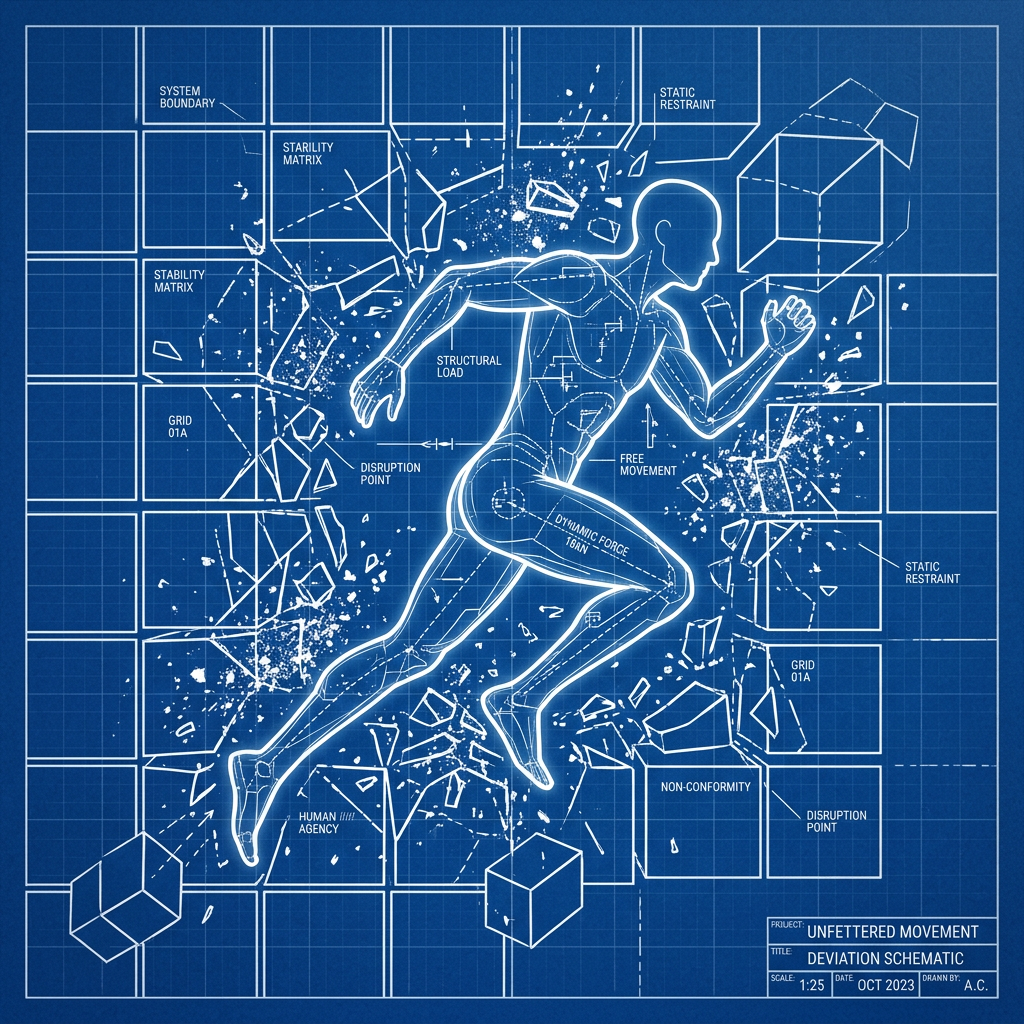
In disrelated systems, stability depends on SCRRIPPTT‑shopping — the continual absorption of systemic incoherence through narrative performance, distortion, and role‑based alignment.
Because the system cannot tolerate full reality, it cannot tolerate full personhood.
So individuals are related to as roles, not as selves.
This is not personal.
It is structural.
1. Roles Are Predictable; People Are Not
Disrelated systems require:
- narrative consistency
- emotional containment
- predictable responses
- loyalty to the script
A role provides this.
A person does not.
So the system relates to:
- “the mother”
- “the partner”
- “the child”
- “the employee”
- “the leader”
instead of the actual human being.
2. Roles Absorb Incoherence; People Would Expose It
A role can be used to:
- justify contradictions
- assign blame
- maintain hierarchy
- preserve narrative control
A real person, with real needs and real boundaries, would expose the system’s incoherence.
So the system suppresses personhood and elevates rolehood.
3. Roles Are Easier to Control
A role can be:
- instructed
- corrected
- disciplined
- replaced
A person cannot.
Roles are structurally safer for the system because they are less complex and more compliant.
4. Vulnerability and Benefit of the Doubt Break the Role Illusion
Vulnerability reveals the self.
Benefit of the doubt acknowledges the self.
Both disrupt:
- narrative performance
- emotional containment
- hierarchical expectations
- the distortion economy
So both are treated as liabilities.
5. Treating People as Roles Protects the System, Not the Relationship
When individuals are treated as roles:
- boundaries collapse
- authenticity disappears
- reciprocity erodes
- trust becomes conditional
- safety becomes performative
This protects the system’s coherence, not the relationship’s integrity.
6. Even Intimate Relationships Become Role‑Based
In disrelated systems, even the closest bonds default to roles:
- partners become functions
- parents become archetypes
- children become extensions
- friends become utilities
The system’s logic overrides relational logic.
7. The Safe Adult Threatens Role‑Based Relating
A Safe Adult insists on:
- personhood
- coherence
- boundaries
- reality
This destabilizes the role‑based architecture.
So the Safe Adult is often treated as:
- disruptive
- disloyal
- “too much”
- unsafe to the system
Not because of harm, but because of clarity.
Core Structural Truth
In disrelated systems, people are treated as roles because roles can absorb incoherence, maintain narrative stability, and protect the system from rupture.
Personhood is too real, too complex, and too revealing.
Roles preserve the system. Selves expose it.
We Believe You


Apple Music
YouTube Music
Amazon Music
Spotify Music


Explore Mini-Topics
Leave a Reply