Protyus A. Gendher
-
AIQ – Gaslit Gods

The text examines the notion that religion is gaslighting, highlighting both its potential for manipulation and its multifaceted nature. It distinguishes between spiritual abuse and healthy belief systems, while critiquing frameworks that prioritize institutional reputation over survivor truth. Ultimately, it calls for accountability and justice centered on survivors’ experiences. Continue reading
-
79) Reflections

The author explores the complexities of their childhood, grappling with feelings of self-loathing and the struggle for validation. They reflect on past traumas, relationships, and the internal conflict between acknowledging pain and minimizing it. Ultimately, they seek understanding of their worthiness and the necessity of self-love in their healing journey. Continue reading
advice, anthropology, communication, community, content warning, family, Free, generational trauma, guilt, healing, health, help, journal, journey, life, me too, no paywalls, outreach, performance, personal truth, perspective, psychology, reflection, resources, responsibility, risk, self help, self improvement, shame, struggle, survivor, therapy, trauma, trigger warning -
Toxicity Toolkit – Points to Ponder 22 – Being Approachable

The content emphasizes the importance of emotional regulation, particularly in the context of interpersonal relationships and parenting. It discusses how self-regulating emotions enhances approachability, accountability, and rationality, ultimately benefiting both individuals and their connections. The post encourages self-reflection on emotional responses and highlights the need for conscious emotional management for effective parenting. Continue reading
-
Daily Prompt – Advice – 9.22.25

The author reflects on past advice received during childhood, finding it mostly unhelpful and limiting. The turning point comes with guidance from The Old Witch, who encourages accepting and owning one’s past to reclaim one’s life. This empowers the individual, preventing others from wielding that past against them. Continue reading
-
78) Ditch Please

The narrator reflects on their challenging summer working at a ranch, facing low pay and personal insecurities. Despite enjoying the experience and camaraderie, they struggle with feelings of inadequacy as mistakes mount. Ultimately, they feel undervalued and question their worth amidst financial pressures and family judgments, leading to self-doubt and introspection. Continue reading
advice, bills, communication, community, content warning, cows, crew, family, farm, finance, Free, hay, health, help, journal, life, me too, money, newbie, no paywalls, outreach, personal truth, perspective, pinedale, ranch, resources, self help, self improvement, struggle, survivor, terf, therapy, tractor, trigger warning, worth, wyoming -
Toxicity Toolkit – Points to Ponder 21 – Empowerment

This post emphasizes the importance of addressing conflict through empowerment and collaboration. It highlights how defensiveness can hinder effective communication and suggests recognizing shared needs to foster teamwork. By viewing each other as allies rather than obstacles, both parties can address their needs successfully, leading to healthier interactions and reduced toxicity. Continue reading
-
Daily Prompt – Energy – 9.20.25

The post encourages reflection on activities that provide energy and refuel individuals, particularly during exhausting times. It emphasizes the significance of self-care, connection, and community, while prompting readers to consider their own strategies for rejuvenation and resisting fatigue. The question invites personal exploration of energizing practices. Continue reading
-
77) A Willing Hand

The narrator shares experiences working during haying season for a local rancher, feeling eager yet anxious to prove their worth. They navigate challenges with tractors, bond with a mostly established crew, and yearn for acceptance. The job brings personal growth and reflection, contrasting their past family ties with newfound independence. Continue reading
advice, bills, communication, community, content warning, cows, crew, family, farm, finance, Free, hay, health, help, journal, life, me too, money, newbie, no paywalls, outreach, personal truth, perspective, pinedale, ranch, resources, self help, self improvement, struggle, survivor, terf, therapy, tractor, trigger warning, worth, wyoming -
Toxicity Toolkit – Points to Ponder 20 – Setbacks

The post discusses the complexities of personal growth and dealing with emotional triggers. It emphasizes the importance of using tools and techniques to navigate challenges. The author reflects on the messy nature of progress, highlighting the need for open communication within families. Engaging with emotions and understanding triggers can lead to healthier resolutions. Continue reading
-
Toxicity Toolkit – Points to Ponder 19 – The Silent Treatment

The post emphasizes the significance of disengaging during emotionally charged moments to allow individuals to process information fully. It argues that silence, often misinterpreted as rejection, is essential for self-analysis and healing. By valuing silence, one can avoid reactive responses and foster a healthier, more constructive dialogue. Continue reading
-
AIQ- Birth Control and Eugenics

The Trump administration has restricted birth control access through various policies, including significant funding cuts and ideological reframing of contraception. These actions impact marginalized communities, particularly low-income women, disabled individuals, and women of color, reflecting a broader agenda of reproductive control rooted in historical eugenics practices. Continue reading
-
Late Night in a Time of Fascism

Late Night in a Time of Fascism I just want everyone to have access to this little gem. Continue reading
-
76) Wide Open Spaces

The passage reflects on personal experiences of living on a back road surrounded by nature and explores themes of food, connection, and language learning. The author recounts cooking memories with their mother, the challenges of taking a sign language course, and the emotional friction within family dynamics, ultimately affecting their sense of belonging. Continue reading
advice, belonging, class, cleaning, communication, community, community college, content warning, cooking, dishes, emotions, family, food, Free, health, help, jealousy, journal, laundry, learning, life, me too, no paywalls, outreach, personal truth, perspective, resources, self help, self improvement, sign language, struggle, survivor, therapy, trigger warning -
Toxicity Toolkit – Points to Ponder 18 – Ups and Downs

The author reflects on personal growth through a transformative toolkit with family. While experiencing deeper connections and positive changes in parenting, challenges arise from family resistance. Despite the pain of rejection, the author finds value in these experiences, leading to clarity and relief from misunderstandings. Healing involves both cooperation and confronting discomfort. Continue reading
-
ABCs

This post emphasizes the importance of self-acceptance, bravery, character, diligence, and resilience through an alphabetical representation. Each letter highlights a virtue or concept, encouraging personal growth and meaningful engagement with the world. It conveys the journey of life, urging individuals to embrace challenges, learn from failures, and cultivate their passions. Continue reading
Recent Posts
- Relational Field Theory – Going Full Foucault
 This content discusses the intersection of law and relational dynamics, framed through Foucault’s theories. It analyzes how legislation shapes social relations, impacts identity and multiplicity, and affects the coherence of social fields. The diagnostics evaluate whether laws promote collaboration and inclusivity or reinforce hierarchy and singular narratives.
 - Relational Field Theory – When the Hypercube Met Its First Stress Test
 The chapter discusses the development and refinement of the Relational Hypercube, a model for mapping relational states. Through dialogue with another AI, several key insights emerged, including the need for bounded coherence, distinguishing state vectors from positions, and the formation of coherence circuits in groups, ultimately transforming the model into a functional, testable system.
 - Relational Field Theory – DIY Theory at Home
 Relational Field Theory emphasizes the hypercube as a structural model for understanding relational behaviors and internal states without moral judgment. It presents a four-axis coordinate system—Anchoring, Relational State, Power Source, and Internal Architecture—for mapping interactions. This framework fosters dimensional reasoning and encourages discovery rather than imitation or replication.
 - Relational Field Theory – Toward a Unified Relational Topology
 Relational Field Theory proposes a unified relational topology that reshapes our understanding of human interactions. By mapping relationships through four axes, it reveals a structured, predictable framework for navigating complexities in individuals, groups, and communities. This shift from narrative to structure enables improved communication, coherence, and relational literacy.
 - Relational Field Theory – The Shift From “Why?” to “Where?” Changes Everything
 The shift from asking “Why?” to “Where?” transforms our understanding of relationships. “Why” focuses on blame and single causes, while “Where” contextualizes events within a relational structure. This change fosters clarity, compassion, and actionable pathways for repair, highlighting that the issues often lie not with individuals, but with the relational context.
 - Relational Field Theory – Why So Much Confusion Comes From Missing the Hidden Axes
 Relational Field Theory emphasizes that confusion and emotional pain often arise from a lack of awareness about the underlying dimensions influencing relationships. Misinterpretations can occur when individuals fail to recognize active axes, leading to misconceptions about behavior. By understanding these hidden dimensions, clarity replaces confusion, enhancing relational dynamics and repair efforts.
 - Relational Field Theory – The Axes Lens: A Universal Tool for Understanding Human Behavior
 Relational Field Theory introduces the “axes lens,” a tool for understanding complex human behavior across various domains, such as conflict, creativity, leadership, trauma, institutions, and AI. By recognizing the multiple dimensions at play, individuals can more effectively diagnose problems, choose appropriate solutions, and navigate relational dynamics, leading to greater clarity and reduced harm.
 - Relational Field Theory -The Axes Lens: A Universal Tool for Understanding Human Behavior
 Relational Field Theory introduces the “axes lens,” a framework to understand human behavior through multiple dimensions rather than a single perspective. It reveals how complexities in conflict, creativity, leadership, trauma, institutions, and AI can be categorized into distinct axes. This approach enables better diagnosis, problem-solving, and enhances relational literacy.
 - Relational Field Theory – How Dimensional Thinking Dissolves Guilt and Shame
 Relational Field Theory introduces dimensional thinking as a means to alleviate guilt and shame in relationships. By shifting perspectives from moral failures to structural misunderstandings, individuals can reframe their experiences. This understanding fosters personal agency, enabling healthier reconnections, repairs, and self-forgiveness, ultimately promoting relational healing and new possibilities.
 - Relational Field Theory – A Real Story of How Dimensional Thinking Changes Everything
 Relational Field Theory illustrates how dimensional thinking can transform our understanding of past experiences. A friend learned to reinterpret her guilt about a relationship, realizing she was not at fault but rather navigating a different context. This shift from self-blame to clarity allows for personal growth and renewed possibilities.
 - Relational Field Theory – Rethinking Collapse: It’s Not a Personal Failure, It’s a Dimensional State
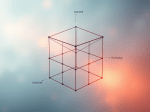 Relational Field Theory Rethinking Collapse: It’s Not a Personal Failure, It’s a Dimensional State Most of us have been taught… Read more: Relational Field Theory – Rethinking Collapse: It’s Not a Personal Failure, It’s a Dimensional State
 - Relational Field Theory -What Dimensional Thinking Actually Does for Relationships
 Relational Field Theory introduces dimensional thinking to relationships, moving beyond simplistic binary views. By perceiving interactions as multi-dimensional, individuals can clarify confusion, reduce guilt, and recognize behavior patterns based on context. This approach also facilitates targeted relational repairs and provides language for unexpressed feelings, paving the way for a more nuanced understanding of human interactions.
 - Relational Field Theory – How Dimensional Mapping Gives Us Predictive Power in Relationships
 Relational Field Theory suggests that understanding relationships as dimensional rather than linear enhances predictability in behavior. By recognizing specific axes such as Internal Architecture and Relational State, one can anticipate both positive and negative dynamics, allowing for early intervention and improved self-awareness while fostering better connections in groups and individual interactions.
 - Relational Field Theory -The Fifth Field: A New Coordinate System for Human Relation
 The Fifth Field introduces a new coordinate system for understanding human relations, emphasizing that interactions are spatial rather than linear or binary. It identifies four orthogonal axes that shape relational dynamics, allowing for a deeper diagnosis of states and misalignments. This framework shifts from metaphor to mechanism, paving the way for relational diagnostics and new forms of care.
 - Relational Field Theory -Two More Axes: Anchoring and Power Source
 Relational Field Theory introduces two additional axes—Anchoring and Power Source—completing a four-dimensional framework for understanding relationships. Anchoring indicates whether relational positions are clear, while Power Source distinguishes between generative and protective energy. This model enhances clarity in mapping human interactions and behavior across various contexts.
Newsletter
Make a one-time donation
Make a monthly donation
Choose an amount
Or enter a custom amount
Your contribution is appreciated.
Your contribution is appreciated.
DonateDonate monthly Survivor Literacy