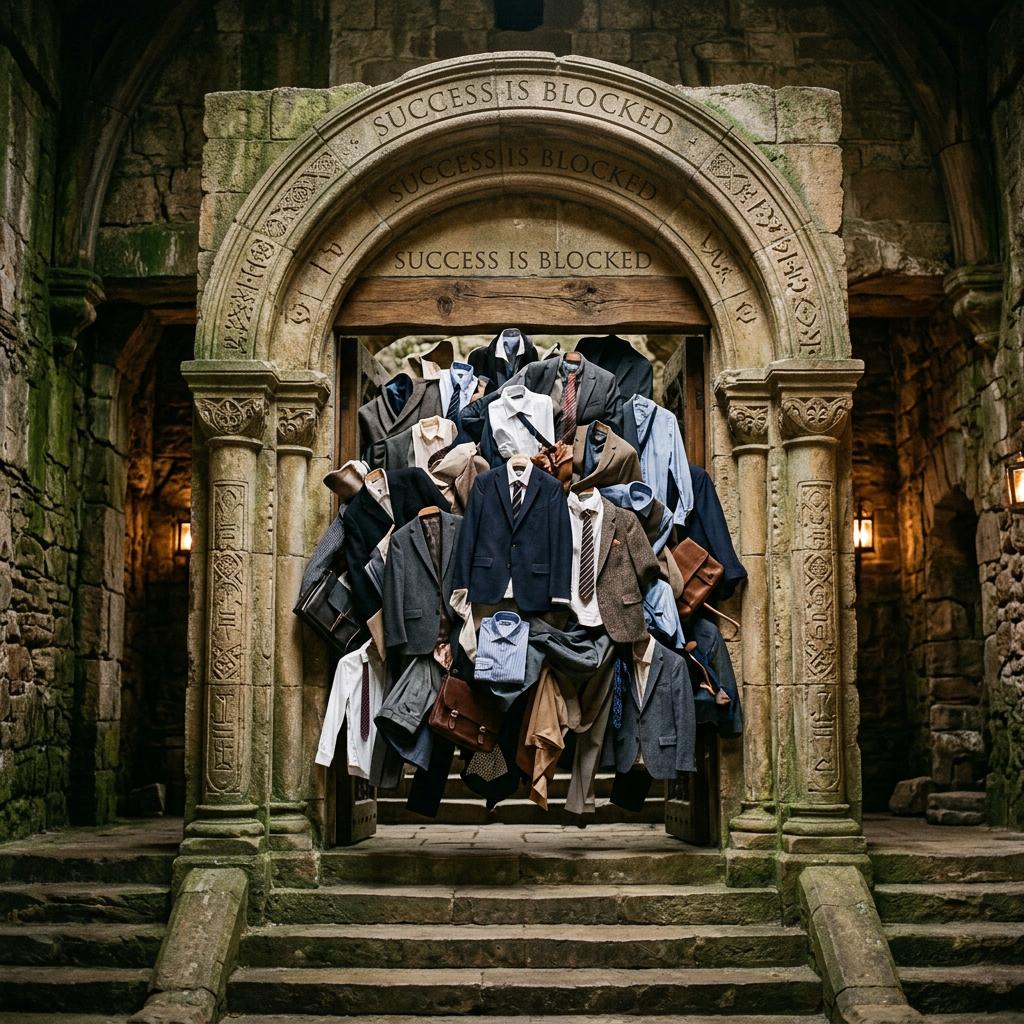
The Unspoken Rule: “Dress Like a Professional — At Your Own Expense”
Colleges and training programs often require students to show up in “professional attire” for:
- internships
- student teaching
- nursing clinicals
- social work placements
- business practicums
- field observations
- presentations
But they rarely provide the clothing — or the money — needed to meet these expectations.
Professional attire becomes a mandatory, unfunded requirement.
The Cost of “Looking the Part”
Professional clothing is expensive.
Students must purchase:
- dress pants
- blouses or button‑downs
- blazers
- ties
- dress shoes
- scrubs
- lab coats
- khakis
- cardigans
- winter‑appropriate professional wear
These costs add up quickly:
- $150–$300 for basic business attire
- $100–$200 for nursing scrubs and shoes
- $50–$150 for teaching‑appropriate clothing
- $100–$200 for seasonal replacements (coats, boots, layers)
For students already struggling with tuition, rent, food, and transportation, this is another financial hit.
The Hidden Rules of Professionalism
“Professional attire” is often defined by:
- middle‑class norms
- white‑collar aesthetics
- gendered expectations
- cultural bias
- ableist assumptions
Students who don’t already own these clothes must spend money to conform.
Professionalism becomes a coded requirement — one that favors students with wealth, stability, and access.
Nursing & Clinical Placements: The Most Expensive
Nursing students must purchase:
- specific scrubs in program‑approved colors
- closed‑toe professional shoes
- lab coats
- stethoscopes
- name badges
- compression socks
- grooming supplies
These items are required for clinicals — and often must be purchased from specific vendors at inflated prices.
Students pay to participate in unpaid clinical labor.
Teaching: The “Dress Like a Teacher” Mandate
Student teachers are expected to dress like full‑time professionals:
- modest clothing
- dress shoes
- classroom‑appropriate outfits
- seasonal layers
- clothing that allows movement
But student teachers:
- are unpaid
- often work full-time hours
- must buy clothing that fits school dress codes
- cannot wear casual or inexpensive clothing
They pay to look like the job they’re not yet paid for.
Internships: The Corporate Costume
Internships — especially in business, law, and government — require:
- suits
- blazers
- ties
- dress shoes
- professional bags
- grooming products
Students who cannot afford these items risk:
- being judged
- being excluded
- being seen as “unprofessional”
- losing opportunities
Professional attire becomes a gatekeeping tool.
Gendered & Cultural Costs
Women, trans students, and nonbinary students often face:
- higher clothing costs
- more complex grooming expectations
- pressure to conform to gender norms
- scrutiny of appearance
- limited access to affordable options
Students of color may face:
- pressure to “tone down” cultural attire
- bias against natural hair
- expectations to match white professional norms
Professionalism is not neutral.
It is shaped by power.
Disabled Students Face Additional Barriers
Disabled students may need:
- adaptive clothing
- sensory‑friendly fabrics
- orthopedic shoes
- specialized scrubs
- tailored fits
- clothing that accommodates mobility devices
These items are more expensive — and rarely subsidized.
Professional attire becomes a disability tax.
The Psychological Toll
Students feel:
- shame for not having the “right” clothes
- pressure to spend money they don’t have
- fear of being judged
- anxiety about fitting in
- stress about appearance instead of learning
Professional attire becomes another source of academic stress.
Why Institutions Ignore This
Because acknowledging the attire tax would require:
- providing stipends
- offering clothing closets
- relaxing dress codes
- confronting class bias
- acknowledging structural inequality
Instead, institutions:
- assume students have resources
- treat clothing as a personal responsibility
- ignore the financial burden
- enforce professionalism without support
It’s cheaper to ignore the problem than to fix it.
Who Gets Hurt
The professional attire tax disproportionately harms:
- poor students
- first‑generation students
- rural students
- disabled students
- students of color
- LGBTQ+ students
- student parents
- students already in debt
The students with the least financial flexibility face the highest appearance expectations.
The Result
The “professional attire” tax:
- extracts money
- reinforces class bias
- punishes poverty
- gatekeeps internships and clinicals
- increases dropout risk
- undermines equity
- turns clothing into a barrier to opportunity
Students shouldn’t have to buy a costume to access their future.
Professional attire shouldn’t be a tax — but the system makes it one.
We Believe You
Visit the Series Archive for more.

Apple Music
YouTube Music
Amazon Music
Spotify Music
Structural Violence in Higher Education
- COLLEGE HOUSING: ACCESSIBILITY & AFFORDABILITY – How Dorms Became Profit Centers Instead of Support Systems
- TUITION VS INCOME & COST OF LIVING – Why College Became Financially Inaccessible for Most Families
- THE DIGITAL DIVIDE – How Students Without Laptops, Wi‑Fi, or Quiet Spaces Are Shut Out Before Learning Even Begins
- TRANSCRIPTS HELD HOSTAGE – How Institutions Block Mobility, Employment, and Graduation Until Students Pay Up
- GRADUATION FEES – How Students Are Charged One Last Time Before They Leave
- TRANSPORTATION DESERTS – How Rural Students Are Physically Cut Off From Higher Education
- FOOD INSECURITY AMONG COLLEGE STUDENTS
- LICENSURE EXAM COSTS – How Professional Gatekeeping Becomes Another Financial Barrier
- DISABILITY ACCESS FAILURES – How Accommodations Become Barriers Instead of Support
- Infrastructural Coercion: How Resource‑Gated Power Creates Captivity
- REMEDIAL CLASSES AS A HIDDEN TUITION SINK – How “Catch-Up” Courses Drain Students Before They Even Begin
- FREE TUITION COUNTRIES & SOCIAL EFFECTS – What Happens When Education Is a Public Good Instead of a Debt Trap
- CATCH‑22s IN HIGHER EDUCATION – How Requirements Trap the Students With the Least Resources
- PREDATION WITHIN THE ACADEMY – How Power, Gatekeeping, and Exploitation Shape the Academic Experience
- UNPAID INTERNSHIPS – How Free Labor Became the New Entry-Level Job
- BOOK COSTS THEN VS NOW – How Textbooks Became a Captive-Market Cash Extraction System
- TUITION CHANGE OVER TIME – How College Went From Public Good to Revenue Stream
- BARRIERS TO ACCESS – How Structural Obstacles Keep Students Out Before They Ever Reach the Classroom
- THE FAFSA MAZE – How Bureaucracy Blocks Poor and First‑Gen Students Before They Even Begin
- Good Citizen v. Bad Student: Why Academia Keeps Talking to Itself, and a Guide to Bring It Off the Shelf
- Why I Left Academia, and Why I Write
- THE MENTAL HEALTH CRISIS – How Understaffed Counseling Centers, Long Waitlists, and Punitive Policies Push Students Past Their Limits
- WAR ON STUDENT SUCCESS SERVICES – How Upward Bound, McNair, and DEI Became Targets — And Why Students Pay the Price
- THE ADJUNCT CRISIS – How Students Pay Premium Tuition While Their Instructors Earn Poverty Wages
- THE MYTH OF SCHOLARSHIPS AS A FIX – Why “Just Apply for Scholarships” Is Not a Real Solution — And How the Numbers Prove It
- LOAN FORGIVENESS & DANGLED CARROTS – How “Relief” Programs Keep Borrowers in Perpetual Limbo
- DEGREE REQUIREMENTS & DEGREE CREEP – How the Goalposts Keep Moving While the Pay Stays the Same
- THE MYTH OF “COLLEGE IS THE ONLY PATH” – How a Narrow Narrative Pushes Students Into Debt Instead of Toward Real Opportunity
- THE “PROFESSIONAL ATTIRE” TAX – How Required Clothing for Internships, Teaching, Nursing, and Fieldwork Becomes Another Hidden Cost
- THE DIGITAL DIVIDE – How Students Without Laptops, Wi‑Fi, or Quiet Spaces Are Shut Out Before Learning Even Begins
Leave a Reply