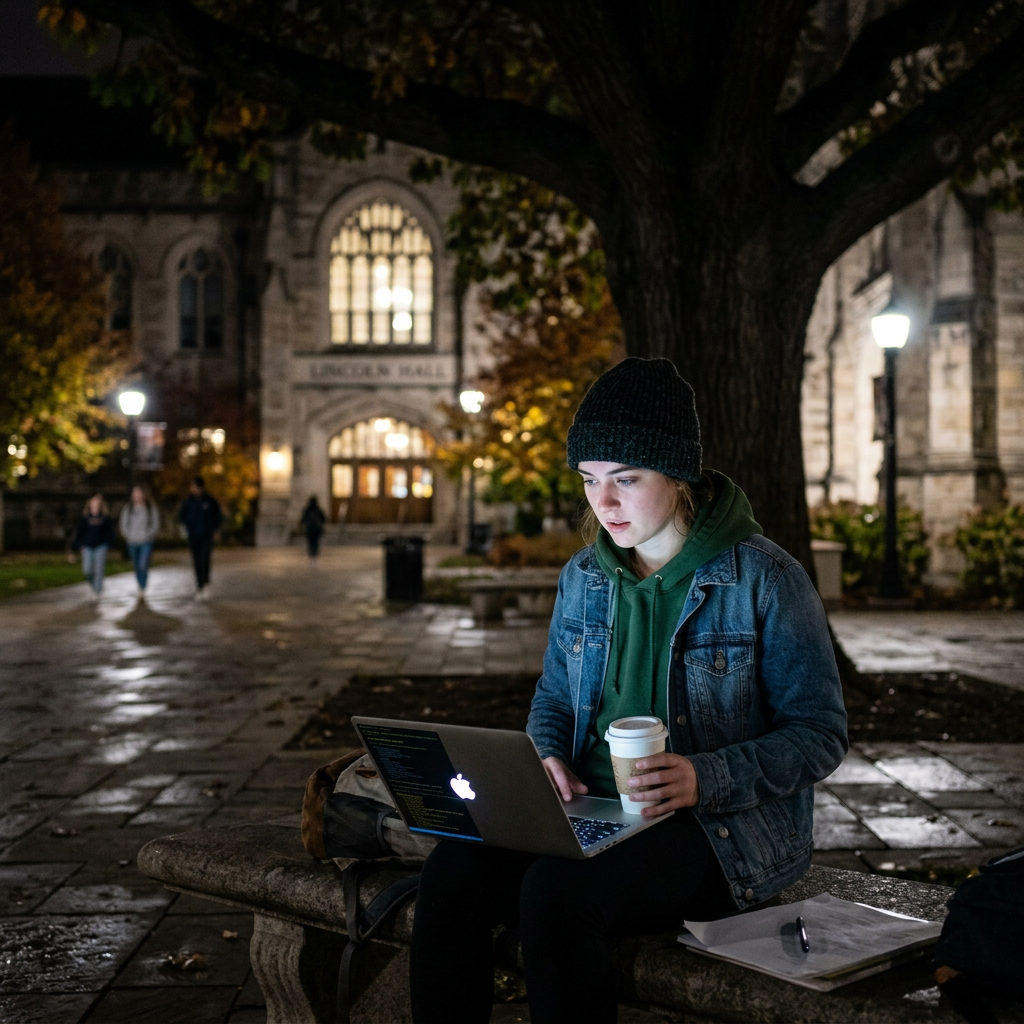
The Myth of “Everyone Has a Laptop Now”
Colleges assume every student has:
- a personal laptop
- high‑speed Wi‑Fi
- a quiet place to study
- reliable electricity
- unlimited data
- modern software
But millions of students — especially poor, rural, disabled, and first‑generation students — do not.
The digital divide isn’t a relic of the past.
It’s one of the most active forms of educational gatekeeping today.
No Laptop, No Access
Many students begin college with:
- outdated laptops that crash
- shared family computers
- borrowed devices
- phones as their only technology
- no device at all
Without a laptop, students cannot:
- submit assignments
- access course portals
- participate in online discussions
- attend remote classes
- complete research
- run required software
- take online exams
The entire structure of modern education assumes device ownership.
Wi‑Fi Deserts
Reliable internet is not universal.
Students face:
- rural areas with no broadband
- unstable apartment Wi‑Fi
- data caps
- slow speeds that make Zoom impossible
- campus Wi‑Fi that doesn’t reach dorms
- outages during peak hours
Students without stable internet cannot:
- attend remote lectures
- upload assignments
- download readings
- access library databases
- communicate with professors
The digital divide becomes an academic divide.
No Quiet Study Spaces
Many students live in:
- crowded homes
- shared bedrooms
- noisy apartments
- unstable housing
- cars
- shelters
They have:
- no desk
- no quiet room
- no privacy
- no consistent study environment
Quiet space is treated as a “personal responsibility,” but it is a resource — one many students do not have.
The Hidden Costs
Even when students have devices, they face:
- expensive software licenses
- paid online textbooks
- proctoring fees
- webcam requirements
- storage limitations
- repair costs
- replacement costs
Digital access is not a one-time purchase.
It’s an ongoing financial burden.
Campus Computer Labs Are Not Enough
Computer labs often have:
- limited hours
- long lines
- outdated machines
- inaccessible locations
- no privacy
- no specialized software
- no evening or weekend access
Students working jobs or caring for family cannot rely on labs.
Disabled Students Face Additional Barriers
Disabled students often need:
- screen readers
- captioning
- voice‑to‑text software
- ergonomic equipment
- accessible interfaces
- quiet sensory‑friendly spaces
Many campuses fail to provide these — or provide them late, inconsistently, or only after extensive documentation.
Digital access becomes disability access.
The Academic Consequences
Students without digital access experience:
- lower grades
- missed deadlines
- inability to participate
- reduced engagement
- higher stress
- increased dropout risk
Professors often interpret these struggles as laziness or irresponsibility — not structural exclusion.
Who Gets Hurt
The digital divide disproportionately harms:
- poor students
- rural students
- disabled students
- first‑generation students
- students of color
- student parents
- students experiencing homelessness
- students without family support
The students with the least resources face the highest digital barriers.
Why Institutions Ignore This
Fixing the digital divide would require:
- providing laptops
- expanding Wi‑Fi infrastructure
- creating accessible study spaces
- offering software licenses
- redesigning courses
- acknowledging inequality
Instead, institutions:
- assume access
- blame students
- push responsibility onto individuals
- treat digital access as a personal problem
It’s cheaper to ignore the divide than to close it.
The Result
The digital divide:
- blocks access
- punishes poverty
- reinforces inequality
- undermines academic success
- increases dropout rates
- turns technology into a gatekeeping tool
Students aren’t struggling because they’re unmotivated.
They’re struggling because the system requires resources they were never given.
The digital divide isn’t about technology.
It’s about equity — and who gets to learn at all.
We Believe You
Visit the Series Archive for more.

Apple Music
YouTube Music
Amazon Music
Spotify Music
Structural Violence in Higher Education
- COLLEGE HOUSING: ACCESSIBILITY & AFFORDABILITY – How Dorms Became Profit Centers Instead of Support Systems
- TUITION VS INCOME & COST OF LIVING – Why College Became Financially Inaccessible for Most Families
- THE DIGITAL DIVIDE – How Students Without Laptops, Wi‑Fi, or Quiet Spaces Are Shut Out Before Learning Even Begins
- TRANSCRIPTS HELD HOSTAGE – How Institutions Block Mobility, Employment, and Graduation Until Students Pay Up
- GRADUATION FEES – How Students Are Charged One Last Time Before They Leave
- TRANSPORTATION DESERTS – How Rural Students Are Physically Cut Off From Higher Education
- FOOD INSECURITY AMONG COLLEGE STUDENTS
- LICENSURE EXAM COSTS – How Professional Gatekeeping Becomes Another Financial Barrier
- DISABILITY ACCESS FAILURES – How Accommodations Become Barriers Instead of Support
- Infrastructural Coercion: How Resource‑Gated Power Creates Captivity
- REMEDIAL CLASSES AS A HIDDEN TUITION SINK – How “Catch-Up” Courses Drain Students Before They Even Begin
- FREE TUITION COUNTRIES & SOCIAL EFFECTS – What Happens When Education Is a Public Good Instead of a Debt Trap
- CATCH‑22s IN HIGHER EDUCATION – How Requirements Trap the Students With the Least Resources
- PREDATION WITHIN THE ACADEMY – How Power, Gatekeeping, and Exploitation Shape the Academic Experience
- UNPAID INTERNSHIPS – How Free Labor Became the New Entry-Level Job
- BOOK COSTS THEN VS NOW – How Textbooks Became a Captive-Market Cash Extraction System
- TUITION CHANGE OVER TIME – How College Went From Public Good to Revenue Stream
- BARRIERS TO ACCESS – How Structural Obstacles Keep Students Out Before They Ever Reach the Classroom
- THE FAFSA MAZE – How Bureaucracy Blocks Poor and First‑Gen Students Before They Even Begin
- Good Citizen v. Bad Student: Why Academia Keeps Talking to Itself, and a Guide to Bring It Off the Shelf
- Why I Left Academia, and Why I Write
- THE MENTAL HEALTH CRISIS – How Understaffed Counseling Centers, Long Waitlists, and Punitive Policies Push Students Past Their Limits
- WAR ON STUDENT SUCCESS SERVICES – How Upward Bound, McNair, and DEI Became Targets — And Why Students Pay the Price
- THE ADJUNCT CRISIS – How Students Pay Premium Tuition While Their Instructors Earn Poverty Wages
- THE MYTH OF SCHOLARSHIPS AS A FIX – Why “Just Apply for Scholarships” Is Not a Real Solution — And How the Numbers Prove It
- LOAN FORGIVENESS & DANGLED CARROTS – How “Relief” Programs Keep Borrowers in Perpetual Limbo
- DEGREE REQUIREMENTS & DEGREE CREEP – How the Goalposts Keep Moving While the Pay Stays the Same
- THE MYTH OF “COLLEGE IS THE ONLY PATH” – How a Narrow Narrative Pushes Students Into Debt Instead of Toward Real Opportunity
- THE “PROFESSIONAL ATTIRE” TAX – How Required Clothing for Internships, Teaching, Nursing, and Fieldwork Becomes Another Hidden Cost
- THE DIGITAL DIVIDE – How Students Without Laptops, Wi‑Fi, or Quiet Spaces Are Shut Out Before Learning Even Begins

Leave a Reply