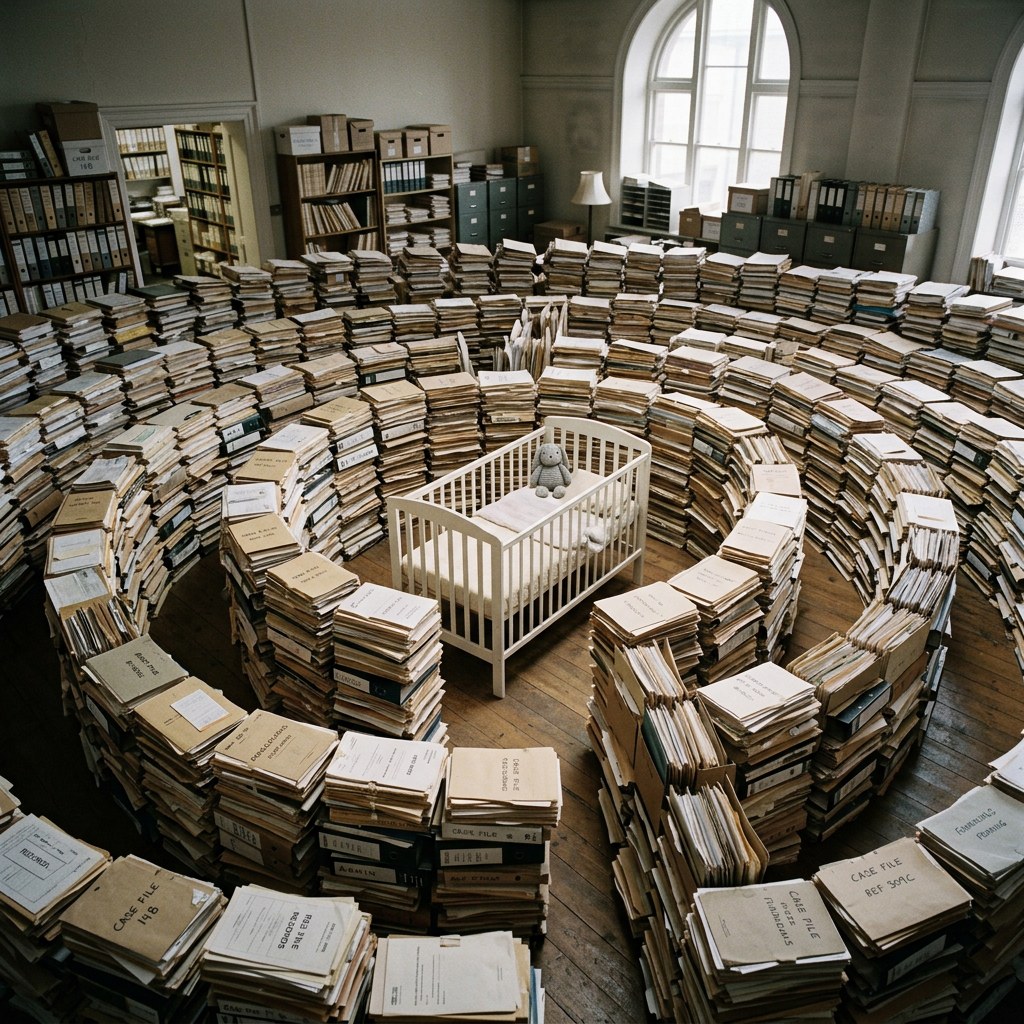

(When the state removes every support except the people who hurt you)
People talk about “family support” as if it’s a natural, neutral resource.
But for millions of parents — especially single parents, trans parents, and low‑income parents — family is not a safe fallback.
And yet policy is designed to make unsafe family members the only fallback.
This post maps the machinery:
Coercive family dependence isn’t cultural. It’s manufactured by policy choices that remove every alternative.
🧩 Mechanism 1: Childcare Costs More Than Rent
When infant care costs:
- $1,542–$1,748/month in Colorado
- 43.4% of a single parent’s income
- More than rent in many counties
Parents cannot afford formal care.
So they turn to:
- Parents who abused them
- Siblings who resent them
- Ex‑partners who control them
- Neighbors with no training
- Teenagers who should be sleeping
This isn’t a “choice.”
It’s economic coercion.
🧩 Mechanism 2: Waitlists Stretch Into Years
When waitlists jump from:
- 3,000 to 30,000 children
- With projections of no new assistance until 2027
Parents are forced into unsafe care because:
- They must work
- They must pay rent
- They must avoid homelessness
- They must maintain benefits
- They must attend court
- They must survive
The state requires labor participation while removing the childcare that makes labor possible.
This is forced dependence.
🧩 Mechanism 3: Subsidies Are Designed to Exclude
Subsidies often require:
- Proof of employment
- Proof of stable housing
- Proof of consistent hours
- Proof of income
- Proof of documentation
- Proof of residency
But parents need childcare to get those things.
This creates a loop:
- You need childcare to work
- You need work to qualify for childcare
- You need childcare to maintain work
- You lose childcare
- You lose work
- You lose housing
- You lose benefits
- You return to unsafe family
The system collapses at Step 1.
🧩 Mechanism 4: Housing Policy Forces Family Dependence
Housing programs often require:
- Proof of income
- Proof of employment
- Proof of childcare
- Proof of stability
But without childcare, you cannot:
- Work
- Attend appointments
- Maintain income
- Maintain stability
So parents move in with:
- Abusive partners
- Abusive parents
- Abusive siblings
Not because they want to —
but because policy makes unsafe family the only available housing option.
🧩 Mechanism 5: The Legal System Assumes Family = Safety
Courts routinely:
- Encourage “family support”
- Recommend relatives for childcare
- Prioritize kinship placements
- Penalize parents who lack family involvement
- Assume grandparents are safe by default
But for many survivors:
- Family is the source of trauma
- Family is the source of control
- Family is the source of coercion
- Family is the source of instability
Policy treats “family” as a universal good.
Survivors know better.
🧩 Mechanism 6: The State Offloads Responsibility Onto Families
Instead of building childcare infrastructure, the state:
- Cuts subsidies
- Cuts funding
- Cuts reimbursement rates
- Cuts staffing support
- Cuts licensing support
- Cuts early childhood programs
And then says:
- “Families should help.”
- “Communities should step up.”
- “Parents should rely on their support network.”
This is not support.
This is outsourcing.
And it forces parents back into the arms of the people who harmed them.
🧨 The Result: Coercive Dependence
When you combine:
- Unaffordable childcare
- Unavailable childcare
- Unsafe childcare
- Unstable subsidies
- Unreachable waitlists
- Unlivable wages
- Unaffordable housing
- Unforgiving courts
You get a system where:
The only “support” left is the family that hurt you — and the state calls that a solution.
This is not cultural.
This is not personal.
This is policy‑engineered captivity.
📌 Closing Line for the Post
Coercive family dependence isn’t a failure of parents. It’s the predictable outcome of a system that removes every safe alternative and calls the unsafe one “support.”
We Believe You


Apple Music
YouTube Music
Amazon Music
Spotify Music


Explore Mini-Topics
Leave a Reply