Harm, Impact, and Lived Reality of the Gap
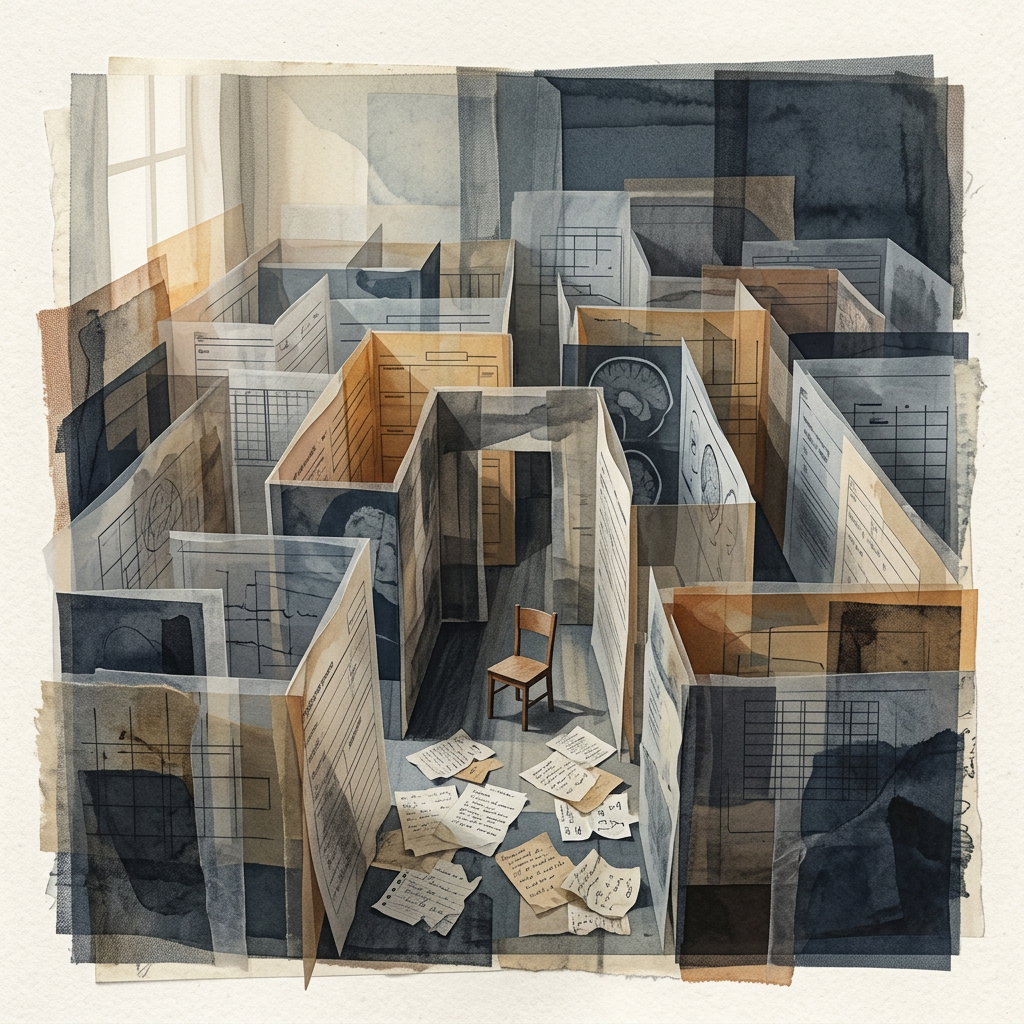
The Survivor Literacy series documents the lived reality of the gap from inside the child’s body. Each piece traces how misread behaviors, punished divergence, and adult‑centric narratives become lifelong wounds carried into adulthood. These posts map the emotional, sensory, and relational impact of growing up misinterpreted, showing how survival strategies become identity and how the gap becomes an internal landscape the survivor must later reconstruct and reclaim.
- What the Gap Feels Like Inside a Child’s Body
- When Your Symptoms Are Someone Else’s Story
- The Violence of Being Misread
- The Harm of Forced Attention
- Living Inside the Archetypes
- The Child’s Regulated Baseline
- Therapy as Narrative Capture
- The Adult Survivor’s Reconstruction
- Fractal Minds: The Lived Version
- The Cost of Being the “Problem Child”
- The Cost of Being the Invisible Child
- Reclaiming Divergence
Find EVERYTHING in the Series Archive.
The Structural Violence of the Gap
Relational Anthropology Sibling Series
The Relational Anthropology sibling series maps the structural violence that produces the gap. Each piece examines the systems, research pipelines, diagnostic frameworks, cultural norms, and adult‑centric interpretations that distort child reality. These posts trace how institutions generate misreadings, how narratives become codified, and how divergence is pathologized at scale. Together, they form the structural counterpart to the lived experiences documented in Survivor Literacy.
- Defining the Gap
- Epistemic Violence in ADHD Research
- The Neurodevelopmental Purity Myth
- Misreading Survival as Disorder
- Capitalism and the Coercion of Attention
- The Adult‑Centric Diagnostic Pipeline
- Trauma‑Informed ADHD: What the Field Missed
- Family Systems as Diagnostic Environments
- The Structural Production of “Problem Children”
- Fractal Minds in Linear Worlds
- Repairing the Gap
- The Cosmology of Divergence
Find EVERYTHING in the Relational Anthropology Series Archive.

Problem Child: Coping Mechanism as Family Diagnostic reframes childhood “misbehavior” as a precise readout of the relational field. Instead of pathologizing children, this book reveals how tantrums, defiance, clinginess, lying, aggression, withdrawal, and overwhelm function as diagnostic signals of systemic stress, unmet needs, and unresolved rupture within the family ecosystem. Drawing from nervous‑system science, attachment theory, and field‑based relational models, the book shows parents how to interpret behavior as communication, stabilize the environment, and repair patterns inherited across generations. Problem Child offers a compassionate, practical, and deeply clarifying framework for understanding children not as problems to fix, but as truth‑tellers revealing where the system needs support.


