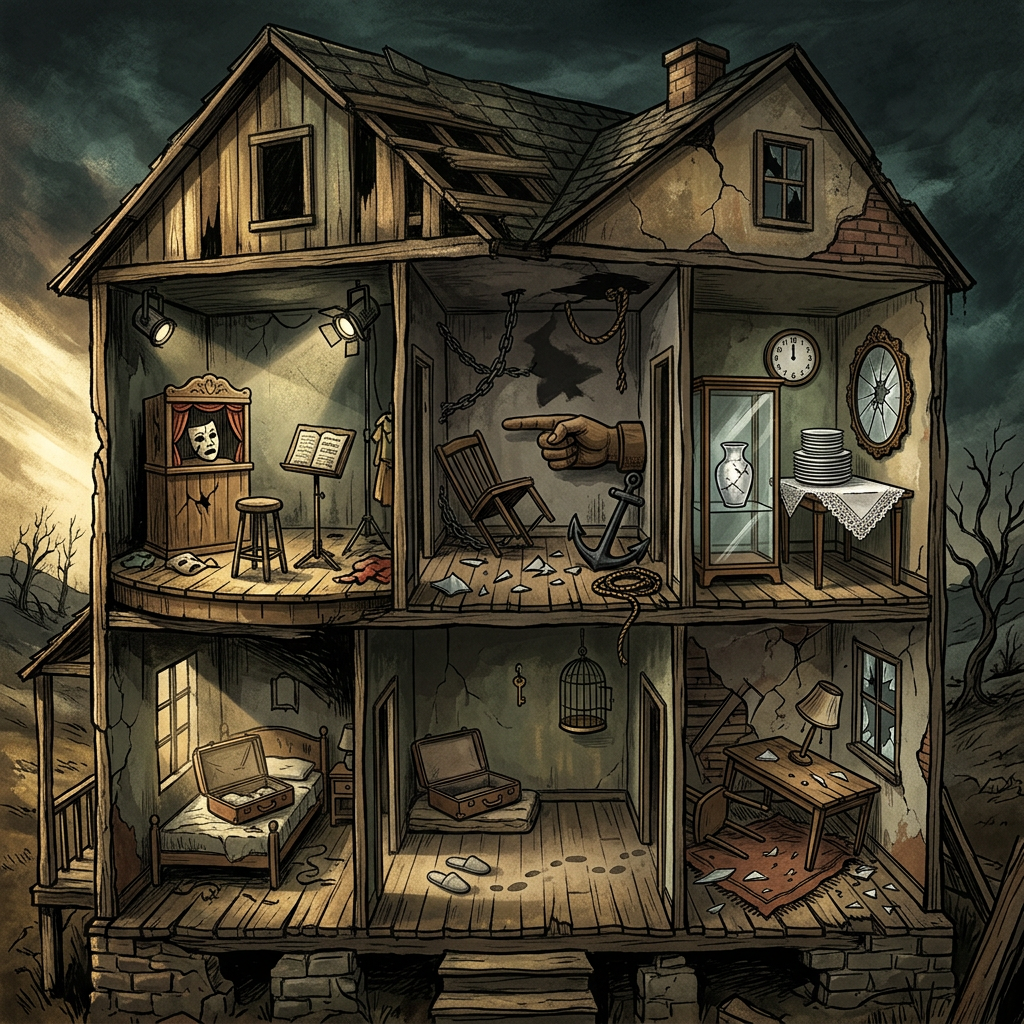
Family roles are not personality traits. They are survival positions shaped by the emotional climate of the home. Inside a child’s body, each archetype becomes a way of navigating adult dysregulation, relational instability, and the constant threat of being misread. The role becomes the child’s reality, and the gap becomes the distance between who they are and who the system requires them to be.
The problem child survives through intensity, honesty, or refusal. Inside the body, this role feels like bracing — a constant readiness for impact. The child learns that their truth is dangerous, their needs inconvenient, and their distress punishable. Survival becomes resistance, and resistance becomes the story adults tell about them.
The clown survives through performance. They diffuse tension with humor, exaggeration, or movement. Inside the body, this role feels like urgency — a need to keep the emotional temperature from rising. Fear hides behind laughter. Overwhelm hides behind jokes. Survival becomes entertainment, and entertainment becomes invisibility.
The scapegoat survives by absorbing blame. They become the vessel for adult frustration, shame, and conflict. Inside the body, this role feels like contamination — the sense that everything is your fault even when nothing is. Survival becomes self-blame, and self-blame becomes identity.
The invisible child survives by disappearance. They withdraw into internal worlds, minimize needs, and avoid drawing attention. Inside the body, this role feels like emptiness — a quiet dissociation that protects against overwhelm. Survival becomes absence, and absence becomes erasure.
The golden child survives through perfection. They maintain adult stability through achievement, compliance, or emotional caretaking. Inside the body, this role feels like pressure — a constant demand to perform goodness, competence, or emotional neutrality. Survival becomes excellence, and excellence becomes imprisonment.
Each role shapes survival differently. The problem child learns to fight. The clown learns to distract. The scapegoat learns to absorb. The invisible child learns to disappear. The golden child learns to perform. These are intelligent adaptations to relational instability — but they become lifelong patterns when the system never recognizes the harm.
According to Problem Child, every behavior a child exhibits under stress is diagnostic of the power structures they are navigating. Inside the archetypes, these behaviors are not symptoms — they are survival maps. They reveal how the child adapted to adult dysregulation, how the system shaped their identity, and how the gap became part of their lived reality.
This post is part of the Survivor Literacy series on the harm, impact, and lived reality of the gap. Its sister series in Relational Anthropology explores the structural and systemic dynamics that produce these embodied experiences.
Find EVERYTHING in the Series Archive.
Both series available here.
Leave a Reply