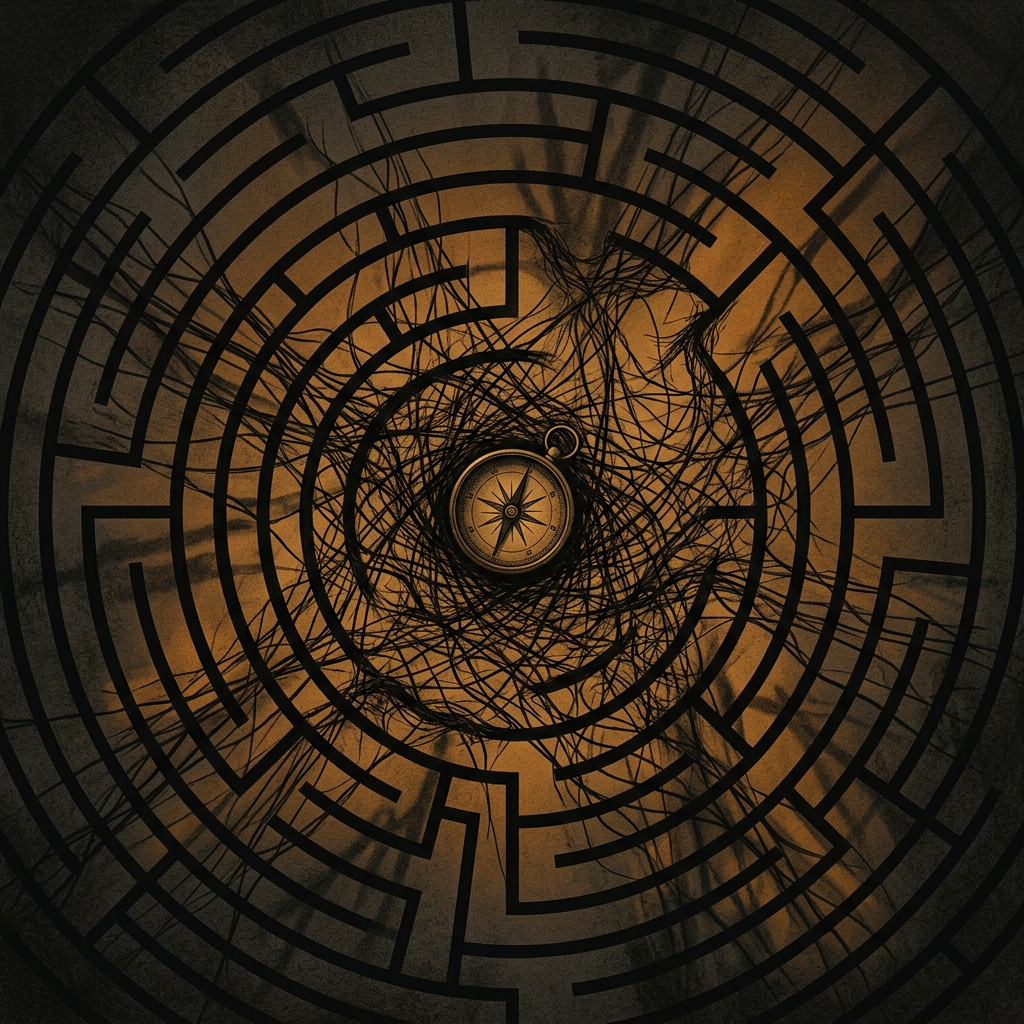
There is a particular kind of harm that happens when your symptoms stop belonging to you and start belonging to someone else’s story. It doesn’t feel like misunderstanding. It feels like distortion from the inside out. The gap becomes an internal wound: the distance between what you know is true in your body and what the adults around you insist is true about you. Over time, that distance reshapes identity, erodes trust in perception, and makes it harder to recognize your own signals.
Identity distortion begins when the adult narrative becomes the official version of who you are. If adults say you’re dramatic, you learn to doubt your intensity. If they say you’re inattentive, you learn to doubt your presence. If they say you’re manipulative, you learn to doubt your needs. The child’s sense of self bends around the adult’s interpretation. You stop asking, “What am I feeling?” and start asking, “What version of me will they believe?” Identity becomes a performance designed to avoid punishment or disbelief.
Internalized misdiagnosis is the next layer. When adults misread dissociation as daydreaming, hypervigilance as hyperactivity, or emotional overwhelm as manipulation, those misreadings become part of your internal narrative. You learn to call your shutdowns “spacing out.” You learn to call your vigilance “restlessness.” You learn to call your distress “overreacting.” The misdiagnosis becomes a lens you use on yourself. You stop recognizing your own survival strategies as intelligent responses to harm. You start believing they are evidence of defect.
Losing trust in your own perception is the deepest impact. When your reality is repeatedly overwritten, your nervous system learns that your internal signals cannot be trusted. You hesitate before naming what you feel. You second‑guess your memories. You doubt your instincts. You assume you are wrong even when your body is screaming that something is off. This loss of trust is not a cognitive issue. It is a trauma imprint. It is the residue of years spent being told that your truth is unreliable, inconvenient, or incorrect.
According to Problem Child, every behavior a child exhibits under stress is diagnostic of the power structures they are navigating. But when those behaviors are interpreted through adult discomfort rather than child reality, the diagnostic value collapses. The child learns that their signals do not matter, and the adult’s story becomes the only story allowed to exist. The gap becomes internalized, carried forward into adulthood as confusion, self‑doubt, and a fractured relationship with one’s own perception.
This post is part of the Survivor Literacy series on the harm, impact, and lived reality of the gap. Its sister series in Relational Anthropology explores the structural and systemic dynamics that produce these embodied experiences.
Find EVERYTHING in the Series Archive.
Both series available here.
Leave a Reply