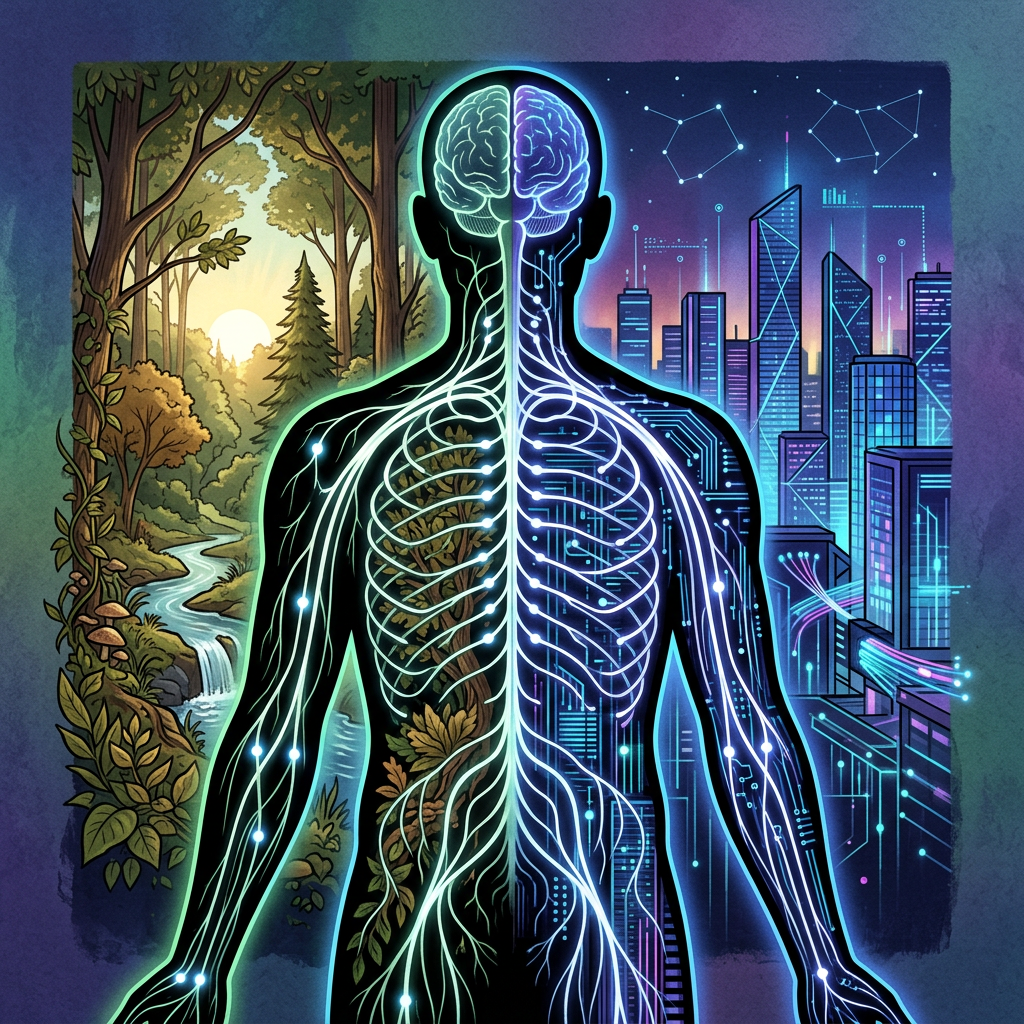
Two different “SADs” share the same biological crossroads:
• SAD = Seasonal Affective Disorder
• SAD = Standard American Diet
They look unrelated, but they converge on the same systems:
• Circadian rhythm
• Serotonin and dopamine
• Blood sugar and insulin
• Inflammation
• Cravings and behavior
SEASONAL SAD: LIGHT-DRIVEN WINTER MODE
Low natural light pushes the body toward:
• Lower serotonin
• Lower dopamine
• Higher daytime melatonin
• Higher inflammation
• Higher carb cravings
Felt as:
• Low mood
• Low drive
• Oversleeping or never feeling rested
DIETARY SAD: FOOD-DRIVEN WINTER MODE
The Standard American Diet (high sugar, high seed oils, low protein) causes:
• Blood sugar spikes and crashes
• Chronic inflammation
• Dopamine overstimulation → downregulation
• Serotonin instability (low tryptophan)
• Circadian disruption from late eating
Felt as:
• Brain fog
• Energy rollercoaster
• Cravings instead of hunger
THE INTERSECTION: SAME PATHWAYS, DIFFERENT DOORS
Both SADs:
• Lower serotonin
• Lower dopamine
• Increase inflammation
• Disrupt circadian rhythm
• Increase carb seeking
Seasonal SAD = winter mode from light.
Dietary SAD = winter mode from food.
Together they create “permanent November.”
THE HUMAN BIOLOGY MISMATCH
Biology expects:
• Bright morning light
• Darkness at night
• High protein, high micronutrients
• Occasional carbs, not constant sugar
Modern life delivers:
• Dim indoor light all day
• Bright screens at night
• Constant ultra-processed carbs
• Low protein, low omega-3, low fiber
Result:
• A nervous system stuck in artificial winter.
THE TAKEAWAY
The two SADs reinforce each other.
They tell your brain:
“You are in scarcity. Seek sugar. Power down.”
Changing the inputs changes the story.
We Believe You


Apple Music
YouTube Music
Amazon Music
Spotify Music


Explore Mini-Topics
Leave a Reply