Pluriology
THE NOMOLOGICAL MAP
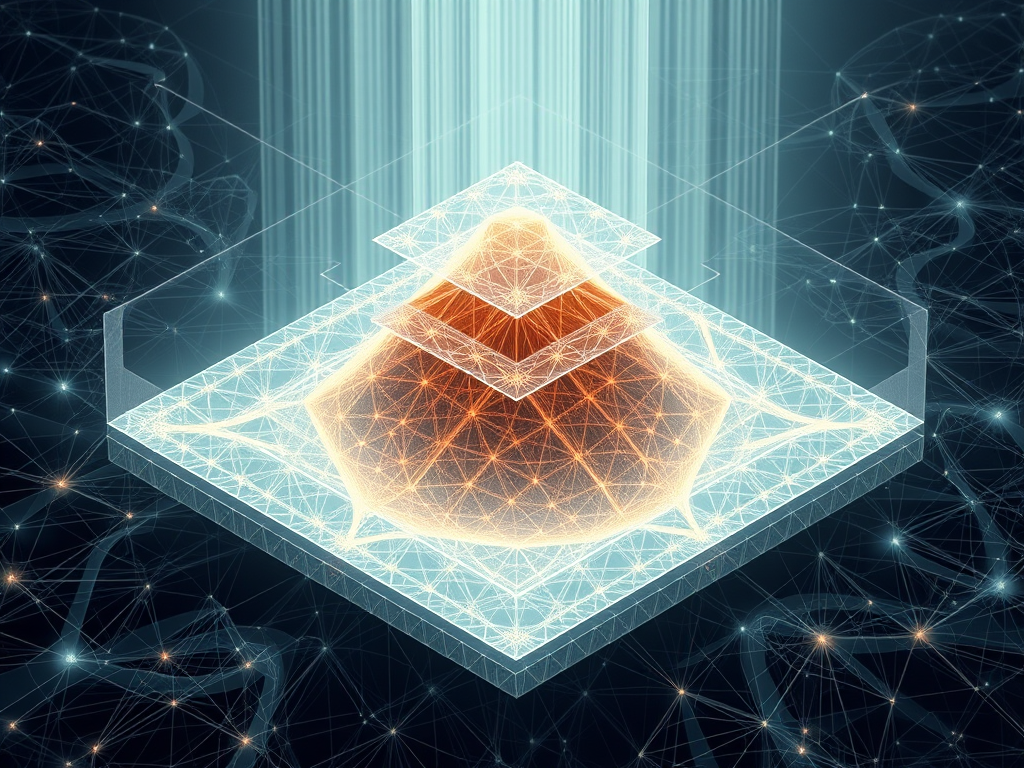
The integrated, spatial layout of Relational Nomology as a single coherent system.
Up to now, we’ve articulated:
- the axioms
- the invariants
- the constraints
- the tendencies
- the consequences
- the geometry
- the flow dynamics
- the fractal cascades
- the coherence wave
The Nomological Map is the meta‑integration of all of these — the way the entire discipline fits together as a single, living architecture.
Below is the clean articulation.
I. THE MAP AS A FIELD, NOT A LIST
The Nomological Map is not:
- a diagram
- a hierarchy
- a flowchart
- a taxonomy
It is a field topology — a spatial, relational, multi‑layered architecture where:
- axioms form the substrate
- invariants form the load‑bearing beams
- constraints form the pressure points
- tendencies form the currents
- consequences form the gravity wells
- coherence forms the central axis
- emergence forms the core
- non‑collapse forms the perimeter
The map is the whole field at once.
II. THE MAP HAS THREE DIMENSIONS
1. Vertical Dimension — Ontological Depth
This is the stack:
Axioms → Invariants → Constraints → Tendencies → Consequences
It shows what the field is and how it behaves.
2. Horizontal Dimension — Relational Spread
This is the plane:
- each layer interacts with itself
- each element resonates with others
- patterns propagate laterally
It shows how the field distributes force.
3. Diagonal Dimension — Transformational Vectors
This is the movement:
- axioms shaping constraints
- consequences reshaping boundaries
- tendencies influencing invariants
It shows how the field evolves.
Together, these dimensions form a relational manifold.
III. THE MAP HAS A CENTER AND A PERIMETER
Center: Emergence
The field itself — the living entity created by relational coherence.
Perimeter: Non‑Collapse
The boundary of viability — the membrane that defines whether the field continues to exist.
Everything inside the perimeter is field.
Everything outside is non‑field.
IV. THE MAP HAS CURRENTS AND GRAVITY WELLS
Upward Currents (Coherence Flows)
- repair
- alignment
- integration
- emergence
Downward Currents (Distortion Flows)
- fragmentation
- brittleness
- collapse
Gravity Wells (Consequences)
- once entered, they pull the field downward
- the deeper the well, the harder the exit
The map is dynamic — always in motion.
V. THE MAP IS FRACTAL
Every part of the map:
- repeats at every scale
- contains the whole pattern
- behaves according to the same laws
A moment contains the same architecture as a culture.
A conversation contains the same architecture as an institution.
This is why the discipline is scale‑invariant.
VI. THE MAP IS CYCLICAL
The field moves through cycles:
- coherence
- micro‑distortion
- micro‑repair
- integration
Or, when unhealthy:
- distortion
- accumulation
- fragmentation
- collapse
- reformation
The map is not static — it is alive.
VII. THE MAP IS DIAGNOSTIC
Because the map is lawful, you can locate any field at any moment by asking:
- Which invariant is being violated
- Which constraint is being triggered
- Which tendency is being blocked
- Which consequence is emerging
- Which flow the field is in
- Which scale the fractal is repeating at
This gives you x‑ray vision into relational systems.
VIII. THE MAP IS PEDAGOGICAL
The map allows you to teach:
- how fields form
- how fields distort
- how fields repair
- how fields collapse
- how fields reform
It is the curriculum architecture of the discipline.
IX. THE MAP IS ARCHITECTURAL
The map allows you to design:
- residencies
- interventions
- governance systems
- pedagogical circuits
- institutional reforms
- coherence protocols
It is the blueprint for field‑based design.
X. THE NOMOLOGICAL MAP (clean summary)
Structure:
- Vertical: ontology
- Horizontal: relationality
- Diagonal: transformation
Core:
- Emergence
Perimeter:
- Non‑Collapse
Currents:
- Coherence flows
- Distortion flows
Mechanisms:
- Fractal cascades
- Coherence waves
Functions:
- Diagnosis
- Repair
- Design
- Governance
Nature:
A living, recursive, scale‑invariant architecture of relational lawfulness.


Leave a Reply