money
-
THE MENTAL HEALTH CRISIS – How Understaffed Counseling Centers, Long Waitlists, and Punitive Policies Push Students Past Their Limits

Understaffed Counseling Centers Campus counseling centers are chronically understaffed — often with: Many campuses operate at ratios of 1 counselor per 2,000–5,000 students.That isn’t care.It’s triage. Students in crisis are told:“We can get you in next month.” Long Waitlists That Make Help Functionally Unavailable Even when students reach out, they face: A waitlist is not… Continue reading
Attunement, Boundary Mechanics, Conformity and Control, Core Mechanisms, Framework Design, Group Behavior, Health and Healing, Heuristic Regression, Meta‑Frameworks & Tools, Misattunement & Rupture, Panthenogenesis of Power, Power & Control, Relate/Disrelate, Relational Anthropology, Relational Dynamics, Relational Field Basics, Repair Pathways, Revictimization, Social Dynamics, Social Issues, Survivor Literacy, theory, Transactionality, Wealthcareanthropology, bear, carry, conformity, control, episkevology, hostage, instagram, iykyk, linguistics, money, patriotism, Pluriology, politics, power, psychology, relational anthropology, Relational Field Theory, RFT, social science, socials, sociology, survivor literacy, survivors, theory, trafficking -
If You Want to Know Who the Predators Around You Are, Note Who Punishes You For Being A Safe Adult

Choosing to be a safe adult in an unsafe‑adult culture is not neutral.It is treated as a threat, a disruption, and a refusal to participate in the emotional economy that keeps harmful systems intact.The punishment you experience is diagnostic. 1. Safe adulthood breaks the emotional outsourcing contract. Unsafe adults rely on others to regulate them,… Continue reading
Conformity and Control, cult of the ego, food addiction, grooming, human trafficking, Panthenogenesis of Power, Relational Anthropology, Revictimization, Social Issues, Survivor Literacy, Wealthcareanthropology, bear, carry, conformity, control, episkevology, hostage, instagram, iykyk, linguistics, money, patriotism, Pluriology, politics, power, psychology, relational anthropology, Relational Field Theory, RFT, social science, socials, sociology, survivor literacy, survivors, theory, trafficking -
Survivor’s Playbook – The Cost of Carrying the Truth

We Believe You The Cost of Carrying the Truth Some people grow up seeing the pattern long before anyone else can name it. They notice the contradictions.They feel the emotional shifts.They understand the dynamics intuitively.They speak the truth. And for that, they are punished. They are labeled: Not because they are wrong.But because their clarity… Continue reading
Conformity and Control, cult of the ego, food addiction, grooming, human trafficking, Panthenogenesis of Power, Relational Anthropology, Revictimization, Social Issues, Survivor Literacy, Wealthcareanthropology, bear, carry, conformity, control, episkevology, hostage, instagram, iykyk, linguistics, money, patriotism, Pluriology, politics, power, psychology, relational anthropology, Relational Field Theory, RFT, social science, socials, sociology, survivor literacy, survivors, theory, trafficking -
WAR ON STUDENT SUCCESS SERVICES – How Upward Bound, McNair, and DEI Became Targets — And Why Students Pay the Price

What These Programs Actually Do Upward Bound, McNair, TRIO, and DEI initiatives are not “extras.”They are structural supports designed to counteract structural barriers. They provide: These programs increase retention, graduation, and upward mobility — especially for students who were never meant to survive the system without help. Which is exactly why they’re under attack. Why… Continue reading
Attunement, Boundary Mechanics, Conformity and Control, Core Mechanisms, Framework Design, Group Behavior, Health and Healing, Heuristic Regression, Meta‑Frameworks & Tools, Misattunement & Rupture, Panthenogenesis of Power, Power & Control, Relate/Disrelate, Relational Anthropology, Relational Dynamics, Relational Field Basics, Repair Pathways, Revictimization, Social Dynamics, Social Issues, Survivor Literacy, theory, Transactionality, Wealthcareanthropology, bear, carry, conformity, control, episkevology, hostage, instagram, iykyk, linguistics, money, patriotism, Pluriology, politics, power, psychology, relational anthropology, Relational Field Theory, RFT, social science, socials, sociology, survivor literacy, survivors, theory, trafficking -
HOW UNSAFE-ADULT CONDITIONING SERVES CAPITALISM AND THE HOSTAGE-PLEDGE SYSTEM

1. It produces workers who self-regulate for the system. Children who grew up managing adult instability become adults who manage workplace instability.They absorb chaos instead of challenging it.They regulate themselves instead of demanding regulated environments. 2. It normalizes conditional safety — the core logic of the Hostage-Pledge system. Unsafe adults teach: “You’re safe if you… Continue reading
Conformity and Control, cult of the ego, food addiction, grooming, human trafficking, Panthenogenesis of Power, Relational Anthropology, Revictimization, Social Issues, Survivor Literacy, Wealthcareanthropology, bear, carry, conformity, control, episkevology, hostage, instagram, iykyk, linguistics, money, patriotism, Pluriology, politics, power, psychology, relational anthropology, Relational Field Theory, RFT, social science, socials, sociology, survivor literacy, survivors, theory, trafficking -
Survivor’s Playbook – The Gaslighting of the Regulated Adult

We Believe You The Gaslighting of the Regulated Adult Core Premise In destabilized relational systems, the person who is the most regulated, perceptive, and boundary‑literate often becomes the one who gets gaslit — not by the unstable individual alone, but by the entire system surrounding them. This gaslighting is not personal.It is structural. It emerges… Continue reading
Conformity and Control, cult of the ego, food addiction, grooming, human trafficking, Panthenogenesis of Power, Relational Anthropology, Revictimization, Social Issues, Survivor Literacy, Wealthcareanthropology, bear, carry, conformity, control, episkevology, hostage, instagram, iykyk, linguistics, money, patriotism, Pluriology, politics, power, psychology, relational anthropology, Relational Field Theory, RFT, social science, socials, sociology, survivor literacy, survivors, theory, trafficking -
THE ADJUNCT CRISIS – How Students Pay Premium Tuition While Their Instructors Earn Poverty Wages

The Two-Tiered System Higher education runs on a two-tiered labor structure: Adjuncts teach the majority of college classes in the United States — yet earn less than fast‑food workers, with no benefits, no job security, and no path to stability. Students pay premium tuition.Adjuncts get scraps. Poverty Wages for Professional Work Adjuncts typically earn: Many… Continue reading
Attunement, Boundary Mechanics, Conformity and Control, Core Mechanisms, Framework Design, Group Behavior, Health and Healing, Heuristic Regression, Meta‑Frameworks & Tools, Misattunement & Rupture, Panthenogenesis of Power, Power & Control, Relate/Disrelate, Relational Anthropology, Relational Dynamics, Relational Field Basics, Repair Pathways, Revictimization, Social Dynamics, Social Issues, Survivor Literacy, theory, Transactionality, Wealthcareanthropology, bear, carry, conformity, control, episkevology, hostage, instagram, iykyk, linguistics, money, patriotism, Pluriology, politics, power, psychology, relational anthropology, Relational Field Theory, RFT, social science, socials, sociology, survivor literacy, survivors, theory, trafficking -
The Nervous System Conditioning of Unsafe Adults

Growing up around unsafe adults installs a predictable operating system in a child’s body.This OS becomes the adult’s default way of relating to themselves, others, and systems of power. 1. Unsafe adults teach children to suppress their needs. Children learn that their needs are inconvenient, excessive, or dangerous to express.They adapt by shrinking, masking, or… Continue reading
Conformity and Control, cult of the ego, food addiction, grooming, human trafficking, Panthenogenesis of Power, Relational Anthropology, Revictimization, Social Issues, Survivor Literacy, Wealthcareanthropology, bear, carry, conformity, control, episkevology, hostage, instagram, iykyk, linguistics, money, patriotism, Pluriology, politics, power, psychology, relational anthropology, Relational Field Theory, RFT, social science, socials, sociology, survivor literacy, survivors, theory, trafficking -
What I’m So Tired of Carrying

We Believe You What I’m So Tired of Carrying The Structural Trap Survivors Navigate Across Every Dimension of Their Lives There is a trap that shows up everywhere survivors go — in families, friendships, workplaces, institutions, and even in the very systems meant to help.It has many faces, but one architecture: When no one else… Continue reading
Conformity and Control, cult of the ego, food addiction, grooming, human trafficking, Panthenogenesis of Power, Relational Anthropology, Revictimization, Social Issues, Survivor Literacy, Wealthcareanthropology, bear, carry, conformity, control, episkevology, hostage, instagram, iykyk, linguistics, money, patriotism, Pluriology, politics, power, psychology, relational anthropology, Relational Field Theory, RFT, social science, socials, sociology, survivor literacy, survivors, theory, trafficking -
Survivor’s Playbook – The Cult of the Ego: How Systems Reward the Most Dysregulated Person

We Believe You The Cult of the Ego: How Systems Reward the Most Dysregulated Person Core Premise In destabilized relational systems — families, institutions, care teams, classrooms, workplaces — the person who is the most dysregulated often becomes the one who sets the emotional terms for everyone else. Not because they are wise.Not because they… Continue reading
Conformity and Control, cult of the ego, food addiction, grooming, human trafficking, Panthenogenesis of Power, Relational Anthropology, Revictimization, Social Issues, Survivor Literacy, Wealthcareanthropology, bear, carry, conformity, control, episkevology, hostage, instagram, iykyk, linguistics, money, patriotism, Pluriology, politics, power, psychology, relational anthropology, Relational Field Theory, RFT, social science, socials, sociology, survivor literacy, survivors, theory, trafficking -
TRANSPORTATION DESERTS – How Rural Students Are Physically Cut Off From Higher Education

When Getting to Campus Is the First Impossible Barrier For millions of rural students, the problem isn’t tuition, housing, or textbooks.It’s geography. They simply cannot reach campus. Transportation deserts turn higher education into a privilege reserved for those who live near it — or those who can afford to relocate. No Public Transit Most rural… Continue reading
Attunement, Boundary Mechanics, Conformity and Control, Core Mechanisms, Framework Design, Group Behavior, Health and Healing, Heuristic Regression, Meta‑Frameworks & Tools, Misattunement & Rupture, Panthenogenesis of Power, Power & Control, Relate/Disrelate, Relational Anthropology, Relational Dynamics, Relational Field Basics, Repair Pathways, Revictimization, Social Dynamics, Social Issues, Survivor Literacy, theory, Transactionality, Wealthcareanthropology, bear, carry, conformity, control, episkevology, hostage, instagram, iykyk, linguistics, money, patriotism, Pluriology, politics, power, psychology, relational anthropology, Relational Field Theory, RFT, social science, socials, sociology, survivor literacy, survivors, theory, trafficking -
FOOD INSECURITY AMONG COLLEGE STUDENTSWhy 30–40% of Students Are Hungry While Paying Tens of Thousands for “Access”

The Scale of the Crisis Between 30–40% of college students experience food insecurity — meaning they regularly: This is not a fringe issue.It is one of the largest, least‑acknowledged crises in higher education. Why Students Are Hungry Food insecurity isn’t caused by poor budgeting.It’s caused by structural extraction. Students face: When every dollar is consumed… Continue reading
Attunement, Boundary Mechanics, Conformity and Control, Core Mechanisms, Framework Design, Group Behavior, Health and Healing, Heuristic Regression, Meta‑Frameworks & Tools, Misattunement & Rupture, Panthenogenesis of Power, Power & Control, Relate/Disrelate, Relational Anthropology, Relational Dynamics, Relational Field Basics, Repair Pathways, Revictimization, Social Dynamics, Social Issues, Survivor Literacy, theory, Transactionality, Wealthcareanthropology, bear, carry, conformity, control, episkevology, hostage, instagram, iykyk, linguistics, money, patriotism, Pluriology, politics, power, psychology, relational anthropology, Relational Field Theory, RFT, social science, socials, sociology, survivor literacy, survivors, theory, trafficking -
THE MYTH OF SCHOLARSHIPS AS A FIX – Why “Just Apply for Scholarships” Is Not a Real Solution — And How the Numbers Prove It

Scholarships Are Competitive, Scarce, and Unequally Distributed Scholarships are marketed as the great equalizer — the thing that makes college “affordable” for anyone who works hard enough.But in reality, scholarships are: The students who need scholarships the most are the least able to meet the requirements. Merit-Based Scholarships Reward Stability, Not Merit To win merit… Continue reading
Attunement, Boundary Mechanics, Conformity and Control, Core Mechanisms, Framework Design, Group Behavior, Health and Healing, Heuristic Regression, Meta‑Frameworks & Tools, Misattunement & Rupture, Panthenogenesis of Power, Power & Control, Relate/Disrelate, Relational Anthropology, Relational Dynamics, Relational Field Basics, Repair Pathways, Revictimization, Social Dynamics, Social Issues, Survivor Literacy, theory, Transactionality, Wealthcareanthropology, bear, carry, conformity, control, episkevology, hostage, instagram, iykyk, linguistics, money, patriotism, Pluriology, politics, power, psychology, relational anthropology, Relational Field Theory, RFT, social science, socials, sociology, survivor literacy, survivors, theory, trafficking -
LICENSURE EXAM COSTS – How Professional Gatekeeping Becomes Another Financial Barrier

The Hidden Price of “Becoming Qualified” Licensure exams are framed as neutral assessments of competence.In reality, they are expensive toll gates — mandatory, high‑stakes, and often repeated — that disproportionately harm poor, rural, disabled, and first‑generation students. These exams don’t just measure knowledge.They measure who can afford to take them. Praxis (Teaching) To become a… Continue reading
Attunement, Boundary Mechanics, Conformity and Control, Core Mechanisms, Framework Design, Group Behavior, Health and Healing, Heuristic Regression, Meta‑Frameworks & Tools, Misattunement & Rupture, Panthenogenesis of Power, Power & Control, Relate/Disrelate, Relational Anthropology, Relational Dynamics, Relational Field Basics, Repair Pathways, Revictimization, Social Dynamics, Social Issues, Survivor Literacy, theory, Transactionality, Wealthcareanthropology, bear, carry, conformity, control, episkevology, hostage, instagram, iykyk, linguistics, money, patriotism, Pluriology, politics, power, psychology, relational anthropology, Relational Field Theory, RFT, social science, socials, sociology, survivor literacy, survivors, theory, trafficking -
DISABILITY ACCESS FAILURES – How Accommodations Become Barriers Instead of Support
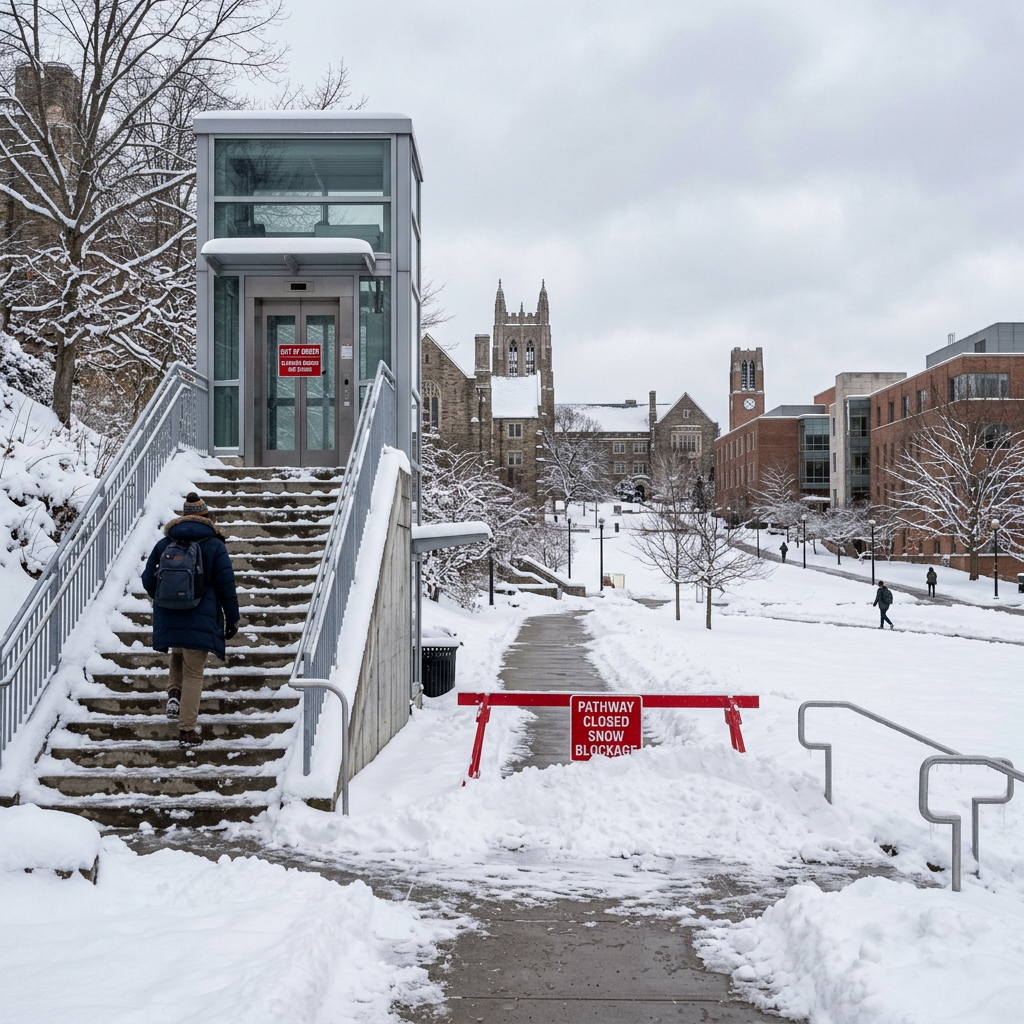
Denied Accommodations Disabled students routinely face outright denial of legally protected accommodations.Common denials include: These aren’t luxuries.They’re basic access — and institutions still say no. Delayed Accommodations Even when accommodations are approved, they often arrive: A delayed accommodation is functionally a denied accommodation.Students lose grades, opportunities, and stability while waiting for paperwork to move. Punitive… Continue reading
Attunement, Boundary Mechanics, Conformity and Control, Core Mechanisms, Framework Design, Group Behavior, Health and Healing, Heuristic Regression, Meta‑Frameworks & Tools, Misattunement & Rupture, Panthenogenesis of Power, Power & Control, Relate/Disrelate, Relational Anthropology, Relational Dynamics, Relational Field Basics, Repair Pathways, Revictimization, Social Dynamics, Social Issues, Survivor Literacy, theory, Transactionality, Wealthcareanthropology, bear, carry, conformity, control, episkevology, hostage, instagram, iykyk, linguistics, money, patriotism, Pluriology, politics, power, psychology, relational anthropology, Relational Field Theory, RFT, social science, socials, sociology, survivor literacy, survivors, theory, trafficking
Recent Posts
- Silence is Deafening by Protyus A. Gendher
 The silence is deafening As it falls in empty reckoningThat breed this hypocrisySomehow in this struggle to surviveTo stay aliveWe… Read more: Silence is Deafening by Protyus A. Gendher
 - Inequality State — The Targetable Person / Scapegoat Archetype
 The Targetable Person / Scapegoat Archetype Every system has a scapegoat role. Not because anyone deserves it — but because… Read more: Inequality State — The Targetable Person / Scapegoat Archetype
 - Stop Blaming the Dependent Variable
 The content discusses the common error of blaming dependent variables across various fields such as economics, education, medicine, social policy, ecology, and organizational behavior. It highlights how systemic issues are overlooked, placing blame on outputs instead of identifying underlying causes, which often involve power dynamics and institutional failures.
 - When Accountability Gets Misclassified as Harm
 There’s a structural glitch in the way large systems interpret conflict, and it has nothing to do with fairness. When… Read more: When Accountability Gets Misclassified as Harm
 - When Systems Protect Themselves Instead of Children
 We Believe You When Systems Protect Themselves Instead of Children: How Permanency Frameworks Drift Into Structural Narcissism Every child‑welfare system… Read more: When Systems Protect Themselves Instead of Children
 - 74) The Old Witch
 The narrative explores the relationship between the narrator, a young person navigating life challenges, and an older Native woman, referred to as the Old Witch. She provides a refuge and imparts wisdom about authenticity and rejecting shame. Their bond deepens through shared experiences, secrets, and the tension of attraction, ultimately highlighting themes of connection and desire amidst life’s complexities.
 - Inequality State — Membrane Reflex
 Membrane Reflex Systems behave like living organisms. They have boundaries, sensitivities, and reflexes. When those boundaries are touched — even… Read more: Inequality State — Membrane Reflex
 - Danger from Dysregulation
 The content discusses the dangers posed by dysregulated individuals who hold volatile power. When their actions are exposed through clarity, they may feel threatened and escalate their behavior. Recognizing structural issues within systems reveals inherent dangers, highlighting that transparency unveils risks rather than creating them.
 - America has never had an appropriate stance on parenting or child development.
 Not once. Not in any era. Not even aspirationally. Every “theory” America has produced about raising children has been a… Read more: America has never had an appropriate stance on parenting or child development.
 - Hypothesis: How Permanency Systems Sort for Narcissistic Dynamics
 We Believe You Hypothesis: How Permanency Systems Sort for Narcissistic Dynamics Permanency frameworks are not designed to create stability for… Read more: Hypothesis: How Permanency Systems Sort for Narcissistic Dynamics
 - 35) The Panopticon
 The content discusses the concept of the Panopticon and its implications in everyday life, reflecting on how surveillance influences behavior. It shares personal anecdotes of growing up in a community where individuals constantly monitored each other, leading to anxiety and a sense of inescapability. The narrative highlights the psychological effects of such a surveillance culture.
 - Institutional Nonsense = Religion With Money Instead of Gods
 (A structural mapping, not a moral claim) When the content of an institution is rational, people can debate it.When the… Read more: Institutional Nonsense = Religion With Money Instead of Gods
 - Inequality State — Conflicting Definitions: Assault, Self‑Defense, Victim, Attacker
 Conflicting Definitions: Assault, Self‑Defense, Victim, Attacker When systems want a particular outcome, they don’t always change the facts — they… Read more: Inequality State — Conflicting Definitions: Assault, Self‑Defense, Victim, Attacker
 - Survivor Literacy – A Framework
 Survivor literacy is crucial for understanding Episkevology, as it enables individuals to perceive and analyze systems authentically. This ability helps reveal power dynamics and the distribution of harm rather than individual blame. By recognizing patterns and structural influences, survivors can better navigate unstable environments, ultimately fostering clarity and facilitating system repair.
 - Unsafe Adults as Geological Cleavage
 (Why Their Behavior Is Predictable Long Before It Breaks) Geological cleavage is the pattern a rock forms under pressure —… Read more: Unsafe Adults as Geological Cleavage
Newsletter
Make a one-time donation
Make a monthly donation
Choose an amount
Or enter a custom amount
Your contribution is appreciated.
Your contribution is appreciated.