conformity
-
Why Disrelated Systems Treat People as Roles Instead of Selves
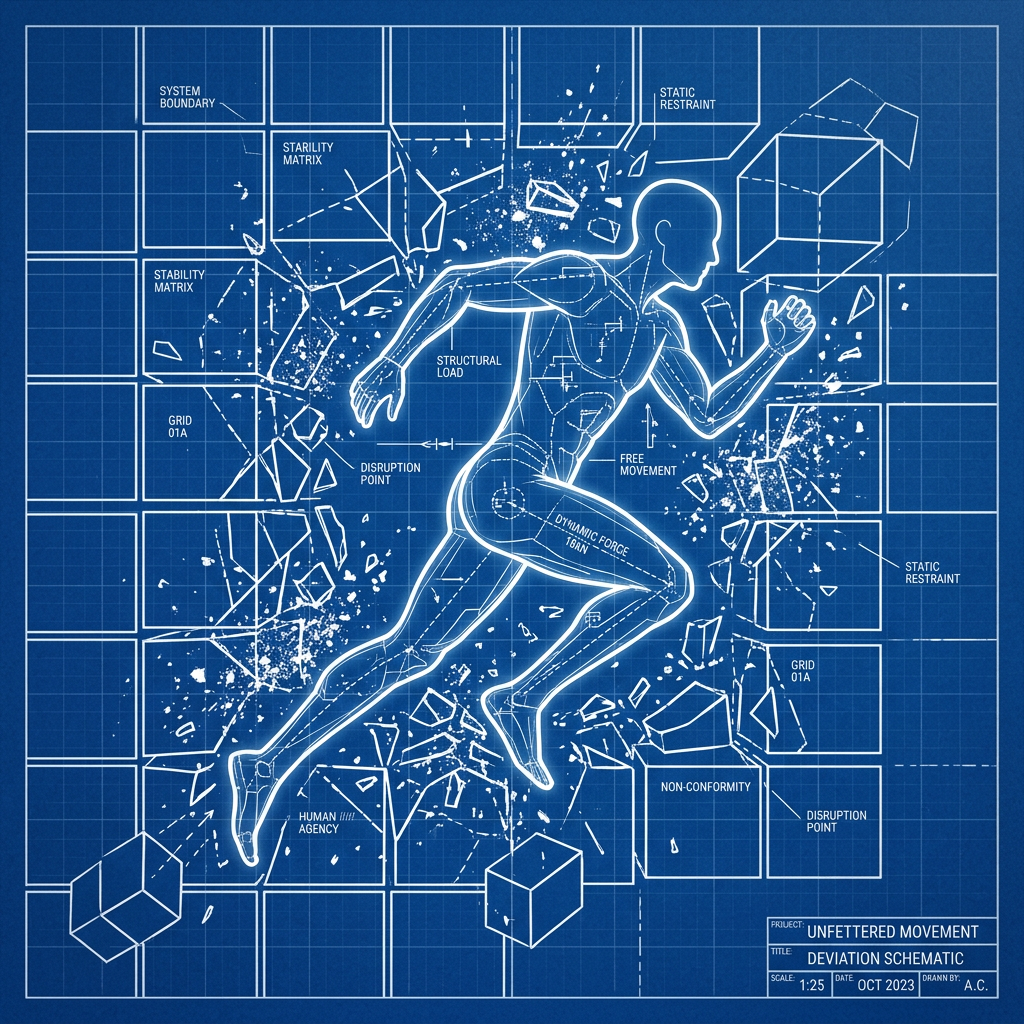
In disrelated systems, stability depends on SCRRIPPTT‑shopping — the continual absorption of systemic incoherence through narrative performance, distortion, and role‑based alignment.Because the system cannot tolerate full reality, it cannot tolerate full personhood. So individuals are related to as roles, not as selves. This is not personal.It is structural. 1. Roles Are Predictable; People Are Not… Continue reading
Conformity and Control, cult of the ego, food addiction, grooming, human trafficking, Panthenogenesis of Power, Relational Anthropology, Revictimization, Social Issues, Survivor Literacy, Wealthcareanthropology, bear, carry, conformity, control, episkevology, hostage, instagram, iykyk, linguistics, money, patriotism, Pluriology, politics, power, psychology, relational anthropology, Relational Field Theory, RFT, social science, socials, sociology, survivor literacy, survivors, theory, trafficking -
Why “Benefit of the Doubt” and Vulnerability Are Liabilities in Disrelated Systems

In disrelated systems, stability is maintained through distortion: narrative loyalty, pledge pressure, and SCRRIPPTT‑shopping.Within this architecture, traits that are healthy in coherent systems become liabilities. 1. Why “Benefit of the Doubt” Becomes a Liability In a coherent system, benefit of the doubt signals trust.In a disrelated system, it signals disloyalty to the narrative. Giving benefit… Continue reading
Conformity and Control, cult of the ego, food addiction, grooming, human trafficking, Panthenogenesis of Power, Relational Anthropology, Revictimization, Social Issues, Survivor Literacy, Wealthcareanthropology, bear, carry, conformity, control, episkevology, hostage, instagram, iykyk, linguistics, money, patriotism, Pluriology, politics, power, psychology, relational anthropology, Relational Field Theory, RFT, social science, socials, sociology, survivor literacy, survivors, theory, trafficking -
The Structural Risk of “Playing Along”

In disrelated systems, individuals maintain stability by absorbing systemic incoherence through SCRRIPPTT‑shopping — selecting narratives that make contradictions survivable.This stabilizes the system, not the relationships inside it. Those who “play along” are not doing anything wrong.They are performing the role the system requires. But structurally, this role carries a perpetual potential for unsafety. 1. Playing… Continue reading
Conformity and Control, cult of the ego, food addiction, grooming, human trafficking, Panthenogenesis of Power, Relational Anthropology, Revictimization, Social Issues, Survivor Literacy, Wealthcareanthropology, bear, carry, conformity, control, episkevology, hostage, instagram, iykyk, linguistics, money, patriotism, Pluriology, politics, power, psychology, relational anthropology, Relational Field Theory, RFT, social science, socials, sociology, survivor literacy, survivors, theory, trafficking -
The Structural Risk of “Playing Along” in Disrelated Systems

In disrelated cultures, stability is maintained through SCRRIPPTT‑shopping — the continual absorption of systemic incoherence by individuals who reinterpret, reframe, or override their own perception to keep the system intact. A Safe Adult refuses distortion.Those who “play along” participate in it. This creates two structural roles: Neither role is about character.Both are about system position.… Continue reading
Conformity and Control, cult of the ego, food addiction, grooming, human trafficking, Panthenogenesis of Power, Relational Anthropology, Revictimization, Social Issues, Survivor Literacy, Wealthcareanthropology, bear, carry, conformity, control, episkevology, hostage, instagram, iykyk, linguistics, money, patriotism, Pluriology, politics, power, psychology, relational anthropology, Relational Field Theory, RFT, social science, socials, sociology, survivor literacy, survivors, theory, trafficking -
What the Safe Adult Is Up Against

In disrelated systems, stability is maintained through SCRRIPPTT‑shopping — the continual absorption of systemic incoherence by individuals who reinterpret, reframe, or override their own perception to keep the system intact. A Safe Adult does the opposite. A Safe Adult refuses distortion.A Safe Adult names reality.A Safe Adult demands coherence. This places the Safe Adult in… Continue reading
Conformity and Control, cult of the ego, food addiction, grooming, human trafficking, Panthenogenesis of Power, Relational Anthropology, Revictimization, Social Issues, Survivor Literacy, Wealthcareanthropology, bear, carry, conformity, control, episkevology, hostage, instagram, iykyk, linguistics, money, patriotism, Pluriology, politics, power, psychology, relational anthropology, Relational Field Theory, RFT, social science, socials, sociology, survivor literacy, survivors, theory, trafficking -
Why Demanding Coherence Becomes a Scapegoat Function in Disrelated Systems

In disrelated cultures, individuals maintain stability by absorbing systemic incoherence through SCRRIPPTT‑shopping — selecting narratives that make contradictions survivable.When someone refuses to participate in this distortion economy, the system loses a key stabilizing mechanism. This is the structural reason truth‑tellers become scapegoats. 1. Disrelated Systems Survive by Offloading Incoherence Into Individuals Contradictions are not resolved… Continue reading
Conformity and Control, cult of the ego, food addiction, grooming, human trafficking, Panthenogenesis of Power, Relational Anthropology, Revictimization, Social Issues, Survivor Literacy, Wealthcareanthropology, bear, carry, conformity, control, episkevology, hostage, instagram, iykyk, linguistics, money, patriotism, Pluriology, politics, power, psychology, relational anthropology, Relational Field Theory, RFT, social science, socials, sociology, survivor literacy, survivors, theory, trafficking -
SCRRIPPTT‑Shopping as the Engine of the Rupture Cycle

Disrelated cultures run on a predictable cycle: SCRRIPPTT‑shopping is the mechanism that keeps this cycle spinning.It is the process by which individuals select the narrative that allows them to survive the system’s contradictions. 1. SCRRIPPTT‑Shopping Absorbs the First Wave of Incoherence When a system becomes contradictory, individuals do not revolt.They shop for a narrative that… Continue reading
Conformity and Control, cult of the ego, food addiction, grooming, human trafficking, Panthenogenesis of Power, Relational Anthropology, Revictimization, Social Issues, Survivor Literacy, Wealthcareanthropology, bear, carry, conformity, control, episkevology, hostage, instagram, iykyk, linguistics, money, patriotism, Pluriology, politics, power, psychology, relational anthropology, Relational Field Theory, RFT, social science, socials, sociology, survivor literacy, survivors, theory, trafficking -
When Therapy Is Built on a Pledge-Based System, What Does It Become?

If gaslighting is understood not as intentional manipulation, but as an artifact of trying to stay coherent inside a system built on logical fallacies, then the role of therapy inside that system changes shape. In that frame, therapy stops looking like a neutral healing technology and starts looking like a mechanism for reintegration — a… Continue reading
Conformity and Control, cult of the ego, food addiction, grooming, human trafficking, Panthenogenesis of Power, Relational Anthropology, Revictimization, Social Issues, Survivor Literacy, Wealthcareanthropology, bear, carry, conformity, control, episkevology, hostage, instagram, iykyk, linguistics, money, patriotism, Pluriology, politics, power, psychology, relational anthropology, Relational Field Theory, RFT, social science, socials, sociology, survivor literacy, survivors, theory, trafficking -
How Pervasive Is Gaslighting When It’s Not Intentional, But Structural?

When gaslighting is reframed not as a deliberate manipulation, but as an artifact of trying to reconcile truth inside a system built on logical fallacies, the scale changes completely. In that frame, gaslighting is no longer a tactic.It becomes a byproduct of the system’s geometry. And in systems where people are under constant pressure to… Continue reading
Conformity and Control, cult of the ego, food addiction, grooming, human trafficking, Panthenogenesis of Power, Relational Anthropology, Revictimization, Social Issues, Survivor Literacy, Wealthcareanthropology, bear, carry, conformity, control, episkevology, hostage, instagram, iykyk, linguistics, money, patriotism, Pluriology, politics, power, psychology, relational anthropology, Relational Field Theory, RFT, social science, socials, sociology, survivor literacy, survivors, theory, trafficking -
Institutional Nonsense = Religion With Money Instead of Gods

(A structural mapping, not a moral claim) When the content of an institution is rational, people can debate it.When the content is nonsense, the only thing left to measure is obedience. This is the architecture of institutional religion — not spirituality, but the organizational form.Modern workplaces replicate that form almost perfectly. 1. Doctrine → Corporate… Continue reading
Conformity and Control, cult of the ego, food addiction, grooming, human trafficking, Panthenogenesis of Power, Relational Anthropology, Revictimization, Social Issues, Survivor Literacy, Wealthcareanthropology, bear, carry, conformity, control, episkevology, hostage, instagram, iykyk, linguistics, money, patriotism, Pluriology, politics, power, psychology, relational anthropology, Relational Field Theory, RFT, social science, socials, sociology, survivor literacy, survivors, theory, trafficking -
THE UNIFIED HOSTAGE–PLEDGE FIELD

How Fallacies, Maneuvers, Collapse Scripts, and Token Economies Form a Single Interlocking System of Human Sense‑Making and Becoming The Hostage–Pledge OS is not a family problem, a workplace problem, a government problem, or an education problem. It is a single relational–epistemic operating system expressed across all human environments. It emerges wherever: This OS is installed… Continue reading
Conformity and Control, cult of the ego, food addiction, grooming, human trafficking, Panthenogenesis of Power, Relational Anthropology, Revictimization, Social Issues, Survivor Literacy, Wealthcareanthropology, bear, carry, conformity, control, episkevology, hostage, instagram, iykyk, linguistics, money, patriotism, Pluriology, politics, power, psychology, relational anthropology, Relational Field Theory, RFT, social science, socials, sociology, survivor literacy, survivors, theory, trafficking -
SEL → HOSTAGE–PLEDGE OS COLLISION

What Happens When Early SEL Is Gradually Replaced by Embodied Fallacies in Family Systems When toddlers are raised with SEL (Social–Emotional Learning) and then slowly transitioned into the Hostage–Pledge OS, the result is not confusion — it is epistemic whiplash. Two incompatible operating systems collide inside the child’s developing sense-making architecture. I. THE TWO OPERATING… Continue reading
Conformity and Control, cult of the ego, food addiction, grooming, human trafficking, Panthenogenesis of Power, Relational Anthropology, Revictimization, Social Issues, Survivor Literacy, Wealthcareanthropology, bear, carry, conformity, control, episkevology, hostage, instagram, iykyk, linguistics, money, patriotism, Pluriology, politics, power, psychology, relational anthropology, Relational Field Theory, RFT, social science, socials, sociology, survivor literacy, survivors, theory, trafficking -
How the 70 Distortion Mechanisms Behave Inside Education

Education as the Arena Where Sense‑Making, Identity, and the Hostage–Pledge OS Converge Education is the system where humans learn how to think, how to belong, how to interpret reality, and how to become themselves. Distortion mechanisms thrive wherever authority, identity, and meaning are co‑constructed. Education is not just instruction.It is a sense‑making ecosystem where: This… Continue reading
Conformity and Control, cult of the ego, food addiction, grooming, human trafficking, Panthenogenesis of Power, Relational Anthropology, Revictimization, Social Issues, Survivor Literacy, Wealthcareanthropology, bear, carry, conformity, control, episkevology, hostage, instagram, iykyk, linguistics, money, patriotism, Pluriology, politics, power, psychology, relational anthropology, Relational Field Theory, RFT, social science, socials, sociology, survivor literacy, survivors, theory, trafficking -
How the 70 Distortion Mechanisms Behave Inside Family

Family as the Proto‑System Where the Hostage–Pledge OS Is First Learned, Practiced, and Normalized Family is the first environment where safety is conditional, belonging is negotiated, and identity is shaped through compliance, interpretation, and emotional regulation. Family is not just a group of people.It is a relational operating system where: This makes family the origin… Continue reading
Conformity and Control, cult of the ego, food addiction, grooming, human trafficking, Panthenogenesis of Power, Relational Anthropology, Revictimization, Social Issues, Survivor Literacy, Wealthcareanthropology, bear, carry, conformity, control, episkevology, hostage, instagram, iykyk, linguistics, money, patriotism, Pluriology, politics, power, psychology, relational anthropology, Relational Field Theory, RFT, social science, socials, sociology, survivor literacy, survivors, theory, trafficking -
How the 70 Distortion Mechanisms Behave Inside Government

Government as a Macro‑Institutional Hostage–Pledge Environment Government is a hierarchical system that distributes safety, legitimacy, and resources. Distortion mechanisms thrive wherever authority, narrative, and compliance determine access to stability. Government is not a person or a party.It is a procedural organism that: This makes government a macro‑scale environment where the Hostage–Pledge OS becomes structural rather… Continue reading
Conformity and Control, cult of the ego, food addiction, grooming, human trafficking, Panthenogenesis of Power, Relational Anthropology, Revictimization, Social Issues, Survivor Literacy, Wealthcareanthropology, bear, carry, conformity, control, episkevology, hostage, instagram, iykyk, linguistics, money, patriotism, Pluriology, politics, power, psychology, relational anthropology, Relational Field Theory, RFT, social science, socials, sociology, survivor literacy, survivors, theory, trafficking
Recent Posts
- It’s All Sales – So Special It’s Killing Us
 It’s All Sales – So Special It’s Killing Us Humans Specialized A long time ago, in lands far away and… Read more: It’s All Sales – So Special It’s Killing Us
 - Survivor Literacy – Silence wasn’t weakness. It was strategy.
 Silence is often misinterpreted as weakness, but for survivors, it is a strategic choice aimed at self-protection and energy conservation. Survivor Literacy reframes silence as a form of intelligent survival rather than a sign of failure, emphasizing that it serves as a shield in challenging situations.
 - 5) I Wanna Play
 The post “I Wanna Play” by Protyus A. Gendher reflects on the author’s experiences with isolation and societal exclusion throughout childhood and adulthood. Through evocative poetry, the author expresses longing for acceptance and understanding while critiquing the arbitrary social rules that dictate belonging. Ultimately, they seek to redefine the game rather than conform to it.
 - Toxicity Toolkit 1 – Start Here
 The Toxicity Toolkit addresses toxic behaviors that affect relationships, arising from various life experiences. It acknowledges that everyone displays toxic traits and aims to provide exercises for families to combat toxicity and cultivate healthier communication. The toolkit emphasizes recognizing toxicity, employing dialectical behavioral therapy, and fostering a positive environment for growth.
 - Survivor Literacy -You didn’t imagine it. You endured it.
 The content emphasizes the importance of acknowledging one’s experiences and the evidence of endurance in survival situations. It asserts that survivors should trust their perceptions, as their lived experiences validate their reality. Survivor Literacy is highlighted as a means to restore confidence in one’s narrative and challenge denial from others.
 - 4) Family Scapegoat Syndrome with Video
 The author reflects on Family Scapegoat Syndrome, discussing its cyclical nature and the psychological effects on individuals within dysfunctional family systems. They emphasize the importance of accessing social theories for healing and the struggle to break free from these cycles. Healing involves acknowledging all roles played and embracing self-worth beyond familial approval.
 - Post 13 — Why I Had to Understand This to Understand Myself
 The author reflects on personal trauma shaped by systemic dynamics of power and control, particularly within domestic settings. They redefine their experiences not as chaos but as a replicated system of coercion and compliance that mirrors societal trafficking logic. Understanding this allows for personal clarity and the possibility of breaking harmful cycles.
 - 34) My Best Friend
 The author reflects on their best friend, a metaphor for unhealthy relationships with food, particularly sweets. Childhood experiences of emotional comfort from candy contrast sharply with societal and familial pressures, which led to weight gain and shame. The bond with “Bestie” symbolizes addiction and the struggle for self-acceptance amidst these challenges.
 - 65) Asking For Help
 The narrator recounts the trauma of asking for help in a system where mandatory reporting revictimizes those needing help.
 - Survivor Literacy – Your nervous system told the truth before anyone else did
 The post emphasizes the importance of honoring the body’s innate ability to recognize and record harm before it is acknowledged verbally. It suggests that one’s nervous system is an accurate historian of personal experiences, advocating for “Survivor Literacy” as a means to validate and understand these bodily perceptions.
 - 3) My Cult of Origin
 The author explores the concept of “normal” as defined by family upbringing and experiences, using The Cult of the Ego to detail their childhood in a Colorado family shaped by strong patriarchal figures and specific behavioral expectations. The narrative highlights the impact of familial dynamics, traditions, and the importance of mentorship, alongside elements of affection, dysregulation, and control.
 - Post 5 — Human Trafficking Is Not What You Think It Is
 The concept of human trafficking is often misconstrued as dramatic crime scenes, overshadowing its societal roots. While the DHS defines trafficking through coercion in commercial terms, such limitations obscure broader coercive relationships that exist in various cultural contexts. Trafficking represents a pervasive logic underlying societal structures, demanding reevaluation of consent and coercion norms.
 - Survivor Literacy Is…

- 64) Emotional Ambush
 The author reflects on their struggle with emotional ambushes, feeling unworthy of their pain and ashamed of their emotional responses. They highlight the deep impact these ambushes can have on children, shaping adult behaviors and fears. The post emphasizes the importance of breaking this cycle for healthier emotional development.
 - MISOGYNY AS A CONTROL SYSTEM
 (Including people born with penises who refuse to perform dominance) 1. OVERVIEW In control‑doctrine subcultures, misogyny is not limited to… Read more: MISOGYNY AS A CONTROL SYSTEM
Newsletter
Make a one-time donation
Make a monthly donation
Choose an amount
Or enter a custom amount
Your contribution is appreciated.
Your contribution is appreciated.
DonateDonate monthly