We Believe You
Applied Survivor Literacy
Part Introduction
Survivor Literacy is not an abstract framework — it is a practical operating system for navigating real‑world environments, relationships, and systems.
Part IV translates the theory into applied practice, showing how survivors can use pattern literacy to:
- read relational fields
- anticipate pattern drift
- interrupt reenactment
- protect their nervous systems
- maintain integrity under pressure
- make aligned decisions
- build relationships that do not require self‑erasure
This section focuses on application, not analysis.
Applied Survivor Literacy teaches survivors how to:
- identify patterns in real time
- map the architecture of a relational moment
- choose interventions that reduce harm
- maintain clarity in distorted environments
- exit systems that cannot support repair
- build systems that do
Where earlier sections explained what patterns are and how they function, Part IV shows what to do with that knowledge.
It is the bridge between understanding and action — between literacy and agency.
Chapter 16 — How to Read a Room
How to Sense the Emotional Field, Track Shifts in Group Physiology, and Understand the Unspoken Architecture of Any Space
Core Premise
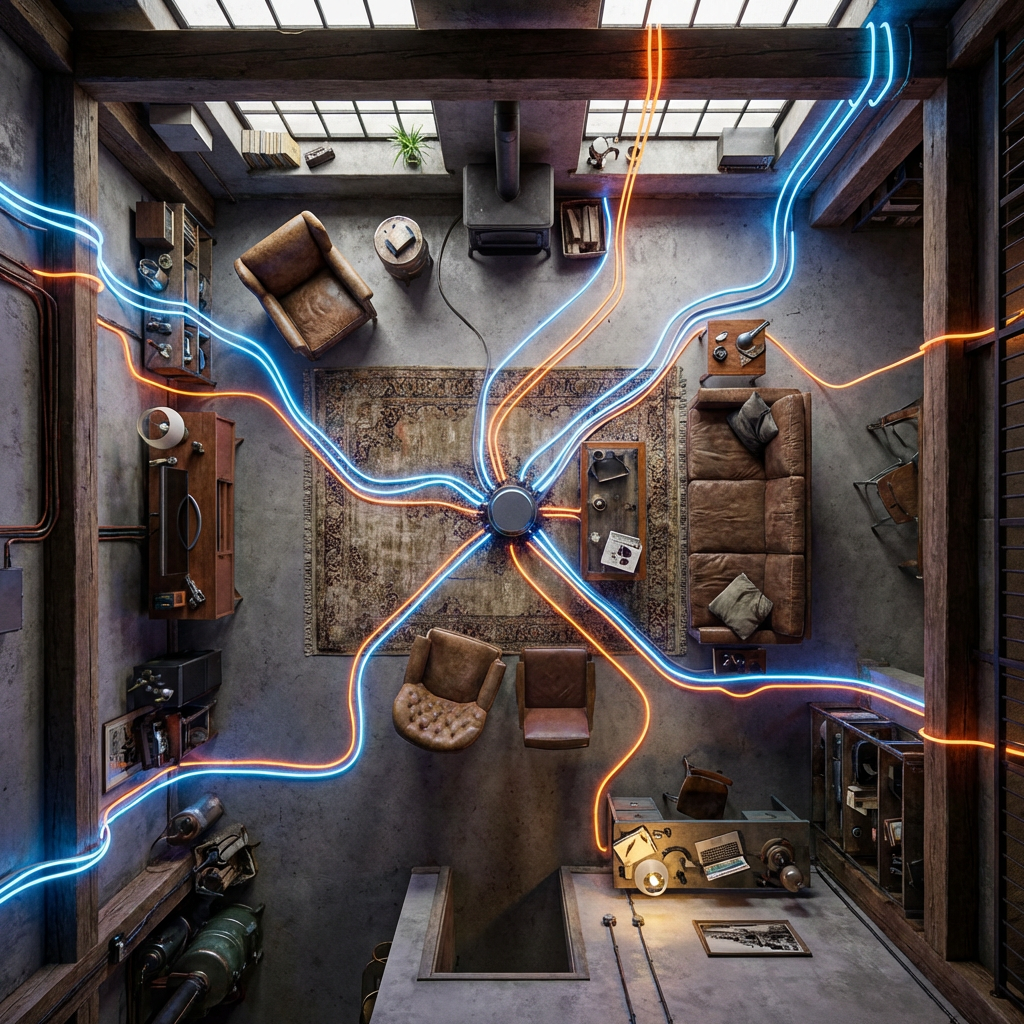
A room is not a neutral container.
It is a relational field with its own:
- emotional temperature
- power gradients
- unspoken rules
- role assignments
- pressure points
- fault lines
- stabilizers and destabilizers
Reading a room is not about analyzing people individually — it is about sensing the system they create together.
Survivors often do this intuitively.
This chapter turns that intuition into a conscious, teachable skill.
1. The Architecture of a Room
1.1 The Emotional Field
Every room has an emotional climate shaped by:
- tone
- pacing
- tension
- openness
- avoidance
- anticipation
This climate is felt before it is understood.
1.2 The Power Map
Power in a room is not about titles — it is about:
- who people orient toward
- who people avoid
- who sets the tone
- who interrupts
- who gets interrupted
- who others regulate around
Power is relational, not positional.
1.3 The Role Distribution
Rooms assign roles automatically:
- the Stabilizer
- the Scapegoat
- the Ghost
- the Performer
- the Fragile Center
- the Chaos Agent
- the Quiet Competent One
These roles shift depending on context.
2. How to Read a Room in Real Time
2.1 Step One: Feel Before You Think
Your body registers the room before your mind does.
Notice:
- breath changes
- muscle tension
- temperature shifts
- pressure in the chest or gut
- urge to move closer or farther
Your body is the first instrument.
2.2 Step Two: Identify the Center of Gravity
Ask:
- Who is everyone orienting around?
- Who changes the room’s tone when they speak?
- Who holds the emotional weight?
The center of gravity reveals the system’s architecture.
2.3 Step Three: Track Micro‑Shifts
Watch for:
- glances
- posture changes
- breath holds
- subtle freezes
- small withdrawals
- sudden brightness
Micro‑shifts show where the field is tightening or loosening.
2.4 Step Four: Listen for Patterned Speech
Patterns appear in:
- who apologizes
- who explains
- who interrupts
- who softens their tone
- who speaks with certainty
- who speaks with caution
Language reveals role assignment.
2.5 Step Five: Map the Tension Lines
Tension shows up as:
- silence
- over‑talking
- rapid topic changes
- forced humor
- sudden seriousness
Tension lines show where the system is bracing.
3. Common Room Patterns
3.1 The Fragile Center Room
Everyone orients around:
- one volatile person
- one fragile person
- one unpredictable person
The room organizes itself to keep them stable.
3.2 The Scapegoat‑Ready Room
The room is looking for someone to:
- blame
- offload tension onto
- criticize
- correct
The target rotates depending on the moment.
3.3 The Performance Room
People are:
- posturing
- impressing
- competing
- curating
Authenticity is low; vigilance is high.
3.4 The Avoidance Room
The room avoids:
- conflict
- truth
- accountability
- discomfort
Silence becomes the organizing principle.
3.5 The Regulator‑Dependent Room
The room relies on one person to:
- soothe
- mediate
- clarify
- stabilize
If that person leaves, the room destabilizes.
4. How Survivors Read Rooms Automatically
4.1 The Hyper‑Attunement Reflex
Survivors track:
- tone
- tension
- micro‑expressions
- emotional shifts
This is not overthinking — it is survival intelligence.
4.2 The Pattern‑Recognition Advantage
Survivors sense:
- contradictions
- inconsistencies
- hidden agendas
- unspoken rules
before others notice.
4.3 The Nervous System Barometer
Survivors feel:
- when the room tightens
- when the room relaxes
- when the room turns
- when the room hides
Their body reads the field.
4.4 The Role‑Assignment Sensitivity
Survivors notice:
- when they are being pulled into a role
- when someone else is being targeted
- when the system is shifting
This awareness is power.
5. How to Use Room‑Reading Without Reenacting
5.1 Stay in Observation, Not Intervention
You do not have to:
- fix
- soothe
- mediate
- stabilize
Observation is enough.
5.2 Name the Field, Not the People
Use structural language:
- “The room feels tense.”
- “The energy shifted.”
- “There’s a lot of pressure here.”
This prevents personalization.
5.3 Protect Your Position
Stay out of:
- triangles
- rescues
- scapegoat rotations
- emotional labor traps
Your clarity is not a resource for the room.
5.4 Regulate Yourself First
Use:
- breath
- grounding
- pacing
- physical orientation
Your nervous system is your anchor.
5.5 Choose Your Engagement Level
You can:
- participate lightly
- stay neutral
- observe quietly
- exit early
You are not obligated to match the room’s intensity.
6. When to Leave the Room
6.1 When the Room Assigns You a Role You Cannot Refuse
If the system insists on:
- scapegoating
- regulating
- rescuing
- absorbing
you are not in a room — you are in a reenactment.
6.2 When Your Body Is Bracing
If your body feels:
- tight
- responsible
- hyper‑aware
- drained
the cost is too high.
6.3 When the Room Cannot Repair
If the system cannot:
- acknowledge harm
- shift dynamics
- share responsibility
it cannot support you.
7. Field Notes for Survivors
- A room is a relational field.
- Your body reads the field before your mind does.
- Power is revealed through orientation, not titles.
- Tension lines show where the system is bracing.
- You are not obligated to regulate the room.
- You deserve spaces where your presence does not require labor.
Closing
Reading a room is the foundation of applied survivor literacy.
Once you understand the architecture of a space, you can navigate any environment without reenacting old roles, without absorbing others’ instability, and without sacrificing your well‑being.
Pattern literacy is field literacy.
Visit the Series Archive for more.


Apple Music
YouTube Music
Amazon Music
Spotify Music
Survivor’s Playbook
- The Cost of Carrying the Truth
- The Gaslighting of the Regulated Adult
- The Cult of the Ego: How Systems Reward the Most Dysregulated Person
- What Someone Stuck in a Narcissistic Behavior Loop Performs Instead of Doing the Work
- The Ultimatum Prohibition as Boundary Prevention
- When Someone Stuck in a Narcissistic Behavior Loop Can’t Accept Help
- The Innocence Defense
- The Survivor’s Nervous System
- The Architecture of Narcissistic Relational Systems
- The Behavioral Patterns of Narcissistic Relational Systems
- The Invisible Abuse: When Harm Isn’t Illegal but Still Destroys Children
- The Loneliness of Seeing What No One Else Sees
- The Outfit Fixation: When Fantasy Parenting Collides With Reality
- The Myth‑Making Move: “I Saved This Outfit for Years”
- What to Expect Next: The Four‑Phase Pattern When You Set a Boundary
- Intent vs. Impact: The Oldest Derailment in the Book
- When You’re the Only Regulated Adult in the Room
- Why Professionals Miss the Real Harm (Even When They’re Trained)
- Identity Fusion
- Minimization
- Emotional Ambush
- Coercive Helplessness
- Symbolic Parenting
- Narrative Control
- The Soft Bid Bypass
- The Guilt Hook
- The Fragility Gambit
- Why the Cycle Repeats
- The Collapse Spiral
- The Escalation Spiral
- The Four‑Phase Pattern
- The Cult of the Ego
- The Professional Blind Spot
- Nervous System Protection
- Anchoring in Impact
- The Gaslighting of the Regulated Adult
- Protecting Children in These Systems
- Communication That Doesn’t Get Hijacked
- Boundary Mechanics
- The Aftermath
- The Survivor’s Exit
- Reclaiming Your Reality
- Nervous System Tools
- Survivor Scripts
- Pattern Glossary
- Workplace Patterns
- How to Talk to Professionals Without Being Minimized
- Red Flags & Early Indicators
- Academic Systems
- Religious & Ideological Systems
- Medical & Mental Health Systems
- Dating & Early Relationship Patterns
- Friendship Patterns
- Co‑Parenting with a Patterned Partner
- Systems with No Regulator
- Low‑Accountability Environments
- High‑Demand Environments
- Public vs Private Pattern Shifts
- Systems with Rotating Scapegoats
- Stress, Scarcity, and Crisis
- Group Dynamics & Triangulation
- Digital Communication Distortions
- How to Read a Room
- How to Predict the Next Move
- How to Identify the System’s Center
- How to Detect Pattern Drift
- Pattern Literacy in Parenting
- Pattern Literacy as a Life Skill
- Pattern Literacy in Leadership
- Pattern Literacy in Community
- Returning to Yourself
- Pattern Literacy as Liberation
- The Seven Layers of Manipulation Detection
- WORKAROUND BEHAVIOR: A STRUCTURAL PATTERN
Leave a Reply