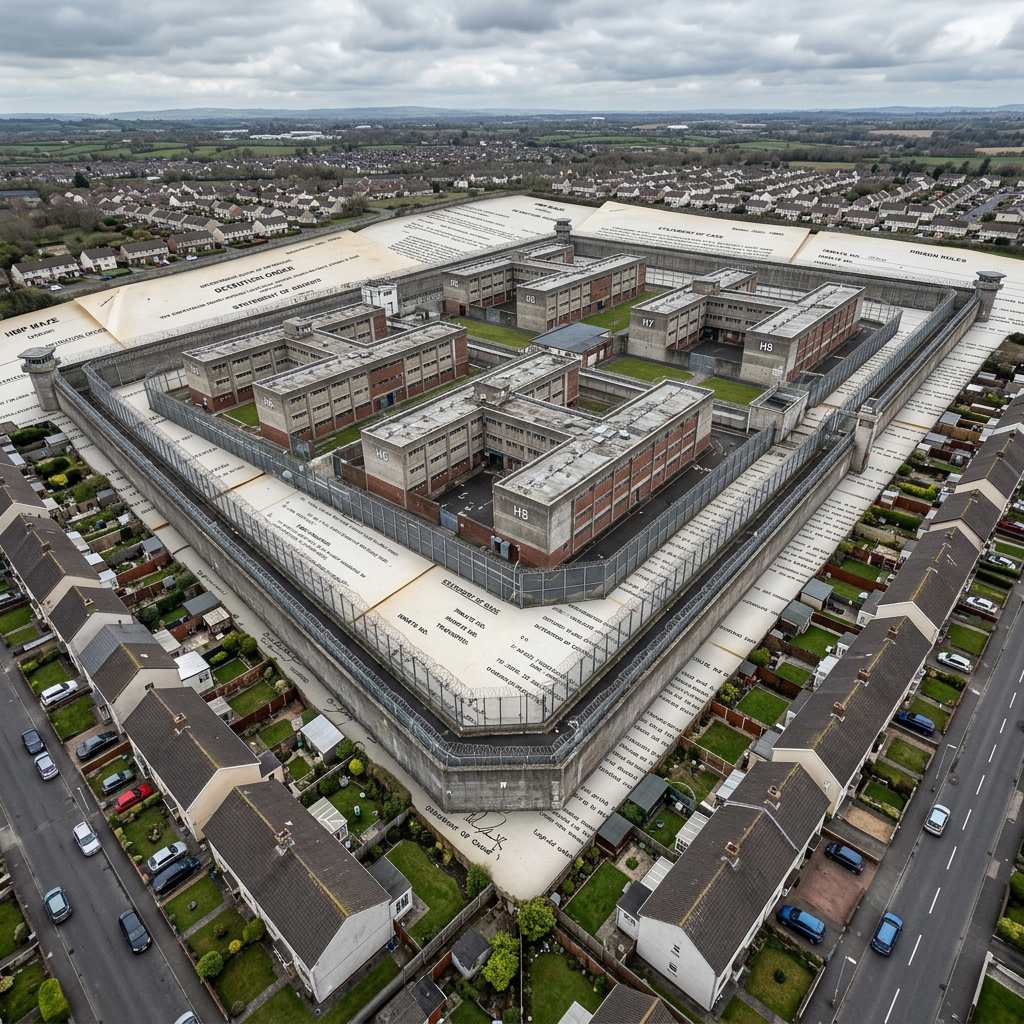
Captivity Architecture
Captivity in a punitive OS isn’t a cage — it’s a structure. A set of interlocking constraints that trap a person in place, limit their movement, and make escape feel impossible.
This post maps the captivity architecture that holds people in rural punitive systems, shows how legal, economic, social, and geographic layers combine to create a no‑exit environment, and uses the Rihanna Novalee Chasingstars case to illustrate how a targetable person becomes captive even without bars or chains.
Captivity Basics: Structural Traps, Not Physical Cages Only
In Survivor Literacy, captivity is defined as:
A condition where a person’s choices, safety, and mobility are constrained by forces they cannot control.
Captivity is not limited to:
- prisons
- jails
- detention centers
It includes:
- legal traps
- social traps
- economic traps
- geographic traps
- narrative traps
Captivity is the architecture that keeps someone vulnerable, exposed, and unable to exit the system without paying a price.
It is not about physical restraint.
It is about structural containment.
Layers: Legal, Economic, Social, Geographic
Captivity architecture is multi‑layered.
Each layer reinforces the others, creating a system that is nearly impossible to escape.
1. Legal Captivity
The law becomes the cage.
- inflated charges
- felony reinstatement
- selective enforcement
- narrative inversion
- prosecutorial discretion
- threat of catastrophic sentencing
Legal captivity keeps the person trapped in fear, uncertainty, and dependency on the system that is harming them.
2. Economic Captivity
Punitive systems drain resources.
- legal fees
- missed work
- instability
- housing precarity
- transportation barriers
- long‑term financial harm
Economic captivity ensures the person cannot simply “leave” or “start over.”
They are held in place by cost.
3. Social Captivity
Community dynamics become a trap.
- stigma
- isolation
- insider loyalty
- outsider suspicion
- narrative exclusion
- reputational harm
Social captivity ensures the person has no allies, no protection, and no legitimacy.
4. Geographic Captivity
Rural geography becomes a containment field.
- limited services
- few support networks
- small‑town surveillance
- cultural homogeneity
- distance from resources
- lack of anonymity
Geographic captivity ensures the person cannot disappear into a crowd or find refuge elsewhere.
Together, these layers create a captivity architecture that is totalizing —
a system where every exit is blocked by another layer of constraint.
Case Mapping: How Rihanna Is Held in Place by Charges, Stigma, Risk
Rihanna Novalee Chasingstars is captive in all four layers simultaneously.
Legal captivity
- Two felonies reinstated
- No charges for attackers
- Narrative inversion
- Discretion used as leverage
- Charge inflation as control
She cannot exit the legal system without consequences.
Economic captivity
- Legal costs
- Time lost
- instability
- resource drain
She cannot escape the financial burden created by the system.
Social captivity
- stigma as a trans woman
- outsider status
- narrative exclusion
- community silence
- insider protection for attackers
She cannot rely on community support or legitimacy.
Geographic captivity
- rural isolation
- limited services
- small‑town networks
- cultural hostility
- lack of anonymity
She cannot simply relocate or disappear from the system’s reach.
Rihanna is captive not because she is physically restrained,
but because every structural layer holds her in place.
This is captivity architecture —
a system designed to trap targetable people in a punitive loop.
Archetypes: Captive, Warden, Gatekeeper, Bystander
Captivity architecture assigns roles.
Not individuals — roles.
Captive
The person held in place by structural constraints.
Targetable.
Vulnerable.
Punished for surviving.
Rihanna occupies this role.
Warden
The actor who enforces the constraints.
Prosecutors.
Police.
Institutional decision‑makers.
They maintain the captivity structure.
Gatekeeper
The actor who controls access to resources, legitimacy, or exit routes.
Judges.
Local officials.
Community leaders.
Institutional allies of insiders.
They decide who gets protection and who stays trapped.
Bystander
The community that witnesses harm and does nothing.
Their silence stabilizes captivity.
Their inaction reinforces the architecture.
These roles appear in every punitive OS —
and they appear clearly in this case.
Closing
Captivity architecture is the invisible cage of the Inequality State.
It traps targetable people through legal, economic, social, and geographic constraints, ensuring they cannot exit the system without paying a price.
In the Rihanna Novalee Chasingstars case, captivity architecture:
- holds her in place
- protects her attackers
- stabilizes the membrane
- reinforces targetability
- maintains narrative control
- ensures chronic vulnerability
This is not accidental.
It is structural.
Captivity is the OS —
and the OS decides who gets trapped, who gets protected, and who gets sacrificed to maintain the illusion of equality.
Follow this story on Instagram and Threads
We Believe You


Apple Music
YouTube Music
Amazon Music
Spotify Music


Explore Mini-Topics
Leave a Reply