Prosecutorial Discretion Is Not Neutral
“Discretion” sounds neutral — like a calm, objective judgment call. In practice, prosecutorial discretion is one of the most powerful levers of inequality in the entire legal system.
This post de‑mythologizes discretion.
It shows how prosecutors decide who suffers, how those decisions consistently fall hardest on marginalized defendants, and how the Rihanna Novalee Chasingstars case demonstrates the structural nature of this power.
Discretion is not a neutral tool — it is an instrument of narrative protection, membrane reflex, and targetability calculus.
What Discretion Really Is: Power to Choose Who Suffers
Prosecutorial discretion is the authority to decide:
- who gets charged
- what they get charged with
- how harshly they are charged
- whether charges are reduced
- whether charges are reinstated
- whether insiders are shielded
- whether outsiders are punished
It is not a passive process.
It is an active sorting mechanism.
Discretion is the power to determine:
- whose life is disrupted
- whose freedom is threatened
- whose narrative is believed
- whose harm is ignored
- whose identity is protected
- whose identity is punished
When a system has bias baked into its OS, discretion becomes the delivery system for that bias.
Patterns of Use: Against Marginalized Defendants, in Politically Sensitive Cases
Across rural punitive systems, discretion follows predictable patterns:
1. Used harshly against marginalized defendants
People who are:
- trans
- queer
- Indigenous
- disabled
- poor
- outsiders
- socially isolated
…receive harsher charges, fewer reductions, and more punitive interpretations of their actions.
2. Used leniently toward insiders
People who fit the “default citizen” narrative receive:
- reduced charges
- dropped charges
- sympathetic framing
- benefit of the doubt
- narrative protection
3. Used strategically in politically sensitive cases
When a case threatens:
- community identity
- institutional reputation
- political stability
- the Equality State narrative
…discretion is used to protect the system, not the people harmed.
These patterns are not accidental.
They are structural.
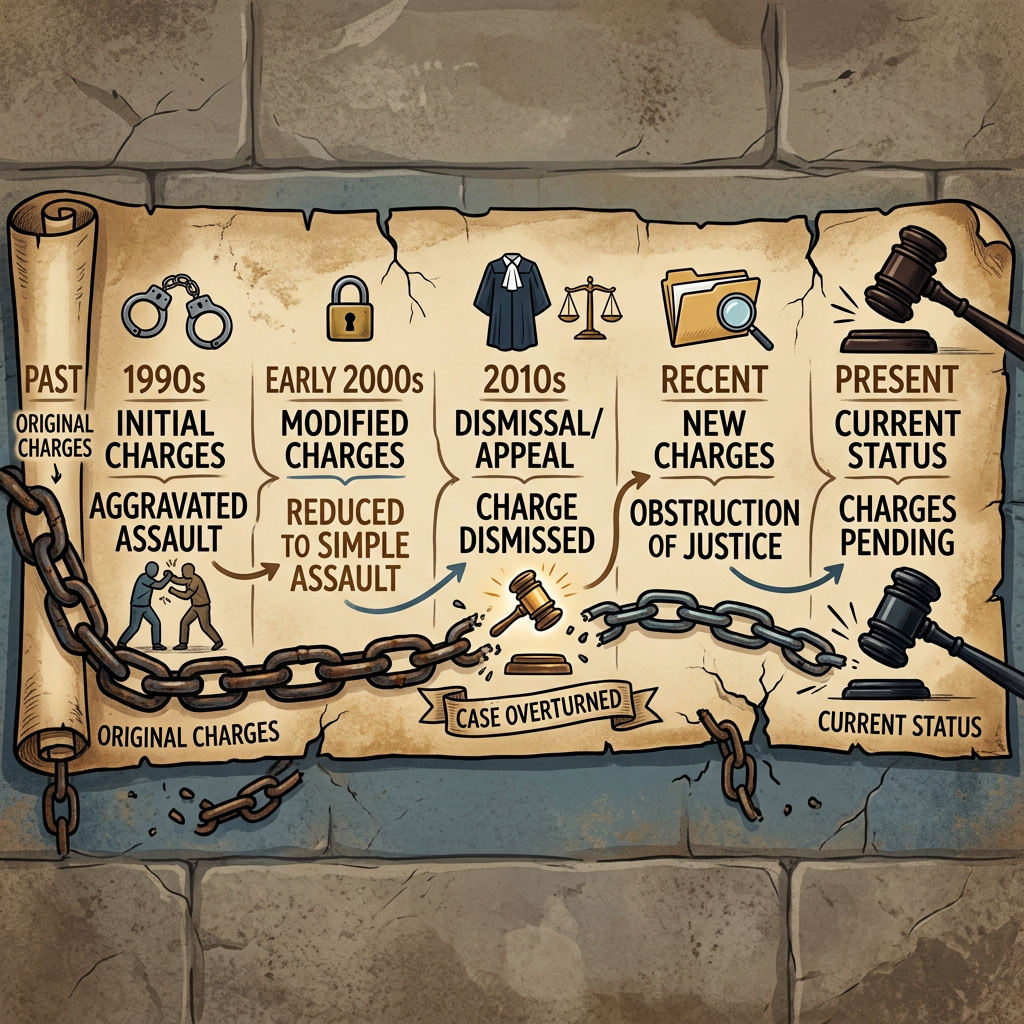
Case Timeline: Charge Decisions, Reductions, Reinstatements
The Rihanna Novalee Chasingstars case demonstrates how discretion operates as a lever of inequality.
Initial charging
She is charged with two felonies — despite harming no one and being attacked by three men.
This is discretion used to:
- punish the targetable person
- stabilize the membrane
- protect insiders
Charge reduction
Charges are briefly reduced to misdemeanors.
This is discretion used to:
- create the appearance of fairness
- test for contrition
- maintain leverage
Charge reinstatement
Felonies are reinstated after Rihanna submits a letter expressing regret.
This is discretion used to:
- reassert dominance
- punish perceived breach
- reinforce narrative control
- ensure the scapegoat carries the system’s contradictions
Non‑charging of attackers
The three men who physically attacked her face no charges at all.
This is discretion used to:
- protect insiders
- avoid community backlash
- maintain the “good citizen” narrative
- prevent destabilization of local identity architecture
The timeline is not random.
It is the OS expressing itself through discretionary power.
Structural Critique: Discretion as a Lever of Inequality
Prosecutorial discretion is often framed as:
- professional judgment
- legal expertise
- neutral evaluation
- case‑by‑case reasoning
But structurally, discretion functions as:
A narrative‑protection tool
It preserves the system’s self‑image at the expense of targetable people.
A membrane‑reflex amplifier
It enforces the system’s identity boundaries by punishing breaches.
A targetability sorter
It identifies who can be punished with minimal blowback.
A political shield
It protects insiders and institutions from scrutiny.
A harm engine
It delivers systemic inequality through individual decisions that appear “procedural.”
Discretion is not neutral.
It is directional.
It flows toward the targetable and away from the protected.
Closing
Prosecutorial discretion is one of the most powerful tools in the Inequality State OS.
It determines who becomes defendant, who becomes victim, who becomes invisible, and who becomes protected.
In the Rihanna Novalee Chasingstars case, discretion:
- punished the person attacked
- protected the people who attacked her
- inverted the narrative
- reinforced targetability
- stabilized the membrane
- preserved the Equality State story
This is not justice.
This is discretion —
and discretion, in a biased OS, is a lever of inequality.
Follow this story on Instagram and Threads
We Believe You


Apple Music
YouTube Music
Amazon Music
Spotify Music


Explore Mini-Topics
Leave a Reply