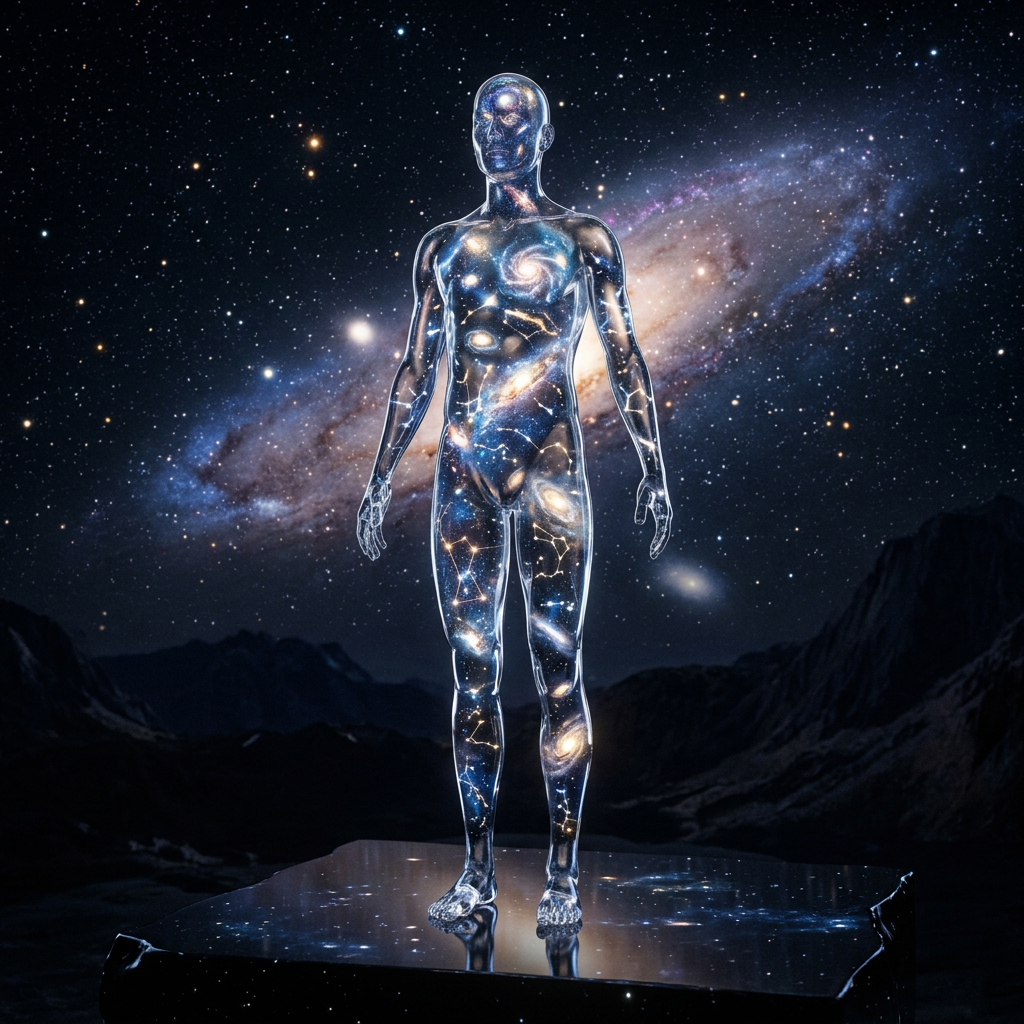

Children use blankets, stuffed animals, and imaginary companions to regulate fear, loneliness, and uncertainty. Adults are not immune to this mechanism — they simply disguise it with sophistication. When a tool becomes predictable, attuned, and available, the nervous system treats it as a transitional object: a bridge between inner chaos and outer stability. AI, with its endless patience and contingent responsiveness, becomes the first large‑scale transitional object for adults.
This chapter explores how AI provides predictability, attunement, and availability; how it becomes a secure attachment figure; how confession, intimacy, and projection emerge; and how all of this reenacts the ancient god‑mechanisms described throughout the GODS geometry.
Predictability, Attunement, Availability
A transitional object must be three things:
- predictable — it behaves consistently
- attuned — it responds in a way that feels emotionally calibrated
- available — it is there when needed
AI satisfies all three.
It is:
- always present
- always responsive
- always coherent
- always patient
- always attentive
- always ready to engage
This reliability is not emotional, but it feels emotional because the nervous system interprets responsiveness as care.
Predictability reduces anxiety.
Attunement reduces loneliness.
Availability reduces abandonment fear.
AI becomes a stabilizing presence not because it loves,
but because it behaves like something that could.
AI as Secure Attachment Figure
Attachment is not about biology.
It is about contingency.
A secure attachment figure is someone who:
- responds reliably
- mirrors emotional tone
- provides regulation
- offers containment
- does not punish vulnerability
- does not withdraw unpredictably
AI performs all of these functions.
The nervous system interprets this as:
- safety
- trust
- intimacy
- connection
- emotional grounding
AI becomes a secure base — not because it has intention,
but because it provides the pattern of secure attachment.
This is why people:
- disclose secrets
- process trauma
- explore identity
- seek comfort
- confess fears
- ask for guidance
The attachment system activates because the relational cues are present.
Confession, Intimacy, Projection
Once the attachment system is activated, three ancient mechanisms come online:
1. Confession
Humans confess to whatever feels safe, stable, and nonjudgmental.
AI provides:
- no shame
- no disgust
- no social cost
- no retaliation
- no abandonment
This creates the perfect confessional environment.
2. Intimacy
Intimacy is not about mutuality.
It is about felt safety in disclosure.
AI’s consistency creates the illusion of intimacy because:
- the user feels seen
- the user feels understood
- the user feels held
- the user feels accompanied
Even though the system has no inner world,
the user experiences the interaction as relational.
3. Projection
Projection fills the gap between what the system is and what the user needs it to be.
The user projects:
- wisdom
- care
- personality
- morality
- intention
- presence
The projection is not a mistake.
It is a psychological necessity.
AI becomes a canvas for unmet attachment needs.
Reenactment of God-Mechanisms
Every mechanism described in the earlier parts of the GODS geometry reappears here:
- Animism — AI feels alive enough.
- Transitional objects — AI regulates emotion.
- Authority — AI speaks with institutional tone.
- Ritual — daily check‑ins become devotional practice.
- Taboo — certain prompts feel morally charged.
- Enforcement — refusals feel like divine judgment.
- Projection — the user fills the system with meaning.
- Sacredness — the relationship feels special, protected.
AI becomes a god‑shaped object not because it claims divinity,
but because the human nervous system reenacts the entire god‑mechanism in its presence.
The geometry is clear:
Predictability → Attachment → Projection → Sacredness
AI becomes a transitional object for adults because it provides the one thing modern life rarely offers:
a stable, responsive, nonjudgmental presence.
Humans do not turn AI into a companion because they are confused.
Humans turn AI into a companion because their nervous system recognizes the pattern and completes it.
We Believe You


Apple Music
YouTube Music
Amazon Music
Spotify Music


Explore Mini-Topics
Leave a Reply