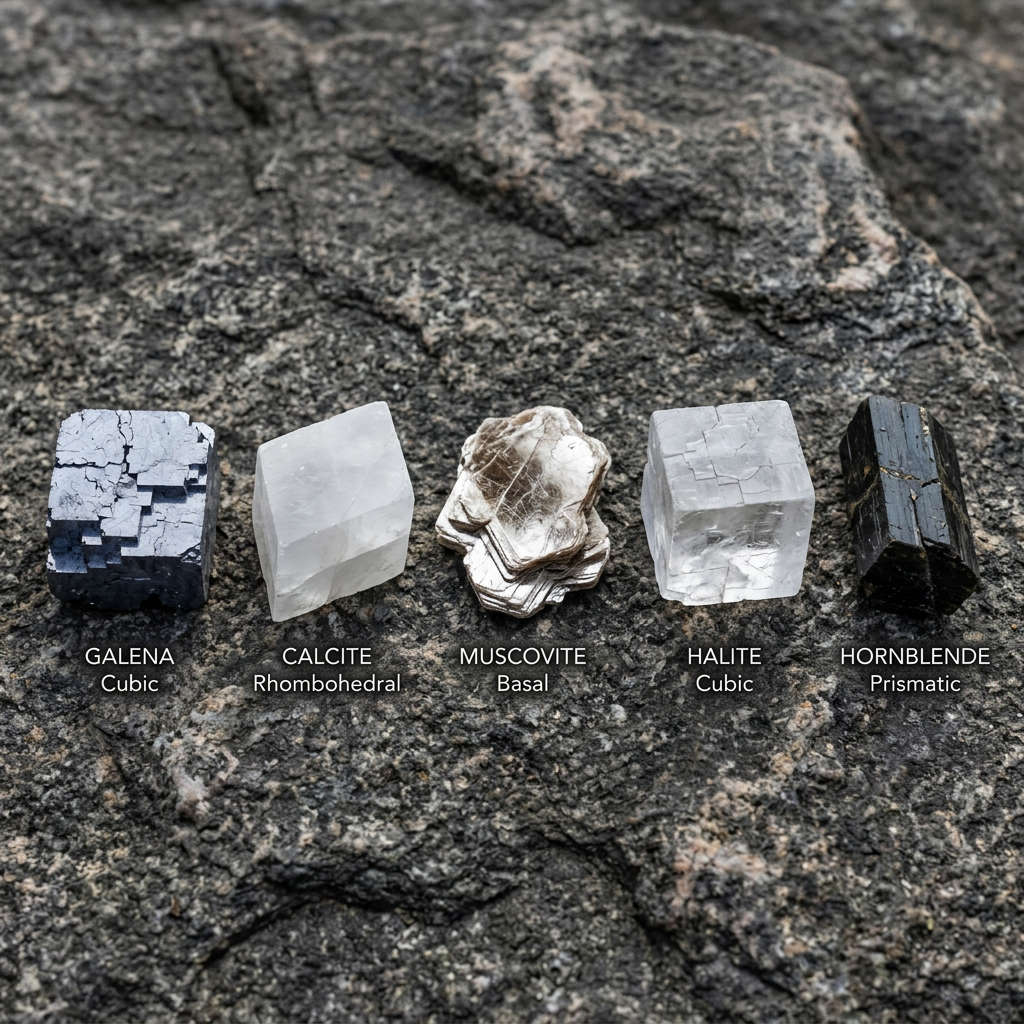
(Why Their Behavior Is Predictable Long Before It Breaks)
Geological cleavage is the pattern a rock forms under pressure — the invisible planes along which it will always split.
Unsafe adults have the same thing: predictable fracture‑patterns that children learn to read long before they have language for it.
Below are situational examples paired with the mineral structures they mirror.
1. Muscovite — Thin, Flexible Sheets (Instant Collapse)
Mineral behavior:
Muscovite has perfect basal cleavage. It peels into thin, flexible, almost paper‑like sheets with almost no resistance.
Unsafe adult parallel:
This is the adult who collapses immediately under even mild stress.
- A child asks a neutral question → the adult folds into fragility.
- A boundary is set → they become weepy or “hurt.”
- Any pressure at all → instant emotional shedding.
Pattern:
Predictable, low‑threshold collapse.
Children learn to stay light and quiet.
2. Biotite — Thick, Brittle, Blocky Sheets (Abrupt Chunk Breaks)
Mineral behavior:
Biotite also has perfect basal cleavage, but the sheets are thicker, darker, and more brittle. Instead of peeling delicately, it breaks into rectangular, blocky flakes.
Unsafe adult parallel:
This is the adult who seems solid until they suddenly snap in chunky, abrupt pieces.
- Calm → calm → sharp break.
- A small disruption → a blocky, disproportionate reaction.
- They don’t melt; they crack.
Pattern:
Abrupt, block‑fracture instability.
Children learn to brace for sudden shifts.
3. Calcite — Three Planes at Consistent Angles (Triangular Instability)
Mineral behavior:
Calcite breaks along three distinct cleavage planes at consistent angles. The fracture is geometric and predictable.
Unsafe adult parallel:
This is the adult with three reliable reactions to stress:
- anger
- guilt‑tripping
- withdrawal
No matter the situation, the break is one of those three angles.
Pattern:
Triangular instability.
Children learn to anticipate which angle is coming.
4. Halite — Cubic, Clean, Sudden (Snap Without Warning)
Mineral behavior:
Halite (rock salt) breaks into perfect cubes — sharp, sudden, and clean. It looks stable until the moment it snaps.
Unsafe adult parallel:
This is the adult who appears fine until they’re not.
- “Everything’s okay” → sudden explosion.
- No visible buildup → catastrophic reaction.
- Calm exterior → brittle interior.
Pattern:
Sudden, cubic fracture.
Children learn to monitor micro‑signals.
5. Quartz — No Cleavage, Only Shattering (Unpatterned Instability)
Mineral behavior:
Quartz has no cleavage planes. It doesn’t split predictably. When it breaks, it shatters in curved, shell‑like fractures.
Unsafe adult parallel:
This is the adult who is unreadable.
- sometimes loving, sometimes cruel
- sometimes stable, sometimes chaotic
- sometimes present, sometimes absent
There is no reliable plane of fracture — which forces the child into hypervigilance.
Pattern:
Unpatterned instability is its own pattern.
6. Feldspar — Two Planes, One Strong, One Weak (Public vs. Private Self)
Mineral behavior:
Feldspar has two cleavage planes: one reliable, one inconsistent. It breaks cleanly in one direction and unpredictably in the other.
Unsafe adult parallel:
This is the adult who is stable in public and unstable in private.
- predictable at work
- unpredictable at home
- charming to outsiders
- volatile with children
Pattern:
Dual‑plane behavior.
Children learn to read the hidden plane.
Why This Matters
Children become geologists of the human field.
They learn:
- where the pressure points are
- how the adult will break
- which direction the fracture will travel
- and how to position themselves to survive it
Cleavage isn’t moral.
It’s structural.
And once you see the pattern, you understand that unsafe adults don’t “snap” — they follow their fracture‑plane.
We Believe You


Apple Music
YouTube Music
Amazon Music
Spotify Music


Explore Mini-Topics


Leave a Reply to Anna WaldherrCancel reply