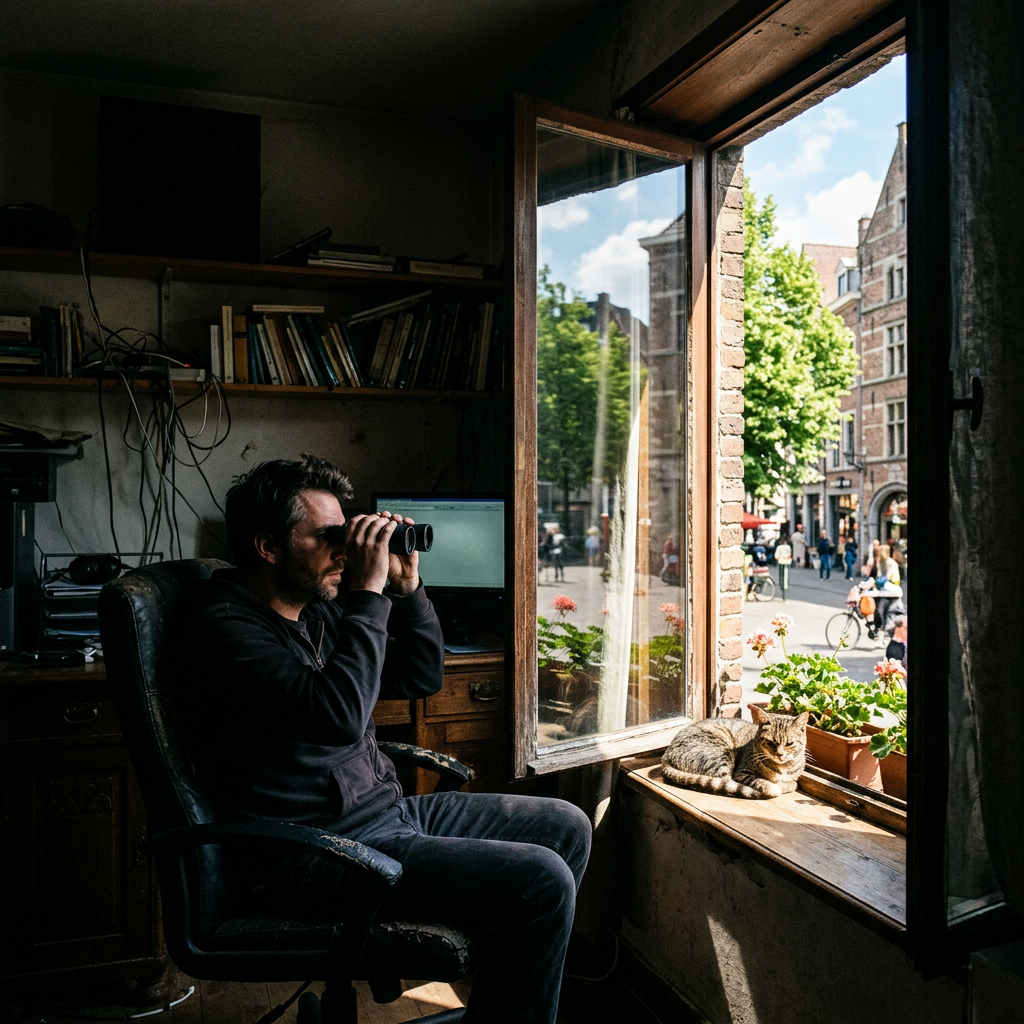
Children don’t misunderstand privacy.
They don’t “have something to hide.”
They don’t “need more supervision.”
They know exactly when an adult crosses into surveillance — reading, checking, snooping, listening, monitoring, interrogating, or accessing things that were never offered.
Kids don’t need the adult to say, “I’m just making sure you’re safe.”
Their body already knows the truth.
Privacy violations aren’t protection.
They are control.
And kids feel the difference instantly.
What Kids Actually Notice
Kids notice:
- when the adult reads their messages without permission
- when the adult goes through their backpack, drawers, or room
- when the adult listens at the door
- when the adult demands to know every detail of their inner world
- when the adult treats privacy as defiance
- when the adult uses “safety” as a cover for intrusion
- when the adult shares the child’s private information with others
- when the adult mocks or criticizes what they find
Kids track the surveillance, not the adult’s justification.
They feel:
- “You don’t trust me.”
- “You want control, not connection.”
- “My inner world isn’t safe with you.”
- “You will use what you find against me.”
This is not secrecy.
This is self‑protection.
What This Teaches a Child’s Nervous System
When an adult violates a child’s privacy, the child learns:
- “My thoughts aren’t mine.”
- “My feelings aren’t safe.”
- “I should hide what matters to me.”
- “I should never tell you the truth.”
- “You will punish me for being honest.”
- “I must protect myself from your reactions.”
- “Safety comes from secrecy, not transparency.”
This is how kids become:
- hyper‑private
- emotionally shut down
- anxious about being known
- terrified of vulnerability
- kids who lie to survive
- kids who hide their real selves
- kids who build entire inner worlds adults never see
Not because they’re deceptive.
Because privacy violations teach them that honesty is dangerous.
What This Does to a Child’s Inner World
A child who grows up with privacy violations learns:
- to compartmentalize
- to hide their feelings
- to mask their identity
- to distrust intimacy
- to fear being known
- to anticipate betrayal
- to believe that adults will weaponize their vulnerability
- to believe that their inner world must be protected at all costs
They learn that their mind is not their own.
They learn that their heart is not safe.
They learn that connection requires self‑erasure.
And they carry this into adulthood:
- hiding their emotions
- avoiding deep relationships
- feeling exposed when someone gets close
- lying reflexively to protect themselves
- keeping secrets even when they want to share
- feeling unsafe in intimacy
- believing that privacy is the only form of safety
This is not avoidance.
It’s survival.
How It Affects Other Adults
Privacy‑violating adults don’t just harm the child.
They distort the entire relational ecosystem.
Other adults:
- become the child’s confidant
- get labeled “too permissive” for respecting privacy
- feel pressured to join the surveillance
- become the buffer between the child and the violating adult
- normalize intrusion to avoid conflict
- or become targets of the same violations
The violating adult becomes the watcher.
Everyone else becomes careful.
And the child learns that no one will protect their inner world.
What Safer Adults Actually Do
A safer adult doesn’t avoid involvement.
They avoid intrusion.
Safer adults:
- ask before entering private spaces
- knock and wait
- treat journals, messages, and belongings as sacred
- build trust instead of surveillance
- create safety through connection, not control
- protect the child’s dignity
- repair when they cross a line
- teach privacy by modeling it
They don’t say,
“If you have nothing to hide, you won’t mind.”
They say,
“Your inner world belongs to you.”
Kids don’t need adults who monitor them.
They need adults who make honesty safe.
What This Feels Like in a Child’s Body
Privacy‑violating adult:
- freezing
- shrinking
- masking
- lying to survive
- hiding
- shutting down
- feeling exposed
- losing trust
Privacy‑respecting adult:
- breathing
- grounding
- opening
- sharing
- trusting
- connecting
- choosing
- staying regulated
The child’s body learns:
- “My inner world is mine.”
- “I can share when I want to.”
- “I don’t have to hide to stay safe.”
- “Honesty won’t be used against me.”
This is what psychological safety feels like.
If You Grew Up With This
You weren’t “secretive.”
You weren’t “closed off.”
You weren’t “hard to read.”
You were a child whose privacy was violated.
Your nervous system learned that secrecy was the only safe boundary.
And you’re still protecting yourself.
If You’re Seeing This in Your Child Now
If you’re seeing:
- freezing
- shrinking
- masking
- lying to survive
- hiding
- shutting down
- feeling exposed
- losing trust
don’t ask them to “open up.”
Don’t ask them to “tell you everything.”
Don’t ask them to “stop being so private.”
Just watch.
Watch who your child hides their belongings from. Watch who they won’t talk around. Watch who they protect their inner world from. Watch who they lie to reflexively. Watch who they never share feelings with. Watch who they brace for intrusion with.
Your child’s body is telling you the truth.
Believe what you see.
Protect them from the surveillance you once had to survive.
We Believe You


Apple Music
YouTube Music
Amazon Music
Spotify Music


Explore Mini-Topics
Leave a Reply