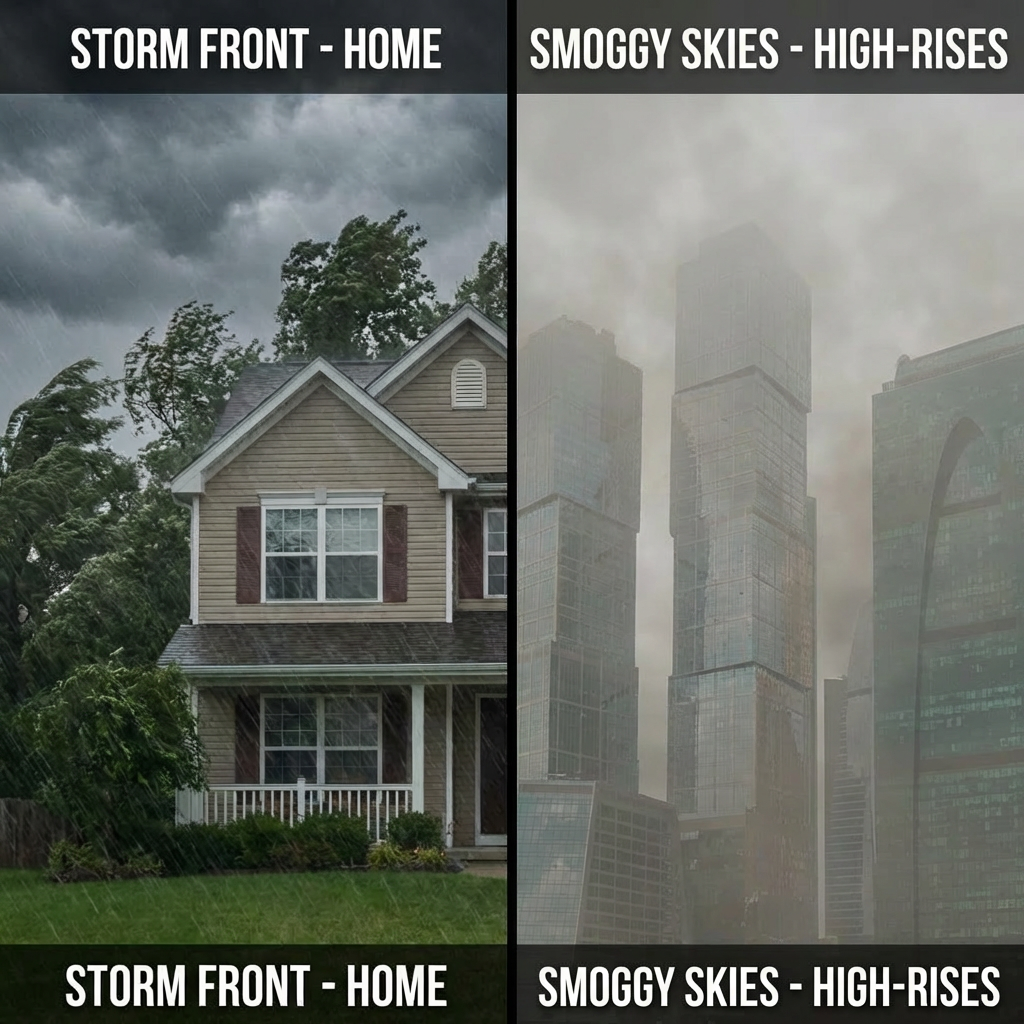
Insurance inflation doesn’t just strain individual households — it reshapes the entire ownership landscape. When premiums rise faster than wages, savings, or rental income, the only actors who can survive the volatility are those already operating at corporate scale. This transforms insurance markets into a mechanism of consolidation, shifting homes out of community ownership and into institutional portfolios.
Why Small Owners Can’t Compete
Small landlords and everyday homeowners operate with:
- limited cash reserves
- no ability to self‑insure
- no access to bulk‑rate insurance
- no portfolio to spread risk across
When insurance premiums spike, they face immediate financial pressure. A single unexpected increase can destabilize their entire budget. For many, the only viable exit is to sell — often quickly, often below market, and often to buyers who can close without financing.
Why Corporate Owners Thrive Under Volatility
Institutional investors experience the same insurance environment, but not the same consequences. They can:
- negotiate lower rates through bulk policies
- absorb losses across hundreds or thousands of units
- self‑insure or partially self‑insure
- treat insurance volatility as a predictable business cost
Where small owners see crisis, corporate actors see opportunity. Rising insurance costs create a steady supply of distressed or pressured sellers, allowing institutions to expand their holdings with minimal competition.
The Structural Shift in Ownership
As insurance inflation pushes individuals out, the ownership landscape tilts toward:
- private equity landlords
- real estate investment trusts (REITs)
- hedge‑fund‑backed property managers
- short‑term rental conglomerates
These entities are not rooted in the community. Their goal is not stability, but yield. They acquire homes not to live in them, but to extract value from them.
Insurance inflation becomes the lever that moves housing from:
- local to non‑local
- personal to corporate
- community‑based to portfolio‑based
Why This Matters for Housing Futures
When corporate ownership expands, communities experience:
- higher rents
- more aggressive eviction practices
- reduced maintenance
- less local accountability
- fewer paths back into ownership for ordinary families
Insurance inflation accelerates this shift by making it harder for individuals to stay in the market and easier for institutions to dominate it.
Insurance inflation doesn’t just raise premiums — it reshapes who owns the housing system, and by extension, who the housing system is built to serve.
We Believe You


Apple Music
YouTube Music
Amazon Music
Spotify Music


Explore Mini-Topics
Leave a Reply