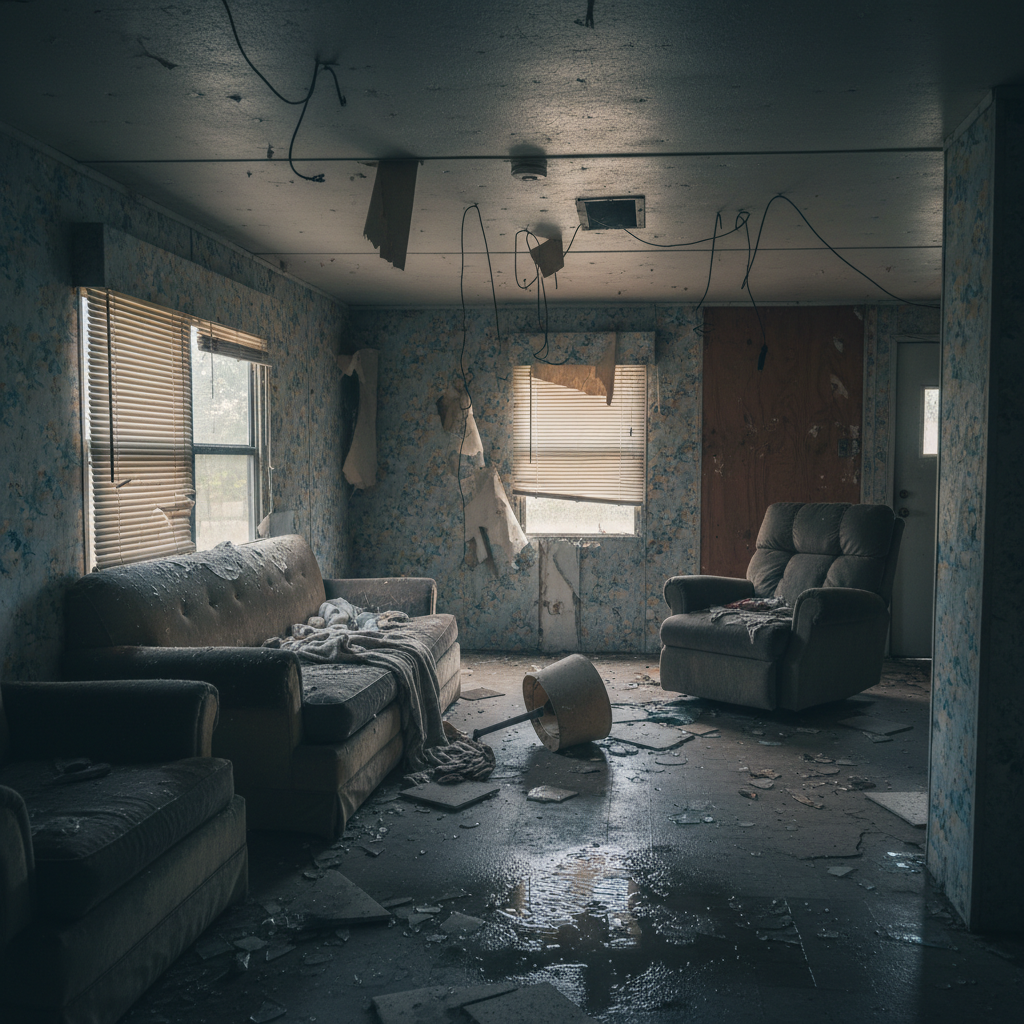
“The ‘Christian’ Rental That Left Us Jumping Over Holes in the Floor”
When people hear “Christian property management,” they picture kindness, integrity, maybe even a little extra compassion. That branding works because it signals safety. It signals trust. It signals that the people running the place see you as a human being.
But branding is not behavior.
And in Loveland, “Christian” was the front door to one of the most structurally neglected, unsafe, and retaliatory housing situations we ever lived through.
The Promise
His House Property Management presented itself as a faith‑based alternative to the corporate rental world. The message was simple:
We care. We’re different. We’re community‑minded.
That’s what we thought we were walking into.
What we walked into was a collapsing trailer with:
- flooring so unstable we had to jump over sections of the hallway
- mold and mildew spreading through the walls
- a bathroom door that broke because the frame was already rotted
- electrical issues
- plumbing issues
- missing skirting
- a second bedroom too small for a bed
- a swamp cooler that failed in the middle of summer
- a maintenance worker who entered our home maskless during COVID
This wasn’t “wear and tear.”
This was structural failure.
And the worst part?
They knew.
The Bait‑and‑Switch
Before we moved in, they showed us four trailers “in repair.” They promised to prioritize the one we chose. They promised it would be ready. They promised we’d have time to look it over.
None of that happened.
Repairs never started.
Progress never came.
And two weeks before our move‑out date, they suddenly offered a “move‑in ready” unit we had never seen.
We got the lease two days before the move.
We had no time to inspect.
We had no alternatives.
We had a child.
We had to sign.
This is how forced nomadism works:
you’re always making decisions under pressure, with no real choices.
The Reality
Once we were inside, the truth was unavoidable: the trailer was unsafe. The floor was literally disappearing beneath us. The hallway was impassable. The structure was degrading around us.
And yet, the lease was strict, punitive, and unforgiving — the same kind of lease you’d expect in a luxury apartment, not a collapsing trailer.
We learned quickly that:
- reporting maintenance made you a “problem tenant”
- repairs were delayed or ignored
- any request could be used against you
- any complaint could trigger retaliation
- any visibility could threaten your housing
The “Christian” label didn’t protect us.
It protected them.
The Emotional Cost
Living in that trailer meant:
- managing fear every time the floor shifted
- keeping a toddler safe in a home that wasn’t safe
- trying to work while the structure literally fell apart
- absorbing the shame of living in conditions people don’t believe still exist
- carrying the emotional labor of a partner who blamed the home on you
- knowing that if you pushed too hard, you could lose the only roof you had
This wasn’t just bad housing.
It was structural violence wrapped in religious branding.
The Retaliation
When we finally reported everything — because we had to — the response wasn’t repair. It was non‑renewal.
Not because we did anything wrong.
Not because we damaged anything.
Not because we violated the lease.
But because we noticed.
In this system, noticing is the real violation.
The Pattern
Looking back, it’s clear that His House wasn’t an outlier. It was the first chapter in a pattern that would repeat across every home we lived in:
- unsafe conditions
- promises that evaporated
- repairs that never came
- retaliation for speaking up
- non‑renewals used as punishment
- forced moves that drained our time, money, and health
This is how forced nomadism begins:
with a home that was never meant to be stable, a lease that was never meant to protect you, and a landlord who was never meant to be accountable.
Why This Matters
People talk about homelessness in Loveland like it’s a mystery.
Like it’s a moral failing.
Like it’s something that happens to “other people.”
But the truth is simple:
If you live in a home where the floor is collapsing and the landlord can retaliate for reporting it, you are already one step into the homelessness pipeline.
His House wasn’t just a bad landlord.
They were the first link in a chain of displacement that would follow us for years.
And they are not the only ones.
In the next episode, we’ll look at the cost of staying housed — not just in money, but in time, labor, health, and the physical toll of moving again and again under duress.
Apple Music
YouTube Music
Amazon Music
Spotify Music


Explore Mini-Topics
Leave a Reply