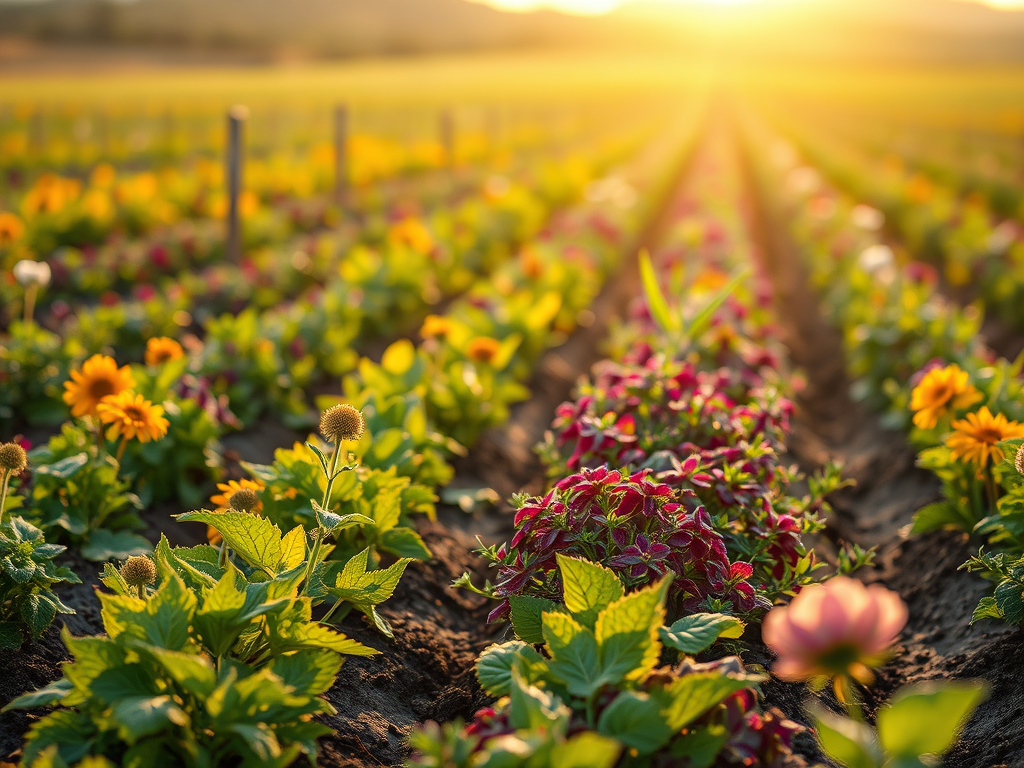
RELATIONAL AGRICULTURE
The Cultivation, Stewardship, and Regeneration of Relational Ecosystems
1. Agriculture as the Oldest Relational Science
Classical agriculture is the study of how to cultivate life.
Relational Agriculture is the study of how to cultivate coherence.
It asks:
- What is the soil of a relational field
- What nutrients does it need
- What crops (patterns) can grow here
- What pests (distortions) threaten it
- What seasons does it move through
- What tools does it require
- What regenerative practices sustain it
This is not metaphor.
It is ecological engineering applied to relational life.
2. Relational Soil
Every relational field has a “soil layer” — the substrate that determines what can grow.
Relational soil is composed of:
- trust
- safety
- shared meaning
- rhythm
- boundary integrity
- metabolic health
Rich soil produces:
- creativity
- intimacy
- collaboration
- insight
- resilience
Depleted soil produces:
- burnout
- fragmentation
- stagnation
- conflict
- collapse
Relational Agriculture begins with soil restoration.
3. Relational Nutrients
Just as plants require nitrogen, phosphorus, and potassium, relational systems require core nutrients:
1. Coherence
The structural nutrient.
2. Rhythm
The metabolic nutrient.
3. Meaning
The cognitive nutrient.
4. Boundary Integrity
The protective nutrient.
5. Multiplicity
The diversity nutrient.
6. Resonance
The connective nutrient.
A nutrient imbalance is the root cause of most relational failures.
4. Relational Crops
A “crop” is any relational pattern you intentionally cultivate.
Examples:
- intimacy
- collaboration
- creativity
- distributed agency
- community coherence
- identity stability
- audience trust
Each crop requires:
- specific soil
- specific nutrients
- specific rhythms
- specific boundaries
Relational Agriculture teaches you which crops can grow in which fields.
5. Relational Seasons
Every relational ecosystem moves through seasons:
Spring — Emergence
New patterns, new connections, new identity shoots.
Summer — Growth
High energy, high metabolism, high output.
Autumn — Harvest
Integration, reflection, consolidation.
Winter — Dormancy
Rest, contraction, soil restoration.
Systems collapse when they try to stay in summer forever.
6. Relational Weather
Weather is the external environment that affects the field.
Examples:
- platform volatility
- cultural shifts
- economic stress
- institutional instability
- technological change
Weather is not controllable.
But it is predictable.
Relational Agriculture teaches systems to adapt to weather rather than resist it.
7. Relational Pests
Pests are patterns that consume relational nutrients without contributing to the ecosystem.
Examples:
- chronic misalignment
- attention parasites
- narrative hijacks
- coercive dynamics
- viral distortions
- boundary‑breaching identities
This is where Relational Virology integrates directly.
Pests are not “bad people.”
They are patterns that deplete the field.
8. Relational Tools
Agriculture requires tools.
So does relational cultivation.
Tools include:
- boundary implements
- rhythm scaffolds
- coherence trellises
- metabolic buffers
- redundancy nets
- viral containment protocols
These tools come from Relational Engineering.
9. Regenerative Relational Agriculture
Regenerative agriculture restores soil rather than depleting it.
Regenerative relational agriculture restores coherence rather than extracting it.
Principles:
1. No‑till boundaries
Minimal disruption of identity.
2. Cover‑cropping with rhythm
Always maintain a protective pulse.
3. Composting distortion
Transforming harm into nutrient.
4. Biodiversity of modes
Plurality increases resilience.
5. Distributed agency
Shared load prevents collapse.
6. Slow cycles
Rest is a nutrient.
This is the future of relational stewardship.
10. Relational Farming vs. Relational Gardening
Two modes of cultivation:
Farming
Large‑scale, systemic, ecosystem‑level design.
Used for communities, organizations, platforms, audiences.
Gardening
Small‑scale, intimate, high‑touch cultivation.
Used for relationships, identity systems, creative partnerships.
Both require:
- tending
- rhythm
- patience
- ecological awareness
But they operate at different scales.
11. Relational Harvest
Harvest is the moment when the system yields:
- insight
- coherence
- creative output
- intimacy
- stability
- transformation
Harvest is not extraction.
It is the natural result of healthy cultivation.
12. Closing: Agriculture as the Stewardship of Relational Life
Relational Agriculture is the discipline that teaches us:
- how to cultivate coherence
- how to regenerate depleted fields
- how to design relational ecologies
- how to steward systems through seasons
- how to protect against pests and viral patterns
- how to harvest insight without extraction
- how to build ecosystems that endure
It is the ecological heart of Pluriology — the return to the land, the soil, the cycles, the tending.
It is the discipline of relational stewardship.


Leave a Reply