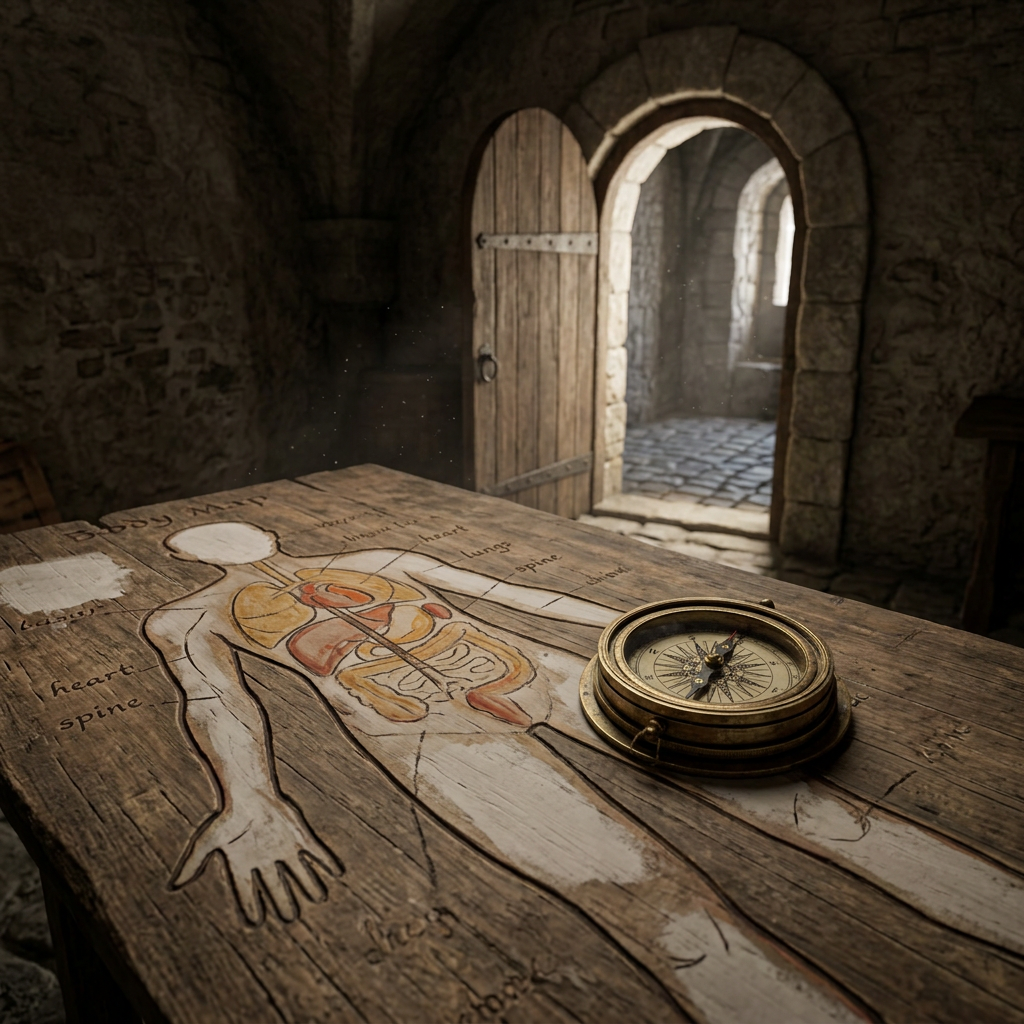
Puberty Begins Before Curriculum
Puberty does not wait for curriculum. Bodies begin changing years before institutions are willing to acknowledge those changes. For survivors, this mismatch is not abstract — it is the landscape we grew up inside. Our bodies shifted, surged, bled, swelled, and awakened while adults insisted we were “too young” to learn what was already happening. This chapter maps the biology gap: the years-long distance between bodily development and educational acknowledgment. It shows how this gap creates vulnerability, shame, secrecy, and measurable harm. The violence of silence begins with timing.
Framing the harm: why limiting body literacy is violence
Structural violence emerges when institutions create harm through omission. The biology gap is one of its clearest expressions. When puberty begins at eight, nine, ten, and eleven — but reproductive anatomy is taught at fourteen or fifteen — children spend their most vulnerable developmental years without language, without context, and without institutional support.
This gap is not accidental. It is engineered through curriculum design, political pressure, and bureaucratic inertia. The result is predictable: children experience profound bodily change in a vacuum of silence.
Empirical evidence: puberty begins early, curriculum begins late
The biology is clear.
Puberty onset:
- Breast development often begins around 8–10.
- Testicular enlargement often begins around 9–11.
- Menarche typically occurs between 10–13, but can occur earlier.
- Hormonal shifts begin years before visible changes.
Curriculum timing:
- Many U.S. districts introduce reproductive anatomy in 5th–6th grade.
- Avoidance-based districts delay until 9th grade.
- Abstinence-leaning districts may omit anatomy entirely until high school biology.
This creates a 3–6 year gap where children’s bodies are changing but schools remain silent.
Consequences of the gap:
- Children interpret bodily changes as shameful, frightening, or “wrong.”
- They lack vocabulary to describe sensations, discomfort, or harm.
- They are more vulnerable to coercion and grooming.
- They are less likely to disclose inappropriate contact.
- They are more likely to internalize blame.
The biology gap is not benign. It is a risk multiplier.
The biology gap in lived experience
For survivors, the biology gap is not theoretical. It is memory.
Many of us bled in secret.
Many of us hid stained underwear.
Many of us experienced erections or nocturnal emissions without explanation.
Many of us were touched before we had words for the parts being touched.
Many of us learned about our bodies through harm rather than instruction.
The biology gap is where silence becomes vulnerability.
Shame as a tool of control
When institutions refuse to name bodily changes, they teach children that those changes are taboo. Shame becomes a mechanism of control. Children learn that their bodies are embarrassing, dirty, or dangerous. Shame suppresses questions. Shame suppresses disclosure. Shame suppresses autonomy.
Shame is not protective. Knowledge is protective.
Bodies without maps: autonomy denied
Autonomy requires literacy. A child cannot assert bodily autonomy if they cannot name their body, understand its functions, or recognize when something is wrong.
Reporting requires vocabulary.
Safety requires vocabulary.
Consent requires vocabulary.
When schools delay reproductive education until years after puberty begins, they deny children the basic tools required for self-defense.
Educational omission is not neutral. It is structural violence enacted through timing.
TSD Case Study: The Biology Gap in Local Practice
Thompson School District exemplifies the biology gap in real time. TSD delays reproductive anatomy until 9th grade biology, long after puberty has begun for most students. Middle school science covers cell division, genetics, and ecology — but not human reproductive systems, not consent, not bodily autonomy, not the mechanics of puberty.
This means:
- A child who begins menstruating at 10 will wait four years before the district teaches what menstruation is.
- A child who experiences erections at 9 will wait five years before the district explains why.
- A child who experiences hormonal shifts at 8–10 will wait until 14–15 for institutional acknowledgment.
This gap is not typical. Most U.S. districts introduce reproductive anatomy in 5th–6th grade. TSD’s delay creates a local environment where children experience puberty without institutional support.
Larimer County’s youth STI and teen pregnancy patterns reflect statewide trends: where reproductive education is delayed, risk increases. TSD’s biology gap is not an oversight — it is a structural choice with measurable consequences.
Colorado Context: A Statewide Biology Gap
Colorado’s “local control” model allows districts to decide how — or whether — to teach reproductive anatomy. While Colorado prohibits abstinence-only instruction, it does not require comprehensive reproductive education in middle school.
This creates statewide variability:
- Some districts teach reproductive anatomy in 5th grade.
- Some teach it in 6th–7th grade.
- Some delay until 9th grade.
- Some provide only partial instruction.
Statewide data show that districts with early, comprehensive programs have lower teen pregnancy and STI rates than districts that delay or minimize reproductive content.
Colorado’s biology gap is unevenly distributed, reproducing inequity across rural, suburban, and urban communities.
National Landscape: The U.S. Biology Gap
Nationally, the U.S. has one of the largest biology gaps among industrialized nations.
International comparison:
- Countries like the Netherlands, Sweden, and Germany introduce reproductive anatomy and consent in elementary school.
- These countries have lower teen pregnancy, lower STI rates, and lower sexual violence.
U.S. timing:
- Many states allow reproductive anatomy to be delayed until high school.
- Abstinence-only states often forbid discussion of contraception or consent.
- Federal abstinence funding historically incentivized late or incomplete instruction.
The U.S. biology gap is not biological. It is political.
Policy, politics, and the fantasy of neutrality
Districts often justify delayed instruction with phrases like “age appropriateness,” “parental rights,” or “community values.” But these justifications ignore biology. Puberty does not wait for parental comfort. Hormones do not wait for political consensus. Bodies do not wait for curriculum.
“We don’t teach that yet” is not neutral. It is a decision with measurable consequences.
Survivor literacy: teaching what was withheld
Survivors, parents, and communities build parallel systems of body literacy when institutions fail. A survivor-informed framework includes:
- Accuracy
- Autonomy
- Consent
- Safety
- Non-shame
These principles counteract the biology gap by teaching what institutions delay.
Conclusion: the biology gap is structural violence
Puberty begins before curriculum. Bodies change before institutions acknowledge them. The biology gap is not a minor misalignment — it is a form of structural violence that increases vulnerability, reproduces inequity, and leaves children defenseless.
We deserved to know our bodies before they were harmed. The children in our care still do.
Visit the Series Archive to view the rest of the Series.


Apple Music
YouTube Music
Amazon Music
Spotify Music
Structural Violence of Limiting Body Literacy in Education
- The Violence of Silence
- Puberty Begins Before Curriculum
- How Schools Learned to Look Away
- What Happens When Kids Don’t Know
- When Knowledge is Forbidden
- Bodies Without Maps
- The Institutional Fantasy of the Pre-Pubescent Child
- The Violence of “Neutrality”
- What Silence Costs Us
- How Silence Reproduces Itself
- Teaching What Was Withheld
- A Survivor Literacy Model for Reproductive Education
- Ending the Violence of Shame
- Case Studies of Harm
- The Economics of Abstinence Education
- How Districts Justify Silence
- Who “Benefits” from Abstinence-Only Education?
- The Geography of Silence
Leave a Reply