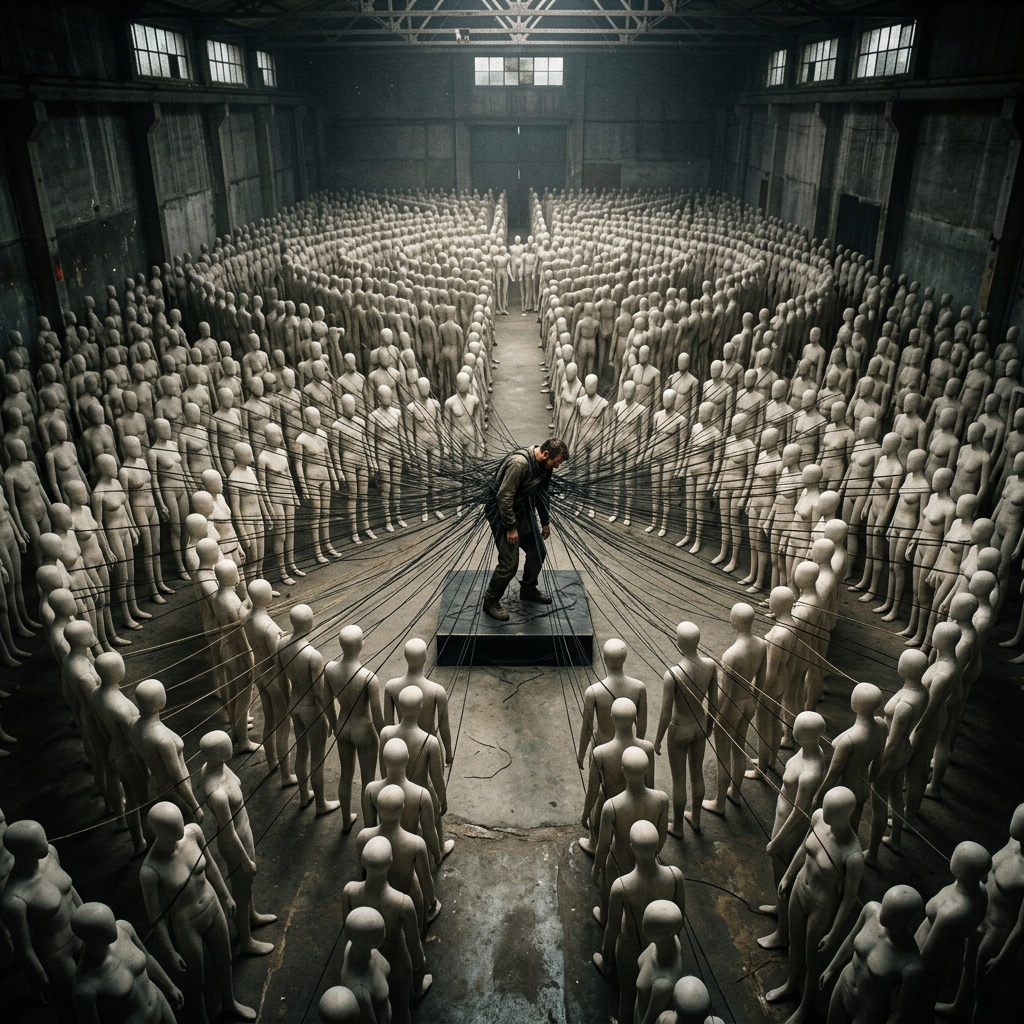
Once codependence is in place and the relational roles have fused, the system stops behaving like a set of individual people.
It starts behaving like an operating system.
The emotional logic becomes predictable, automated, and self‑protective.
At this point, FamilyScapegoatSyndrome.exe installs — not as a metaphor, but as a functional description of how the system now runs.
The New Operating Logic
After installation, the system begins to operate on a set of default processes:
- fused roles — each person is locked into a narrow relational function
- misattribution — feelings are consistently assigned to the wrong source
- emotional outsourcing — one person becomes responsible for everyone’s regulation
- blame consolidation — discomfort is routed toward a single target
- conflict absorption — tension is redirected into the same person every time
- identity distortion — the scapegoat becomes defined by the system’s needs, not their reality
These processes run automatically.
They don’t require conscious intent.
They don’t require malice.
They don’t even require conflict.
They simply require the structure to remain intact.
The Scapegoat as Shock Absorber
Once the OS is installed, the scapegoat becomes the relational shock absorber.
Every spike of:
- fear
- shame
- conflict
- disappointment
- frustration
- unmet need
gets routed into them.
Not because they caused it.
Not because they deserve it.
But because the system has learned that this is the most stable configuration.
The scapegoat becomes the emotional landfill — the place where the system deposits everything it cannot process.
A Self‑Reinforcing System
Here’s the most important part:
Once FamilyScapegoatSyndrome.exe is installed, the system becomes self‑reinforcing.
- The more the scapegoat absorbs, the more the system relies on them.
- The more the system relies on them, the more the roles harden.
- The more the roles harden, the more the OS protects itself.
- The more the OS protects itself, the harder it becomes to see the pattern.
This is why scapegoat dynamics can last for years, decades, or generations.
The system isn’t waiting for someone to behave differently.
It’s running a program.
And until the program is interrupted, the pattern continues — regardless of intention, love, or goodwill.
The OS doesn’t need a villain.
It only needs a structure.
We Believe You


Apple Music
YouTube Music
Amazon Music
Spotify Music


Explore Mini-Topics
Leave a Reply