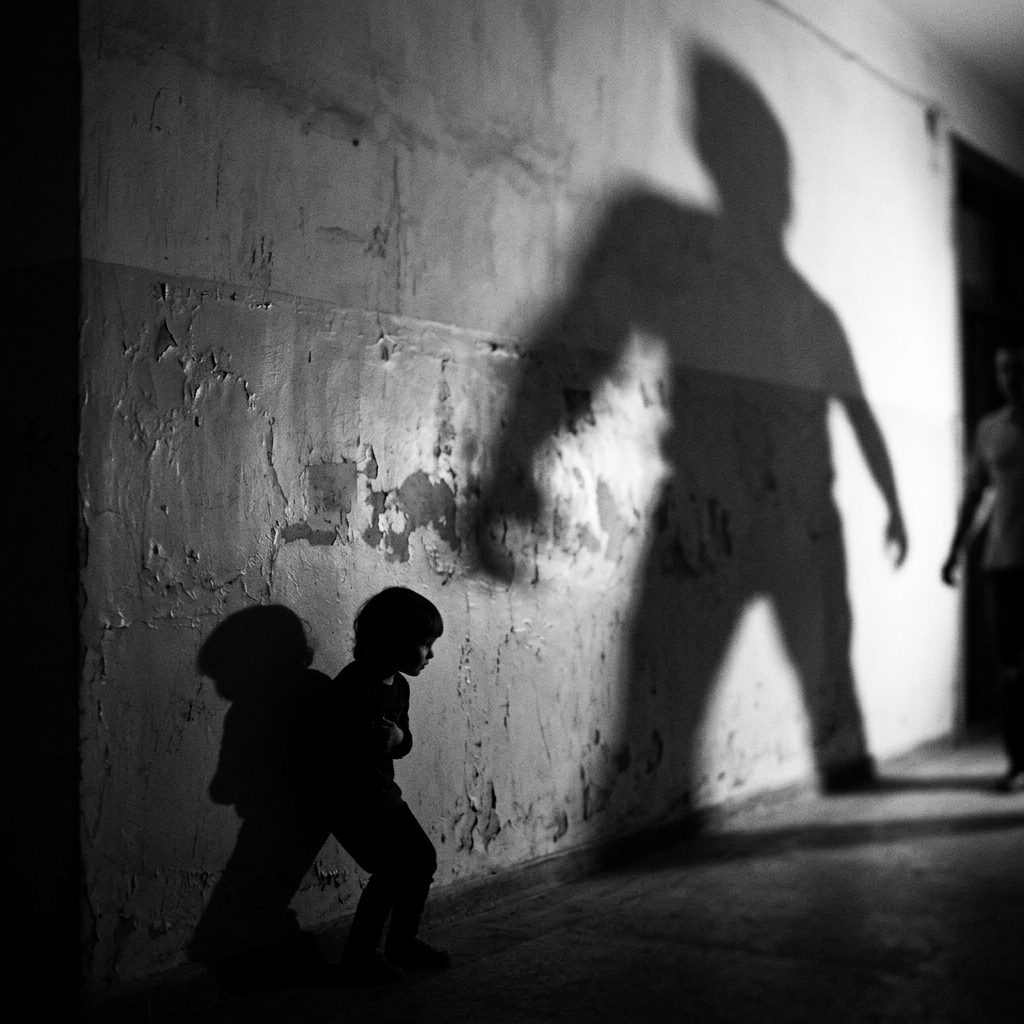
Children don’t need to understand psychology to understand dysregulation.
They don’t need vocabulary for it.
They don’t need an adult to explain what’s happening.
They feel it in their bones.
A dysregulated adult is a weather system — sudden storms, unpredictable winds, pressure changes that make the child’s whole body brace. Kids don’t just notice the outburst. They notice the pattern, the timing, the charge, and the cost.
And they know exactly who pays that cost.
What Kids Actually Notice
Kids don’t just see the yelling, the slamming, the sighing, the pacing, the crying, the stonewalling, the emotional dumping.
They notice:
- how fast the adult’s mood flips
- how big the reaction is compared to the situation
- how the adult’s body changes — eyes, jaw, shoulders, breath
- how everyone else in the room suddenly orbits the adult
- how the adult’s distress becomes the center of gravity
- how their own needs vanish the moment the adult escalates
Kids track the impact, not the explanation.
They feel:
- “Your feelings take over the whole room.”
- “My feelings disappear when yours show up.”
- “I have to manage you to stay safe.”
- “Your body is unpredictable, so mine can’t relax.”
This is not misinterpretation.
This is survival literacy.
What Dysregulation Teaches a Child’s Nervous System
When an adult can’t regulate, the child learns:
- “I cause your reactions.”
- “I have to be careful with you.”
- “My needs are dangerous.”
- “I must shrink to keep the peace.”
- “Your emotions matter more than mine.”
- “Calm is fragile and can break at any moment.”
This is how kids become:
- fawners
- perfectionists
- conflict‑avoidant
- hypervigilant
- self‑erasing
- prematurely adult
- terrified of making mistakes
Not because they’re dramatic.
Because their body is adapting to an unstable environment.
What This Does to a Child’s Inner World
A dysregulated adult becomes the child’s barometer.
The child’s own internal signals get overwritten.
They learn to:
- scan the adult’s face before speaking
- predict the adult’s mood before entering a room
- soften their voice
- hide their excitement
- hide their sadness
- hide their needs
- hide their truth
They become experts at not triggering the adult.
And the tragedy is:
They think this is what love requires.
How It Affects Other Adults
Dysregulation doesn’t just impact the child.
It reorganizes the entire system.
Other adults:
- walk on eggshells
- overfunction to keep the peace
- silence themselves
- avoid conflict
- absorb the emotional fallout
- become the “stable one” by default
- or become dysregulated themselves
The loudest nervous system sets the rules.
Everyone else adapts.
What Safer Adults Actually Do
A safer adult doesn’t need to be perfectly calm.
They just need to be responsible for their own emotional weather.
Safer adults:
- notice their escalation
- pause before reacting
- take space without abandoning
- name their state without dumping it on the child
- repair when they rupture
- return to connection without demanding the child soothe them
They don’t say,
“You made me yell.”
They say,
“My reaction was too big. That wasn’t your fault.”
Kids don’t need perfect adults.
They need adults who don’t make children responsible for adult storms.
What This Feels Like in a Child’s Body
Dysregulated adult:
- flinching
- shrinking
- scanning
- appeasing
- freezing
- bracing
- monitoring
- self‑silencing
Regulated or repairing adult:
- breathing
- softening
- grounding
- staying present
- staying connected
- staying accountable
- staying adult
The child’s body learns:
- “Your feelings don’t endanger me.”
- “I don’t have to manage you.”
- “I can have my own emotions.”
- “I can trust the space between us.”
This is what safety feels like.
If You Grew Up With This
You weren’t “too sensitive.”
You weren’t “overreacting.”
You weren’t “walking on eggshells for no reason.”
You were adapting to an adult who couldn’t regulate themselves.
Your nervous system did exactly what it needed to do to survive.
And it worked.
If You’re Seeing This in Your Child Now
If you’re seeing:
- flinching
- shrinking
- scanning
- appeasing
- freezing
- bracing
- monitoring
- self‑silencing
don’t ask them why.
Don’t ask them to explain.
Don’t ask them to name the source.
Just watch.
Watch who your child becomes small around. Watch who they over‑function for. Watch who they try to soothe. Watch who they avoid upsetting. Watch who they monitor like a storm cloud.
Your child’s body is telling you the truth.
Your job is to believe what you see.
And to protect them from the emotional weather you once had to survive.
We Believe You


Apple Music
YouTube Music
Amazon Music
Spotify Music


Explore Mini-Topics
Leave a Reply