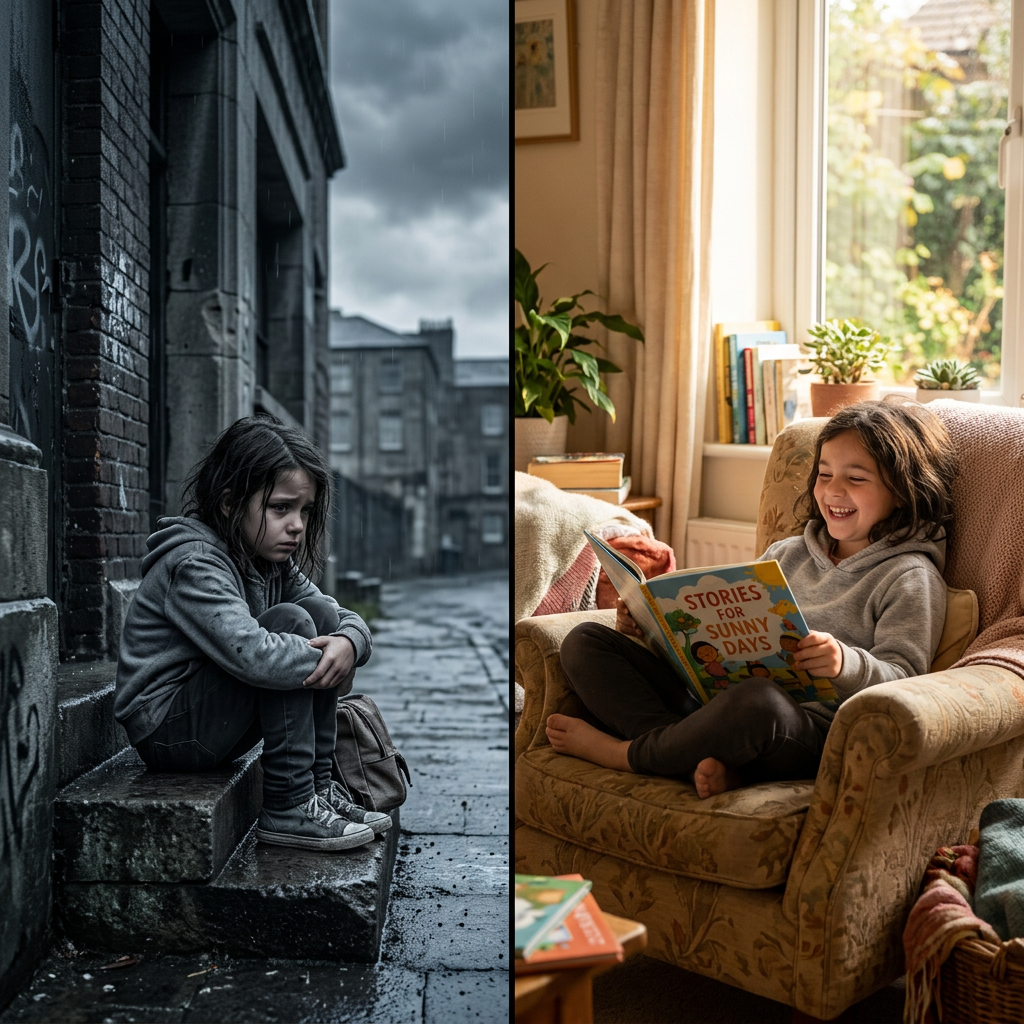
Children don’t misunderstand communication.
They don’t “talk wrong.”
They don’t “take too long to get to the point.”
They don’t “ask too many questions.”
They don’t “use the wrong tone.”
They communicate in the way their brain, development, culture, neurotype, and emotional state allow.
Kids don’t need the adult to say, “Use your words.”
Their body already knows the truth:
The adult only accepts communication that fits their preferences.
And they feel the rupture instantly.
What Kids Actually Notice
Kids notice:
- when the adult interrupts them
- when the adult mocks their tone, cadence, or phrasing
- when the adult demands eye contact that burns
- when the adult treats silence as defiance
- when the adult treats questions as disrespect
- when the adult punishes stimming, scripting, or pacing
- when the adult forces verbal communication when the child isn’t ready
- when the adult treats their natural communication style as a problem
Kids track the rules, not the adult’s justification.
They feel:
- “You don’t want to understand me.”
- “You want me to communicate like you.”
- “My natural voice irritates you.”
- “I have to perform communication to stay safe.”
This is not stubbornness.
This is survival.
What This Teaches a Child’s Nervous System
When an adult rejects a child’s communication style, the child learns:
- “My voice is wrong.”
- “My way of expressing myself is unacceptable.”
- “I should mask to be understood.”
- “I should hide my natural communication patterns.”
- “I should only speak in ways that keep you comfortable.”
- “Silence is safer than authenticity.”
- “Connection requires performance.”
This is how kids become:
- chronic maskers
- anxious speakers
- kids who freeze when asked a question
- kids who script conversations
- kids who apologize for their tone
- kids who avoid communication altogether
- kids who feel defective for how they speak
Not because they’re shy.
Because their voice was unwelcome.
What This Does to a Child’s Inner World
A child who grows up with communication invalidation learns:
- to distrust their natural voice
- to fear being misunderstood
- to overthink every word
- to mask their tone, cadence, and expression
- to disconnect from spontaneous communication
- to feel ashamed of their natural patterns
- to believe that being understood requires self‑erasure
- to believe that communication is a performance, not a connection
They learn that their voice is a liability.
They learn that their authenticity is dangerous.
They learn that their communication must be curated.
And they carry this into adulthood:
- social anxiety
- fear of speaking up
- fear of asking questions
- fear of being “too much” or “too blunt”
- difficulty advocating for themselves
- chronic over‑explaining
- choosing relationships where they must shrink their voice
This is not insecurity.
It’s conditioning.
How It Affects Other Adults
When one adult invalidates a child’s communication style, the whole system shifts.
Other adults:
- become the child’s translator
- get labeled “too permissive” for understanding the child
- feel pressured to enforce the same communication rules
- become the buffer between the child and the invalidating adult
- normalize communication policing to avoid conflict
- or become targets of the same criticism
The invalidating adult becomes the judge.
Everyone else becomes the interpreter.
And the child learns that no one will protect their voice.
What Safer Adults Actually Do
A safer adult doesn’t avoid communication differences.
They avoid policing them.
Safer adults:
- listen to understand, not correct
- allow silence
- allow stimming, scripting, pacing, gestures
- adjust expectations to the child’s communication style
- ask clarifying questions without judgment
- model curiosity, not control
- repair when they shut a child down
- treat communication as relational, not performative
They don’t say,
“Don’t talk like that.”
They say,
“I want to understand you. Take your time.”
Kids don’t need adults who demand conformity.
They need adults who make communication safe.
What This Feels Like in a Child’s Body
Communication‑invalidating adult:
- bracing
- freezing
- masking
- shutting down
- overthinking
- panicking
- losing words
- feeling defective
Communication‑respecting adult:
- breathing
- grounding
- expressing
- exploring
- connecting
- trusting
- regulating
- staying present
The child’s body learns:
- “My voice is real.”
- “My communication is valid.”
- “I don’t have to perform to be understood.”
- “I can speak without fear.”
This is what communicative safety feels like.
If You Grew Up With This
You weren’t “awkward.”
You weren’t “too quiet.”
You weren’t “too much.”
You weren’t “bad at communicating.”
You were a child whose natural voice was unwelcome.
Your nervous system learned to survive by editing yourself.
And you’re still trying to reclaim your voice.
If You’re Seeing This in Your Child Now
If you’re seeing:
- bracing
- freezing
- masking
- shutting down
- overthinking
- panicking
- losing words
- feeling defective
don’t ask them to “talk normally.”
Don’t ask them to “use a better tone.”
Don’t ask them to “speak up.”
Just watch.
Watch how your child communicates when they feel safe. Watch how they communicate when they feel judged. Watch who they go silent around. Watch who they mask their tone for. Watch who they avoid asking questions near. Watch who they lose their words with.
Your child’s body is telling you the truth.
Believe what you see.
Protect them from the communication policing you once had to survive.
We Believe You


Apple Music
YouTube Music
Amazon Music
Spotify Music


Explore Mini-Topics
Leave a Reply