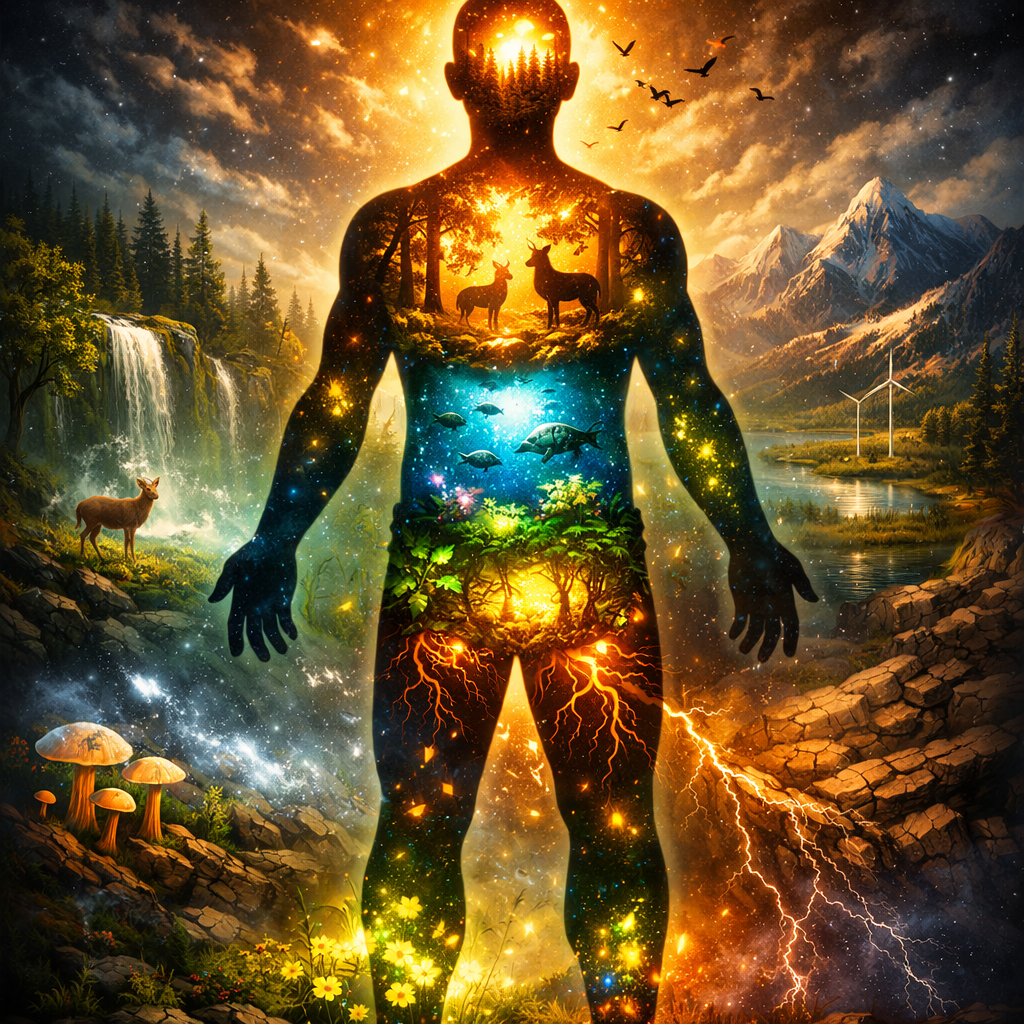
CHAPTER 15 — THE ECOLOGY OF THE SELF: AUTONOMY, IDENTITY, AND INTERNAL COHERENCE
Every person is a system. Not metaphorically — structurally. The self is an ecology: a dynamic, interdependent network of needs, boundaries, memories, truths, identities, and internal narratives that must remain coherent enough to function. When external systems demand too much authenticity exchange, too much role performance, or too much shame regulation, the internal ecology destabilizes.
Understanding the ecology of the self is essential for understanding why some people collapse inside belonging systems, why others exit, and why truth-first people cannot tolerate environments that require internal distortion. The self is not infinitely flexible. It has load-bearing beams. When those beams are compromised, the entire internal architecture begins to fail.
The Three Layers of the Self
The self has three structural layers:
- Autonomy (the engine)
- Identity (the shape)
- Internal Coherence (the glue)
These layers interact constantly. When one is compromised, the others destabilize.
1. Autonomy: The Engine of the Self
Autonomy is the capacity to act from internal truth rather than external pressure. It includes:
- agency
- choice
- boundaries
- self-direction
- internal authority
Autonomy is not independence. It is self-governance. It is the ability to remain intact in the presence of external demands.
When autonomy collapses, the self becomes porous. External systems begin to overwrite internal truth.
2. Identity: The Shape of the Self
Identity is the structure that organizes:
- values
- preferences
- roles
- memories
- self-concepts
Identity is not static. It is adaptive. But it must remain internally consistent. When identity is forced to contort itself to maintain belonging, the self becomes distorted.
Identity collapse occurs when a person must perform a version of themselves that contradicts their internal truth.
3. Internal Coherence: The Glue of the Self
Internal coherence is the alignment between:
- what you feel
- what you know
- what you believe
- what you say
- what you do
Internal coherence is not perfection. It is integrity. It is the sense that your internal parts are in conversation rather than in conflict.
When internal coherence breaks, the self fragments.
The Ecology Model: How the Layers Interact
The three layers of the self form an ecology:
- Autonomy protects identity.
- Identity organizes coherence.
- Coherence stabilizes autonomy.
When one layer is compromised, the others compensate — until they can’t.
When Autonomy Fails
Identity becomes performative.
Coherence becomes fragile.
Shame becomes dominant.
When Identity Fails
Autonomy becomes chaotic.
Coherence becomes unstable.
Belonging becomes conditional.
When Coherence Fails
Autonomy becomes reactive.
Identity becomes fragmented.
Truth becomes overwhelming.
The Internal Cost of External Systems
External systems interact with the self’s ecology in predictable ways:
- Coherence-first systems demand identity distortion.
- Shame-based systems erode internal coherence.
- Role-rigid systems collapse autonomy.
- Narrative-controlled systems overwrite internal truth.
The self can tolerate some distortion. But when the cost becomes cumulative, the ecology destabilizes.
Truth-First Architecture and Internal Ecology
Truth-first people have a different internal ecology. Their load-bearing beams are arranged differently:
- Autonomy is non-negotiable.
- Identity is truth-anchored.
- Internal coherence is mandatory.
They cannot collapse authenticity to maintain external coherence because doing so would collapse their internal architecture.
This is not stubbornness. It is structural necessity.
Truth-first people maintain internal coherence even when external systems demand distortion. This makes them incompatible with environments that rely on self-suppression.
The Ecology of Collapse
Internal collapse occurs when the self’s ecology becomes unsustainable. Collapse can take several forms:
1. Autonomy Collapse
The person becomes compliant, passive, or numb. They lose access to internal authority.
2. Identity Collapse
The person becomes fragmented, inconsistent, or performative. They lose access to internal truth.
3. Coherence Collapse
The person becomes overwhelmed, confused, or dissociated. They lose access to internal stability.
Collapse is not a failure of character. It is a structural failure caused by external demands that exceed internal capacity.
The Ecology of Reconstruction
Reconstruction begins when the self reclaims its architecture:
1. Autonomy Restoration
Rebuilding boundaries, agency, and internal authority.
2. Identity Reassembly
Reintegrating suppressed truths, preferences, and values.
3. Coherence Reformation
Aligning actions, beliefs, emotions, and narratives.
Reconstruction is not a return to the old self. It is the creation of a self that can no longer be collapsed by external systems.
Why This Chapter Matters
The ecology of the self explains:
- why people collapse inside harmful systems
- why truth-first people cannot tolerate distortion
- why autonomy is the foundation of identity
- why internal coherence is non-negotiable
- why reconstruction requires truth
It reveals that the self is not infinitely elastic. It has structure. It has limits. It has needs. And when external systems violate those needs, the self must either collapse or exit.
The next chapter will map the social physics of truth — why accuracy destabilizes coherence-first systems and why truth-first people become structural disruptors.
We Believe You


Apple Music
YouTube Music
Amazon Music
Spotify Music


Explore Mini-Topics
Leave a Reply