Episkevology
When the Horror Baseline Rises
How Repeated Civic Shocks Reshape a Population’s Sense of “Normal”
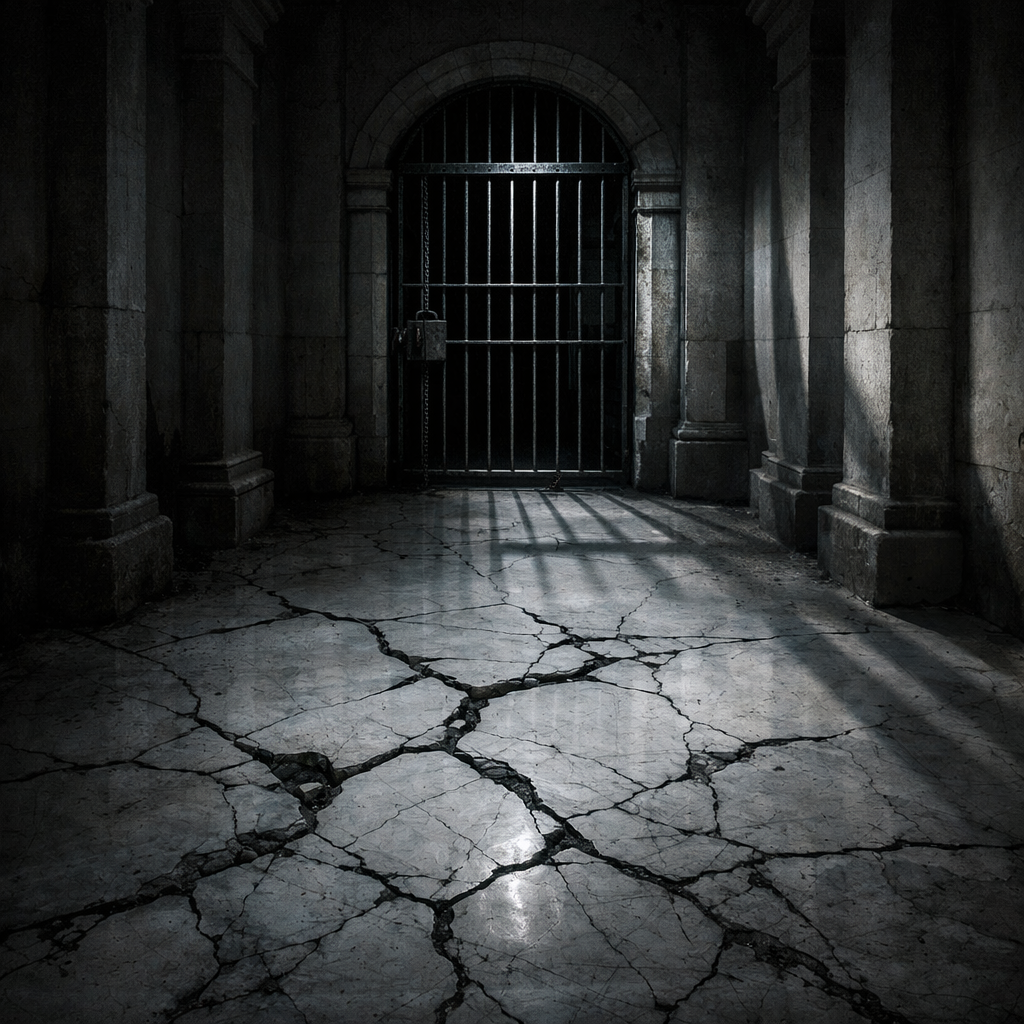
Most people imagine democratic decline as a single dramatic event — a coup, a collapse, a moment when everything changes at once. But that’s not how it feels from the inside. From the inside, decline arrives as waves: recurring shocks that reveal deeper layers of captivity inside systems people once believed were free.
Each wave forces a recalibration. Each recalibration raises the threshold for what counts as shocking. Over time, the population’s horror baseline rises — not because people stop caring, but because the nervous system cannot remain in full alarm forever.
This is how a society becomes conditioned to tolerate what once would have been unthinkable.
🌊 Shock Arrives in Waves, Not Lines
Shock is not a one‑time event. It’s a recurring civic tremor that hits whenever a new rupture exposes another layer of institutional failure or hidden harm.
Examples vary — a high‑profile abuse case, a government overreach, a systemic cover‑up, a foreign policy betrayal, a scandal revealing normalized cruelty — but the structure is the same:
- A rupture breaks through the story people believed about their country.
- A recalibration forces the nervous system to update its threat map.
- A resonance amplifies the shock by linking it to previous waves.
The shock is cumulative. Each wave lands on top of the last.
🧩 The Threshold Where Captivity Becomes Salient
Captivity doesn’t become real when it begins.
It becomes real when it becomes visible.
A threshold is crossed when:
- The story of freedom no longer predicts outcomes.
- Institutions stop behaving as neutral.
- Rights feel like permissions.
- Consequences become personal, not abstract.
- The system stops pretending.
This is the moment when people realize they were living inside conditional safety, not guaranteed safety. The captivity was always there; the salience wasn’t.
📉 Why Outrage Fades: The Rising Horror Baseline
When shock arrives in waves, the nervous system adapts. It has to.
Three things happen:
1. The previously unthinkable becomes familiar.
Not accepted — familiar.
The psyche dampens its response to survive the overload.
2. Each new event must be worse to register as “new.”
What once would have caused national outrage now barely breaks through the noise.
3. The system becomes self‑reinforcing.
As the baseline rises:
- institutions feel less pressure to correct themselves
- abuses escalate because they meet less resistance
- citizens lose the ability to distinguish “bad” from “unacceptable”
This is not moral decay.
It’s collective trauma physiology.
🔄 Echoes of Late‑Stage Collapse: When Breaks and Resets Stop Working
In late‑stage systems — political, economic, relational — breaks and resets lose their stabilizing power.
Early on, a scandal or crisis triggers reform.
Later, the same kind of rupture barely moves the needle.
Why?
Because the system has exhausted its slack:
- trust is depleted
- narratives are threadbare
- institutions are brittle
- the public is numb
- the baseline for horror is too high
A break that once bought years now buys days.
A reset that once restored order now restores nothing.
This is the echo you’re feeling:
the rising horror baseline and the failure of resets are the same phenomenon.
Both signal that the system has entered a phase where shocks no longer reset the world — they simply reveal how little world is left to reset.
🧭 What This Means for Us Now
We are living through a period where:
- captivity is becoming salient
- shock arrives in waves
- the horror baseline is rising
- institutional resets are losing power
This doesn’t mean collapse is inevitable.
It means the old mechanisms of stability no longer function.
The work now is not to wait for the next reset.
It’s to build new forms of coherence, new forms of accountability, and new forms of collective orientation that don’t rely on the systems that are failing.
Because once the horror baseline rises, a society must choose:
- numbness
- despair
- or clarity
Clarity is the only one that leads anywhere new.


Apple Music
YouTube Music
Amazon Music
Spotify Music


Explore Mini-Topics
Leave a Reply