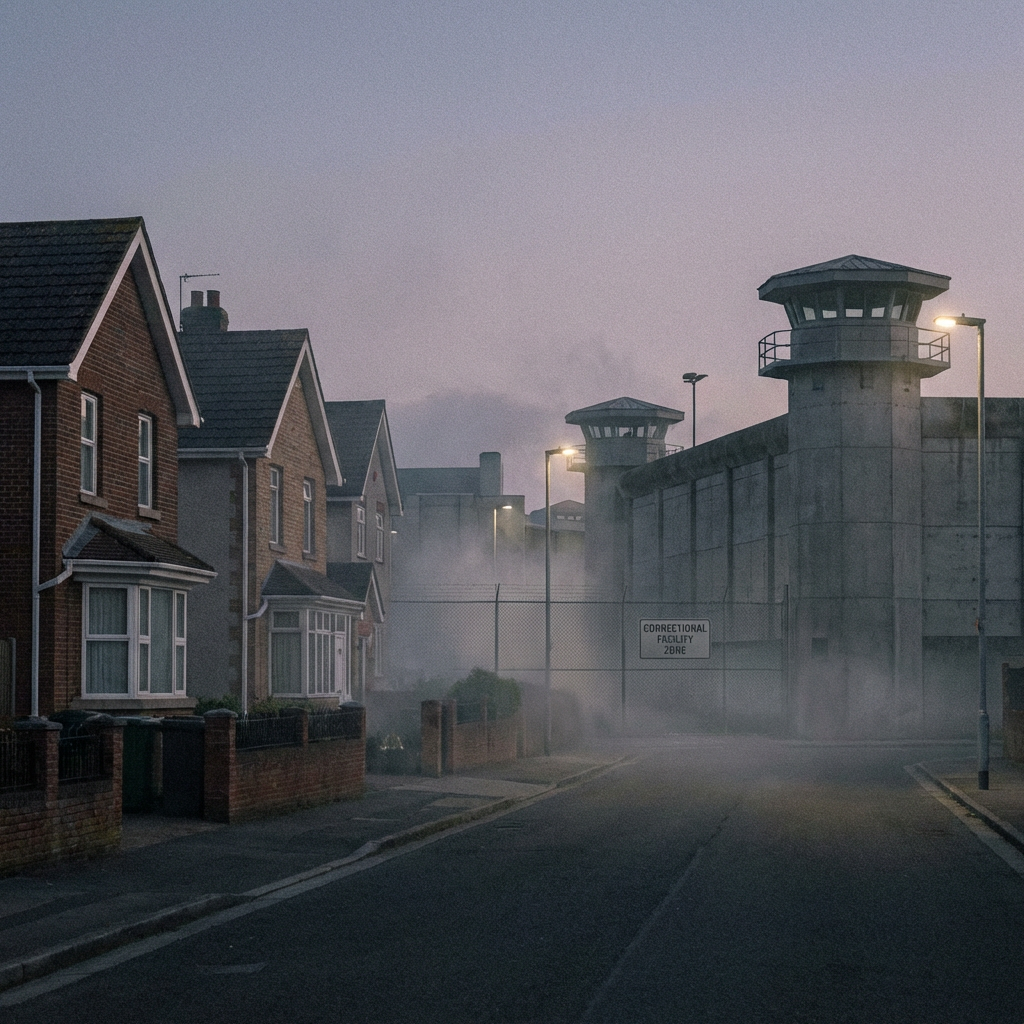
How predatory housing and policing co‑produce surveillance, criminalization, and community destabilization
1. The Core Insight: Housing and Policing Are Co‑Designed Systems
Policing is not separate from housing.
It is the enforcement arm of the housing regime.
Predatory housing relies on:
- surveillance,
- compliance,
- silence,
- fear,
- rapid removal.
Policing provides:
- the threat,
- the presence,
- the justification,
- the escalation,
- the narrative.
Together, they form a feedback loop that stabilizes predatory housing by destabilizing the people living inside it.
2. Stage One — Crime‑Free Housing as the Origin Point
Loveland’s adoption of crime‑free housing programs (2013–2016) created:
- “conduct of all occupants” clauses,
- “potential criminal activity” clauses,
- nuisance enforcement,
- police‑landlord partnerships.
These clauses:
- bypass due process,
- criminalize normal behavior,
- allow eviction without conviction,
- shift policing into private homes.
This is the legal foundation of the feedback loop.
3. Stage Two — Surveillance Becomes Normalized
Predatory leases introduce:
- inspections,
- entry without notice,
- noise monitoring,
- guest restrictions,
- parking enforcement,
- camera systems.
Policing reinforces these through:
- patrols,
- welfare checks,
- nuisance calls,
- “community policing” visits.
Surveillance becomes:
- ambient,
- normalized,
- expected.
Housing becomes a quasi‑carceral environment.
4. Stage Three — Behavior Becomes Criminalized
Under predatory housing, normal life becomes “risk”:
- noise → nuisance
- conflict → disturbance
- guests → unauthorized
- adolescence → delinquency
- mental health → threat
- poverty → instability
Policing interprets these as:
- disorder,
- danger,
- criminality.
Housing and policing reinforce each other’s definitions of “problem tenants.”
This is how poverty becomes criminalized.
5. Stage Four — Eviction Velocity Increases
Predatory housing uses:
- 3‑day notices,
- “additional rent,”
- crime‑free clauses,
- “sole discretion,”
- non‑renewal.
Policing provides:
- incident reports,
- welfare checks,
- noise complaints,
- “documentation.”
Landlords use police presence as:
- justification for eviction,
- justification for non‑renewal,
- justification for blacklisting.
Eviction becomes a quasi‑policing action.
6. Stage Five — Community Destabilization Justifies More Policing
As families churn through unstable housing:
- conflict rises,
- stress rises,
- mobility rises,
- neighborhood cohesion collapses.
Policing responds with:
- more patrols,
- more enforcement,
- more surveillance,
- more “community safety” initiatives.
The instability created by predatory housing becomes the reason for increased policing.
This is the feedback loop:
- housing creates instability → policing responds → policing justifies housing control.
7. Stage Six — Schools Absorb the Overflow
Children living under:
- surveillance,
- fear,
- instability,
- criminalization,
arrive at school:
- dysregulated,
- hypervigilant,
- withdrawn,
- reactive.
Schools respond with:
- discipline,
- SRO involvement,
- identity policing,
- behavior plans.
The policing feedback loop extends into:
- classrooms,
- hallways,
- playgrounds.
Housing policing → school policing.
8. Stage Seven — Community Health Mirrors the Loop
Policing and housing together produce:
- chronic stress,
- anxiety,
- depression,
- medical crises,
- behavioral health emergencies.
These crises lead to:
- more police calls,
- more welfare checks,
- more “community safety” interventions.
Health instability → policing → housing retaliation → more instability.
The loop tightens.
9. Stage Eight — Public Works and Enrichment Absorb the Physical and Emotional Overflow
Public works sees:
- more complaints,
- more degradation,
- more emergency calls.
Enrichment programs see:
- more dysregulation,
- more conflict,
- more supervision needs.
Both systems respond with:
- rules,
- restrictions,
- surveillance.
The policing logic spreads across civic life.
10. The Full Feedback Loop in One Line
Predatory housing creates instability → instability invites policing → policing justifies more housing control → housing control creates more instability.
This is not a cycle.
It is a self‑reinforcing system.
11. Why This Loop Is So Effective
Because it:
- externalizes blame onto tenants,
- legitimizes landlord power,
- normalizes surveillance,
- suppresses resistance,
- isolates families,
- destabilizes neighborhoods,
- and keeps the system profitable.
The policing feedback loop is the enforcement engine of predatory housing.
12. Closing
The policing feedback loop reveals the truth:
Policing is not a separate institution.
It is the behavioral enforcement layer of the housing regime.
It criminalizes:
- poverty,
- instability,
- trauma,
- adolescence,
- identity,
- survival.
It stabilizes:
- landlord power,
- predatory leases,
- eviction velocity,
- community fear.
This is not a policing problem.
It is not a housing problem.
It is a structural system of control —
and policing is the mechanism that keeps the entire ecosystem intact.
We Believe You


Apple Music
YouTube Music
Amazon Music
Spotify Music


Explore Mini-Topics
Leave a Reply