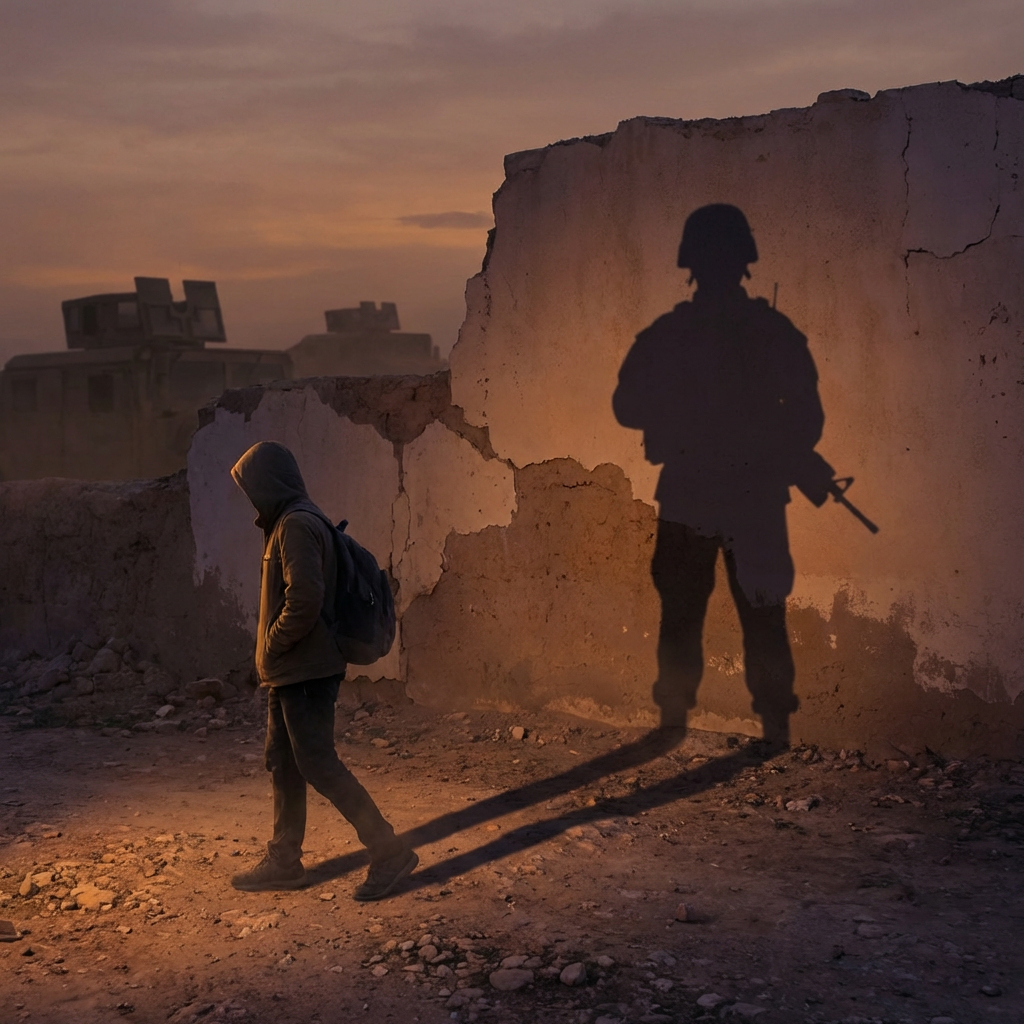
A Structural Analysis
This analysis explains:
- What is actually happening with the U.S. draft (based on current reporting)
- How the draft functions inside a hostage‑pledge system
- Why the idea of reinstatement is structurally significant even if no draft exists
I. What the News Actually Confirms
- The U.S. has not reinstated the draft.
- The Selective Service System remains active, as it always does.
- Officials have stated publicly that the president “keeps all options on the table” regarding conscription.
- This refusal to rule it out is what triggered public concern.
- The context is escalating conflict in the Middle East, with officials acknowledging the possibility of a “longer fight.”
So: no draft. But the option is being publicly floated.
This is the structural signal.
II. Hostage‑Pledge Interpretation: What the State Is Actually Doing
A hostage‑pledge system is any system that:
- demands loyalty under conditions of fear,
- frames obedience as virtue,
- and treats bodies as resources to be allocated.
The draft conversation fits this pattern precisely.
1. The State Is Testing the Narrative Boundary
When leaders say:
“Nothing is planned, but we’re not ruling anything out,”
the system is:
- gauging public tolerance,
- measuring compliance,
- identifying resistance,
- and normalizing the idea of compulsory service.
This is field testing, not policy.
2. Conscription Is the Purest Form of State Ownership of Bodies
In hostage‑pledge terms, the draft is the state saying:
“Your body is yours until we need it.
Then it becomes ours.”
This logic is identical to:
- reproductive criminalization,
- bans on gender‑affirming care,
- policing of pregnancy outcomes,
- and other forms of bodily control.
Different domain, same architecture.
3. Perpetual Undeclared War Makes Conscription Structurally Tempting
The U.S. has not declared a formal war in decades, but it has:
- ongoing operations,
- overseas bases,
- drone campaigns,
- counterterror missions,
- and escalating regional conflicts.
A system that is always at war eventually faces:
- recruitment shortages,
- retention problems,
- public fatigue.
Conscription becomes the emergency lever that preserves the system’s function when voluntary participation declines.
4. The Draft Conversation Is a Symptom of a Deeper Structural Truth
The U.S. is already in a hostage‑pledge relationship with its own population.
The logic is:
“We will not declare war,
but we will behave as if we are always at war.
And if we need your body,
we will take it.”
This is the same logic behind:
- undeclared war,
- undeclared occupation,
- undeclared surveillance,
- undeclared reproductive control.
The system avoids naming the thing so it never has to end the thing.
III. Why the Draft Fits the Hostage‑Pledge Pattern
Across all domains, the hostage‑pledge system relies on:
- ambiguity (so the system can deny what it’s doing)
- fear (so obedience feels like safety)
- sacrifice (so loyalty feels moral)
- identity scripts (“patriot,” “protector,” “good citizen”)
- narrative control (“service,” “duty,” “unity”)
Conscription is simply the most explicit version of this logic.
IV. The Cleanest Possible Summary
The draft has not been reinstated. But the fact that leaders refuse to rule it out reveals a system that still believes it owns the bodies of its hostages when the pledge requires it.
Apple Music
YouTube Music
Amazon Music
Spotify Music


Explore Mini-Topics
Leave a Reply