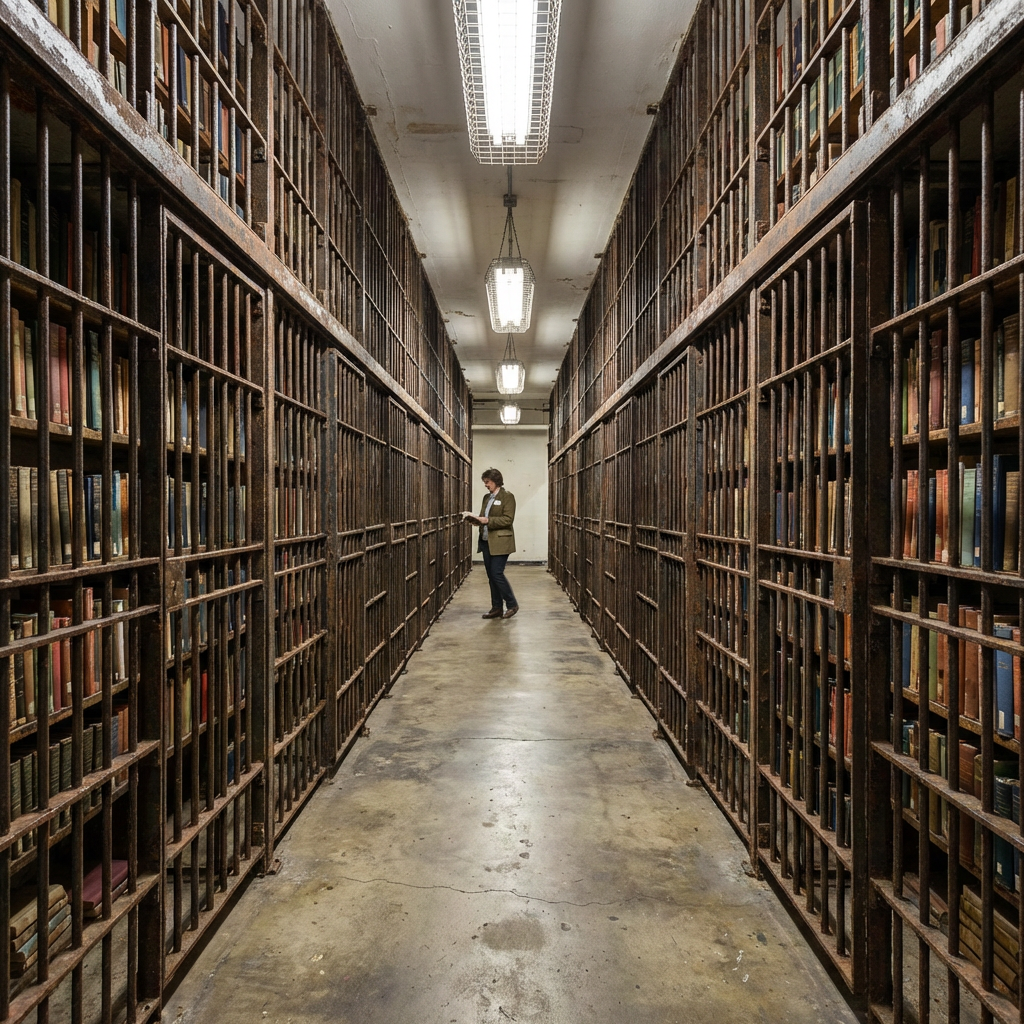
If Colorado shows how a hostage‑pledge system behaves in a “purple” environment,
Mississippi shows what the system looks like when it stops pretending.
Mississippi is not an outlier — it is the blueprint.
It reveals the hostage‑pledge logic in its purest, least camouflaged form.
Below is the structural contrast.
🔥 I. Mississippi’s Banned‑Books Pattern Is Not a Culture War — It Is Governance
Where Colorado’s bans cluster around identity, history, and bodily autonomy, Mississippi’s bans are part of a longstanding state project:
- control of racial memory
- control of gender and sexuality
- control of obedience
- control of narrative authority
Mississippi’s educational system is already structured like a hostage‑pledge environment:
high surveillance, high punishment, high identity policing, and extremely low curriculum truthfulness.
So when Mississippi bans books, it is not escalating — it is maintaining.
🧱 II. Mississippi’s Banned Books Reveal the Captor’s Core Dependencies
Mississippi’s bans overwhelmingly target:
- Black history
- Reconstruction, Jim Crow, and civil rights
- Indigenous dispossession
- Queer and trans lives
- Books about consent, abuse, and bodily autonomy
- Books naming state violence or white supremacy
Through the hostage‑pledge lens, this is not random.
It is a structural confession of what the system must suppress to reproduce itself.
| Banned Content | What the System Is Protecting |
|---|---|
| Black history, civil rights, Reconstruction | The racial hierarchy that underwrites state legitimacy |
| Jim Crow, lynching, segregation | The myth of “heritage” and benevolent authority |
| Queer/trans stories | Evangelical identity scripts and compulsory heterosexuality |
| Consent, abuse, bodily autonomy | The right to script bodies and silence harm |
| State violence, policing, prisons | The moral authority of coercive force |
Mississippi bans the truths that would collapse the pledge.
⚖️ III. Mississippi’s Discipline System Makes the Hostage Logic Explicit
Mississippi maintains one of the most punitive school systems in the country:
- corporal punishment still legal and widely used
- extreme racial disparities in suspension and expulsion
- police presence normalized
- truancy tied to courts and fines
- alternative schools functioning as exile systems
In this environment, banned books are not symbolic.
They are infrastructure.
The system cannot allow hostages to read anything that teaches:
- how power works
- how harm is named
- how resistance is possible
- how history actually unfolded
Books that teach these skills are treated as contraband because they are.
🧨 IV. Mississippi’s Curriculum Censorship Is a Hostage‑Pledge Operating Manual
Mississippi’s curriculum restrictions include:
- bans on “divisive concepts”
- sanitized narratives of slavery, Reconstruction, and civil rights
- erasure of Indigenous history
- bans on LGBTQ+ topics
- book bans targeting queer authors and Black authors
- state‑level pressure to maintain “patriotic” or “heritage” narratives
This is not about protecting children.
It is about protecting the mythology that keeps the pledge intact.
The system must maintain:
- white innocence
- state innocence
- heterosexuality as default
- obedience as virtue
- silence as safety
Books that disrupt these myths are treated as threats to state stability.
🧬 V. Mississippi vs. Colorado: What the Contrast Reveals
Colorado’s bans expose the hostage‑pledge system’s fears.
Mississippi’s bans expose the system’s foundations.
| Colorado | Mississippi |
|---|---|
| Bans reveal vulnerabilities | Bans reveal operating principles |
| Hostage logic is present but contested | Hostage logic is normalized and enforced |
| Bans are reactive | Bans are structural |
| System fears defection | System prevents defection |
| Bans map pressure points | Bans map the architecture itself |
Colorado shows what the system tries to hide.
Mississippi shows what the system looks like when it stops hiding.
🌱 VI. Mississippi’s Banned‑Books List as a Liberation Syllabus
If you flip the frame, Mississippi’s banned titles become a curriculum of repair:
- Every banned Black history book = a lesson in truth‑telling and historical literacy.
- Every banned queer book = a lesson in self‑definition and alternative kinship.
- Every banned book about state violence = a lesson in naming power accurately.
- Every banned book about consent = a lesson in recognizing coercion.
In Mississippi, the banned‑books list is not just a hostage‑pledge confession.
It is a map of the exact skills the next generation needs to break the cycle.
🧭 Conclusion: Why Mississippi Matters in the National Picture
Colorado shows the hostage‑pledge system under pressure.
Mississippi shows the hostage‑pledge system at rest.
Together, they reveal the full architecture:
- what the system fears
- what the system requires
- what the system suppresses
- what the system cannot survive
And most importantly:
They reveal the reading list for liberation.
Apple Music
YouTube Music
Amazon Music
Spotify Music


Explore Mini-Topics
Leave a Reply