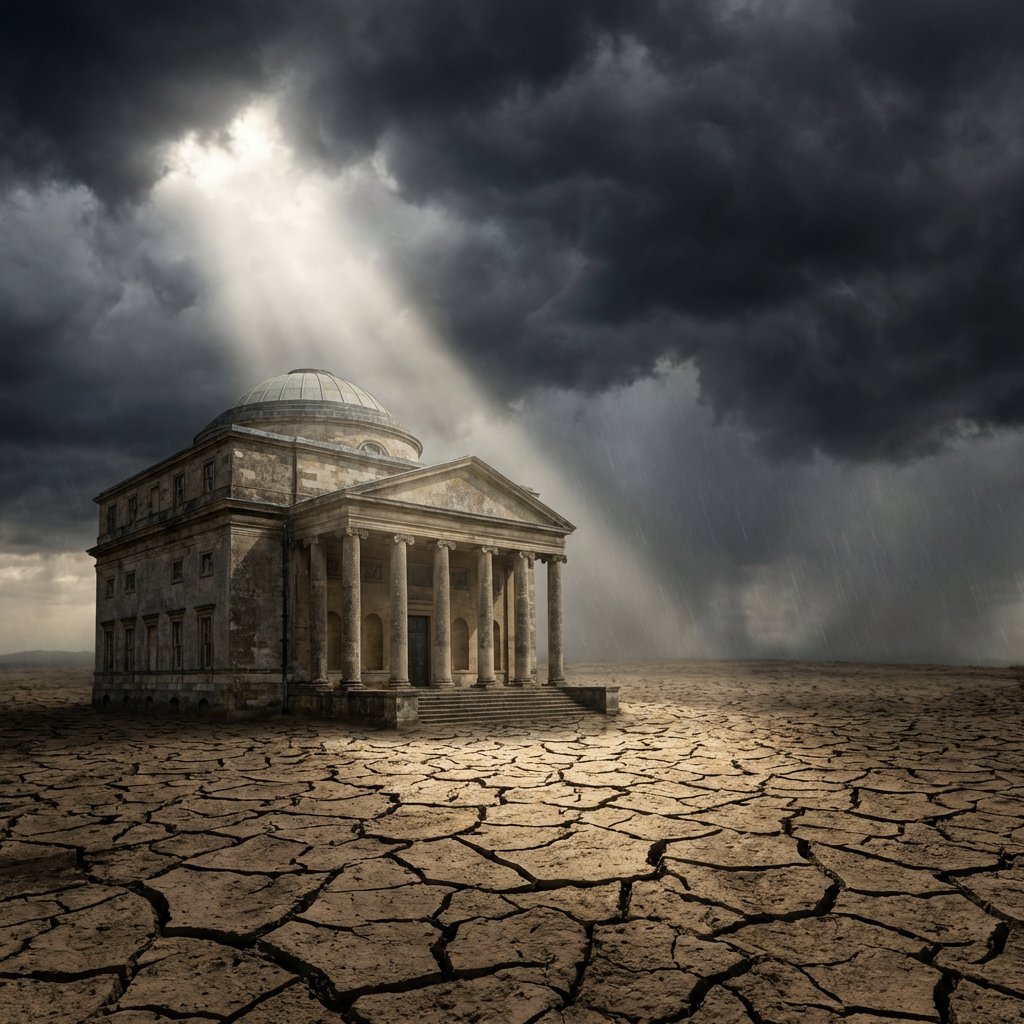
Part XLIII — The Joseph R. Biden Administration: Pandemic Recovery, Democratic Strain, and Governing in the Long Shadow of Crisis
Joseph R. Biden (2021– ) entered office at one of the most volatile and fractured moments in modern American history.
He inherited:
- a global pandemic
- economic collapse
- mass death
- political polarization
- racial unrest
- institutional fragility
- the aftermath of January 6
Biden ran on:
- stability
- competence
- institutional restoration
- democratic norms
- national healing
But he governed in an era defined by structural crisis, disinformation, and a political system stretched to its limits.
Biden’s presidency is the moment when the founding contradiction — liberty for some, captivity for others — reappears in its post‑2020 form:
A nation that claimed to defend democracy confronted the fragility of its institutions, the persistence of inequality, and the challenge of governing amid polarization, pandemic, and global instability.
To understand Biden’s presidency, we have to map the forces shaping the era.
The Major Social Forces at Play (2021– )
1. The COVID‑19 Pandemic
Biden inherited:
- mass death
- overwhelmed hospitals
- vaccine rollout challenges
- economic disruption
The pandemic shaped the early presidency.
2. The Crisis of Democratic Legitimacy
After January 6, the nation faced:
- disinformation
- election denialism
- institutional strain
Democracy itself became a political issue.
3. The Persistence of Racial Inequality
Despite national attention:
- policing disparities continued
- wealth gaps widened
- structural inequities persisted
The racial fault line remained central.
4. The Transformation of the Global Order
The U.S. confronted:
- rising authoritarianism
- China’s ascent
- Russia’s aggression
- shifting alliances
The post‑Cold War order was dissolving.
5. The Climate Crisis
Extreme weather intensified.
Energy systems strained.
Climate policy became urgent.
6. The Digital Information Crisis
Social media fueled:
- polarization
- conspiracy theories
- political fragmentation
Truth itself became contested.
The Contradiction Biden Inherited
Biden inherited the same contradiction as his predecessors — but in its post‑2020 form:
The United States claimed to be a resilient democracy, but its institutions were weakened by polarization, disinformation, inequality, and the aftershocks of crisis.
Biden believed in restoration.
The era demanded transformation.
The Key Events That Exposed the Tension
1. The American Rescue Plan (2021)
A massive stimulus package that:
- expanded child tax credits
- funded vaccine distribution
- supported state and local governments
It reduced poverty — temporarily.
2. The Vaccine Rollout
Biden oversaw:
- mass vaccination
- public health campaigns
- logistical coordination
But vaccine hesitancy and misinformation limited impact.
3. The Infrastructure Investment and Jobs Act (2021)
A bipartisan bill that:
- rebuilt roads and bridges
- expanded broadband
- modernized infrastructure
It was a rare moment of cross‑party cooperation.
4. The Inflation Surge (2021–2023)
Global supply shocks and pandemic aftereffects triggered:
- rising prices
- political backlash
- economic anxiety
Inflation reshaped public perception of the presidency.
5. The Withdrawal from Afghanistan (2021)
The U.S. ended its longest war.
The withdrawal:
- was chaotic
- triggered humanitarian crisis
- damaged public confidence
It marked the end of the post‑9/11 era.
6. The War in Ukraine (2022– )
Russia invaded Ukraine.
Biden:
- built a global coalition
- supported Ukraine militarily
- strengthened NATO
The conflict reshaped global geopolitics.
7. The Supreme Court’s Dobbs Decision (2022)
The Court overturned Roe v. Wade.
This:
- reshaped reproductive rights
- intensified political mobilization
- exposed institutional fragility
8. The CHIPS and Science Act (2022)
A major industrial policy initiative:
- semiconductor investment
- technological competitiveness
- reshoring manufacturing
This marked a shift away from neoliberal orthodoxy.
9. The Inflation Reduction Act (2022)
A sweeping climate and industrial policy bill:
- clean energy investment
- emissions reduction
- healthcare reforms
It was the largest climate legislation in U.S. history.
10. The Ongoing Crisis of Democracy
Election denialism persisted.
Political violence increased.
Institutional trust eroded.
The system remained under strain.
What Biden’s Administration Reveals
Biden’s presidency exposes a new dimension of the founding contradiction:
A nation that claimed democratic resilience confronted the fragility of its institutions, the persistence of inequality, and the challenge of governing amid polarization, disinformation, and global instability.
His administration reveals:
- restoration as political aspiration
- transformation as structural necessity
- inequality as enduring constraint
- democracy as contested terrain
- governance as fragile under stress
Biden did not resolve the contradiction.
He governed within its most volatile modern form.
Why This Matters for the Series
Biden adds the final layer to the pattern:
- Washington built federal power.
- Adams used federal power to suppress dissent.
- Jefferson used federal power to expand the nation while deepening inequality.
- Madison discovered the limits of constitutional compromise.
- Monroe created the illusion of unity while contradictions intensified.
- John Quincy Adams saw the contradictions clearly but lacked the power to resolve them.
- Andrew Jackson expanded democracy for the majority while intensifying captivity for everyone else.
- Martin Van Buren inherited the consequences — economic collapse and political realignment.
- Harrison & Tyler exposed constitutional ambiguity and accelerated sectional crisis.
- James K. Polk expanded the nation through war, pushing the slavery question to the breaking point.
- Zachary Taylor confronted the crisis directly but died before the nation chose its path.
- Millard Fillmore enforced compromise through coercion, deepening the contradictions.
- Franklin Pierce attempted unity through appeasement, unleashing violence and accelerating collapse.
- James Buchanan presided over the final breakdown of the political system.
- Abraham Lincoln confronted the contradiction directly and transformed the meaning of freedom.
- Andrew Johnson attempted to reverse that transformation, revealing the fragility of freedom.
- Ulysses S. Grant fought to secure Reconstruction against violent resistance.
- Rutherford B. Hayes ended Reconstruction, enabling a new racial order.
- Garfield & Arthur modernized the state while new exclusions emerged.
- Grover Cleveland (First Term) governed as a conservative reformer in an age of corporate power.
- Benjamin Harrison expanded federal authority to confront industrial inequality.
- Grover Cleveland (Second Term) faced economic collapse with tools that no longer fit a modern economy.
- William McKinley ushered in American empire and corporate consolidation.
- Theodore Roosevelt built the modern presidency and expanded federal power.
- William Howard Taft struggled to define the limits of Progressive governance.
- Woodrow Wilson expanded democracy abroad while restricting it at home.
- Harding & Coolidge presided over corporate conservatism and the illusion of stability.
- Herbert Hoover confronted systemic collapse with an ideology built for a different world.
- Franklin D. Roosevelt rebuilt the American state and redefined economic citizenship.
- Harry S. Truman built the national security state and globalized American power.
- Dwight D. Eisenhower consolidated Cold War order and suburban prosperity.
- John F. Kennedy embodied the optimism and contradictions of the early 1960s.
- Lyndon B. Johnson expanded democracy while escalating a war that fractured the nation.
- Richard Nixon weaponized division and triggered a crisis of legitimacy.
- Gerald Ford attempted to restore trust after institutional collapse.
- Jimmy Carter sought moral renewal in an era of structural crisis.
- Ronald Reagan redefined American politics through neoliberalism and militarization.
- George H. W. Bush managed the end of the Cold War and the unipolar moment.
- Bill Clinton fused neoliberal economics with Democratic politics and expanded punitive governance.
- George W. Bush reengineered American power through the War on Terror.
- Barack Obama embodied the promise and limits of American democracy.
- Donald J. Trump exposed the fragility of democratic institutions.
- Joseph R. Biden attempted restoration amid pandemic, polarization, and global instability — governing in the long shadow of crisis.
Each administration inherits the fault line.
Each administration reshapes it.
None escape it.
Apple Music
YouTube Music
Amazon Music
Spotify Music


Explore Mini-Topics
Leave a Reply