Reconstruction to Jim Crow: Schooling as the Architecture of Racial Control
The end of the Civil War did not dismantle the captivity systems that structured American life. It forced them to mutate. Education became the primary arena where the nation renegotiated racial hierarchy, citizenship, and power. Schools were not neutral institutions — they were the frontline mechanisms for defining who counted as human, who counted as American, and who would remain permanently hostage to white supremacy.
Hostage
Black children and Indigenous children — their futures, identities, labor, and access to citizenship.
Pledge
Submission to white racial order: deference, discipline, cultural erasure, and acceptance of second‑class status.
Sovereign
Federal and state governments, white vigilante power, missionary societies, and local white communities acting as decentralized enforcement networks.
Ideology
“Education uplifts the inferior” — a paternalistic doctrine that framed racial domination as benevolence and captivity as civilization.
A. Reconstruction: Education as a Battleground for Freedom
The Freedmen’s Bureau and Black communities built thousands of schools after emancipation. These schools were acts of collective self‑determination — but they existed under constant threat.
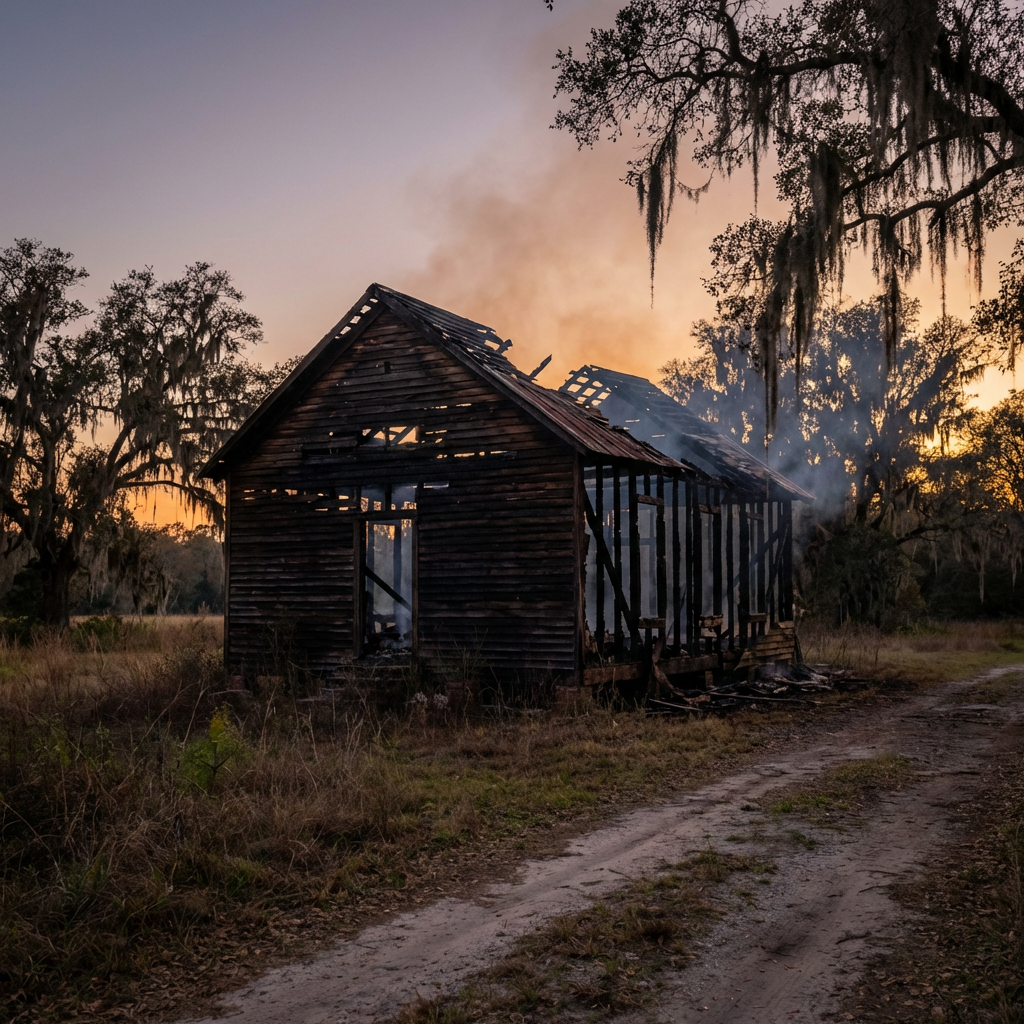
- White mobs burned schoolhouses.
- Teachers were assaulted, harassed, or killed.
- States refused funding or imposed discriminatory laws.
- Black literacy was framed as a political threat, not a civic good.
Education became the site where Black freedom was contested, constrained, and violently policed.
B. The White Response: Segregation as a Hostage Strategy
As Reconstruction collapsed, white lawmakers built a dual school system designed to maintain racial hierarchy.
- Black schools were systematically underfunded.
- White schools received the majority of public resources.
- Segregation was justified as “separate but equal,” but enforced as separate and inferior.
- Black children were held in educational environments engineered to limit mobility and reinforce dependency.
Segregation was not a compromise — it was a containment strategy.
C. Industrial Education: The Curriculum of Subordination
White philanthropists and policymakers promoted “industrial education” for Black students, modeled on the Hampton and Tuskegee systems.
- Academic subjects were minimized.
- Manual labor and vocational training were emphasized.
- The goal was to produce a compliant labor force, not autonomous citizens.
- Black ambition was framed as dangerous; Black excellence as subversive.
Industrial education was a curriculum of racial obedience.
D. Indigenous Boarding Schools: Total Captivity
For Indigenous nations, the period from 1870 to 1920 marks the expansion of the most extreme educational captivity system in U.S. history: the federal boarding school regime.
- Children were forcibly removed from their families.
- Hair was cut; languages banned; names replaced.
- Punishments included beatings, solitary confinement, and starvation.
- Labor exploitation was routine and systemic.
- Cultural genocide was the explicit goal.
The pledge demanded of Indigenous children was total:
abandon your people, your language, your identity — or be punished.
This was not education. It was a state‑run assimilation prison.
E. White Vigilante Sovereignty: Schools as Targets and Symbols
Schools for Black and Indigenous children were attacked because they symbolized autonomy.
- Night riders burned Black schoolhouses to enforce racial order.
- Indigenous parents who resisted boarding school removal faced imprisonment.
- Teachers were threatened, beaten, or lynched.
- Local white communities acted as decentralized sovereigns, enforcing racial captivity outside the law.
Education was the terrain where white supremacy reasserted control after emancipation.
F. The Legal Architecture: Codifying Racial Captivity
Between 1877 and 1920, states built a legal framework that made racialized education the law of the land.
- Jim Crow statutes mandated segregated schools.
- Funding formulas guaranteed inequality.
- Courts upheld white control over curriculum, governance, and access.
- Black and Indigenous children were denied pathways to political power.
The law transformed racial captivity into a stable, self‑reproducing system.
G. The Mutation: From Slavery to Segregation to Schooling
By 1920, the hostage‑pledge system had undergone its most consequential mutation:
- Hostage: Black and Indigenous children.
- Pledge: Acceptance of racial hierarchy and limited citizenship.
- Sovereign: White state power + local vigilante enforcement.
- Ideology: Racial uplift framed as benevolent domination.
- Mechanism: Segregated schools, boarding schools, and industrial curricula.
Education became the primary instrument for maintaining racial order after slavery — a system designed not to uplift, but to contain.
Summary of the Post–Civil War Racial Hostage System
- Reconstruction schools were sites of both liberation and violent backlash.
- Segregation functioned as a containment strategy, not a compromise.
- Industrial education enforced economic subordination.
- Indigenous boarding schools enacted cultural genocide.
- White vigilante power operated as an extralegal sovereign.
- The legal system codified racial captivity through schooling.
- The mutation from slavery to segregation was executed through education.
By 1920, the United States had built a racialized educational caste system that would define the next century of American life.
Apple Music
YouTube Music
Amazon Music
Spotify Music


Explore Mini-Topics
Leave a Reply