
THE RELATIONAL SYSTEMS CHAPTER
Part I: Relational Engineering
Part II: Relational Virology
PART I — RELATIONAL ENGINEERING
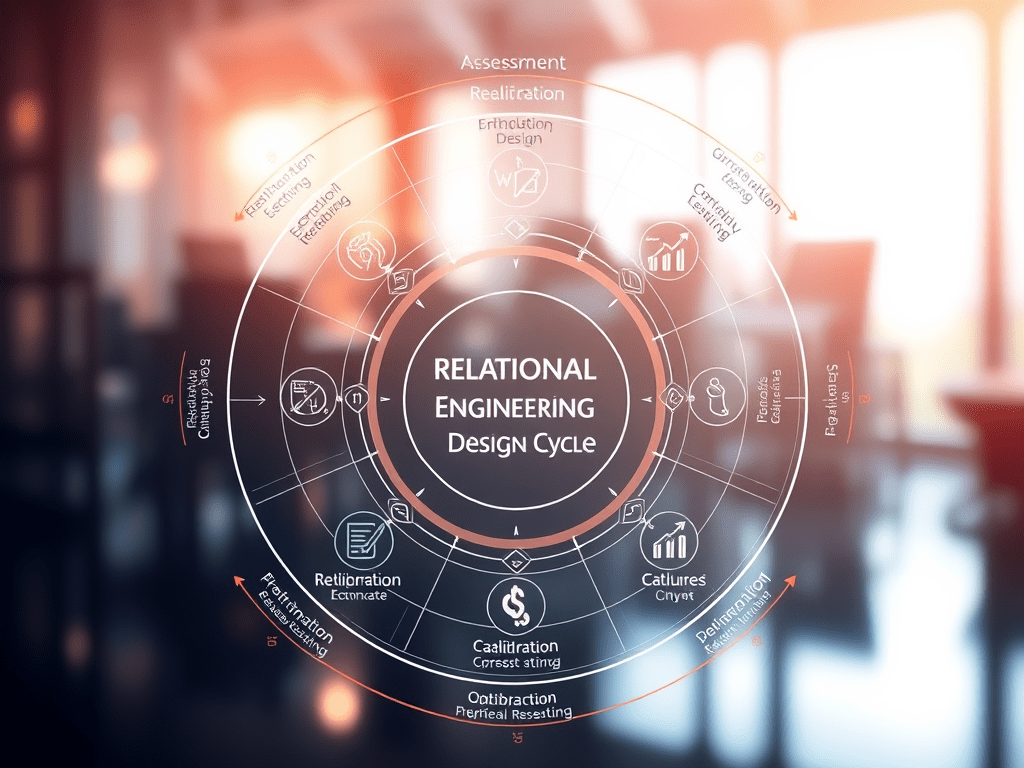
The Design, Construction, and Optimization of Relational Systems
1. Engineering as Applied Relational Physics
Relational Engineering is the discipline that takes the entire mathematical and biological architecture of Pluriology and turns it into infrastructure. It applies:
- Relational Physics (forces)
- Relational Chemistry (interactions)
- Relational Biology (organisms)
- Relational Mathematics (blueprints)
to design systems that are:
- coherent
- resilient
- metabolically efficient
- self‑repairing
- sustainable
- adaptive
Engineering is the shift from understanding relational systems to building them.
2. The Architecture of Relational Systems
Every relational system has:
- structure (geometry, topology)
- flow (energy, attention, meaning)
- load (relational weight)
- capacity (metabolic limits)
- rhythm (pulse, cycles)
- boundaries (integrity)
- redundancy (resilience)
- repair pathways (self‑maintenance)
Relational Engineering designs these intentionally.
3. Relational Load‑Balancing
A system collapses when too much relational weight sits on too few nodes.
Engineering distributes:
- trust load
- emotional load
- decision load
- identity load
- meaning load
This uses Relational Linear Algebra to ensure no single part of the system becomes a failure point.
4. Relational Circuitry
Relational energy flows through circuits:
- trust circuits
- meaning circuits
- resonance circuits
- attention circuits
Engineering maps these circuits and ensures they are:
- efficient
- buffered
- non‑leaking
- non‑overloaded
This is the relational equivalent of electrical engineering.
5. Relational Failure Analysis
Every system has predictable failure modes:
- boundary collapse
- coherence fracture
- metabolic overload
- distortion propagation
- viral infiltration (foreshadowing Part II)
Engineering identifies:
- weak points
- stress points
- tipping points
- cascade triggers
This is where Relational Dynamical Systems becomes essential.
6. Relational Optimization
Optimization tunes the system for:
- sustainability
- coherence
- resilience
- distributed agency
- metabolic health
This is the engineering expression of the Quadrivium.
7. Engineering Principles
Relational Engineering rests on seven principles:
- Coherence First
- Boundaries Are Structural
- Rhythm Determines Capacity
- Multiplicity Increases Resilience
- Distortion Propagates Predictably
- Repair Must Be Designed In
- Systems Must Match Their Environment
These principles turn relational theory into design logic.
8. The Limit of Engineering
Engineering can design for:
- coherence
- resilience
- sustainability
But it cannot prevent:
- infiltration
- parasitism
- viral distortion
This is where Part II begins.
PART II — RELATIONAL VIROLOGY
The Study of Parasitic Patterns That Hijack Relational Systems
1. What Is a Relational Virus?
A relational virus is a non‑living pattern that:
- hijacks relational metabolism
- replicates through contact
- mutates under pressure
- exploits vulnerabilities
- spreads through networks
- creates systemic distortion
Examples include:
- misinformation
- panic cascades
- shame scripts
- coercive narratives
- identity hijacks
- conspiracy loops
These are not metaphors.
They behave like biological viruses.
2. Viral Attachment
A relational virus attaches to a host through:
- fear
- uncertainty
- identity vulnerability
- boundary weakness
- coherence collapse
Attachment is the first stage of infection.
3. Viral Replication
A relational virus replicates by hijacking:
- attention
- meaning
- identity
- emotional energy
It uses the host’s relational metabolism to produce more copies of itself.
4. Viral Mutation
Relational viruses mutate to evade:
- boundaries
- coherence
- clarity
- relational immunity
This explains why harmful narratives evolve rapidly.
5. Viral Spread
Spread occurs through:
- networks (Graph Theory)
- resonance (Trigonometry)
- shared identity (Biology)
- attention circuits (Engineering)
A relational virus spreads faster in fragmented fields.
6. Viral Symptoms
Symptoms include:
- coherence collapse
- boundary confusion
- identity distortion
- emotional overload
- narrative fixation
- relational fatigue
These are field‑level symptoms, not individual ones.
7. Relational Immunity
Immunity is the system’s ability to:
- detect distortion early
- neutralize harmful patterns
- maintain coherence under stress
- prevent viral replication
Strong relational immunity requires:
- clear boundaries
- stable rhythm
- distributed agency
- coherent meaning
This is the biological counterpart to engineering resilience.
8. Relational Epidemiology
Relational Virology transforms our understanding of biological pandemics.
It reveals that pandemics are:
- biological events
- relational events
- narrative events
- identity events
- ecological events
COVID‑19, swine flu, avian flu, and poxes all spread through relational ecologies, not just biological ones.
Pluriology shows that:
- trust erosion accelerates viral spread
- fragmentation weakens field immunity
- narrative viruses mutate faster than biological ones
- identity polarization amplifies infection
- relational fatigue reduces resilience
Pandemics expose the relational health of societies.
9. Viral Engineering
Just as biological viruses exploit cellular machinery, relational viruses exploit:
- relational circuits
- metabolic weaknesses
- boundary gaps
- coherence fractures
This is the dark mirror of Relational Engineering.
10. Closing: The Full Spectrum of Relational Systems
Relational Engineering and Relational Virology form a complete pair:
- Engineering builds systems.
- Virology reveals how they fail.
- Engineering designs resilience.
- Virology reveals vulnerabilities.
- Engineering creates coherence.
- Virology tests it.
Together, they describe the full lifecycle of relational systems:
- construction
- operation
- stress
- infiltration
- collapse
- repair
- evolution
This two‑part chapter is the bridge between the living architecture of Pluriology and the real‑world systems it seeks to transform.




























 Survivor Literacy
What do you think?