
Unified Theory of the Panthenogenesis of Power
CHAPTER 23 – THE NEW FIELD: ARCHITECTURE WITHOUT CAPTIVITY
A system collapses.
A vacuum opens.
Repatterning begins.
And then — slowly, quietly, almost imperceptibly — a new field forms.
The new field is not the opposite of the old system.
It is the absence of its compulsions.
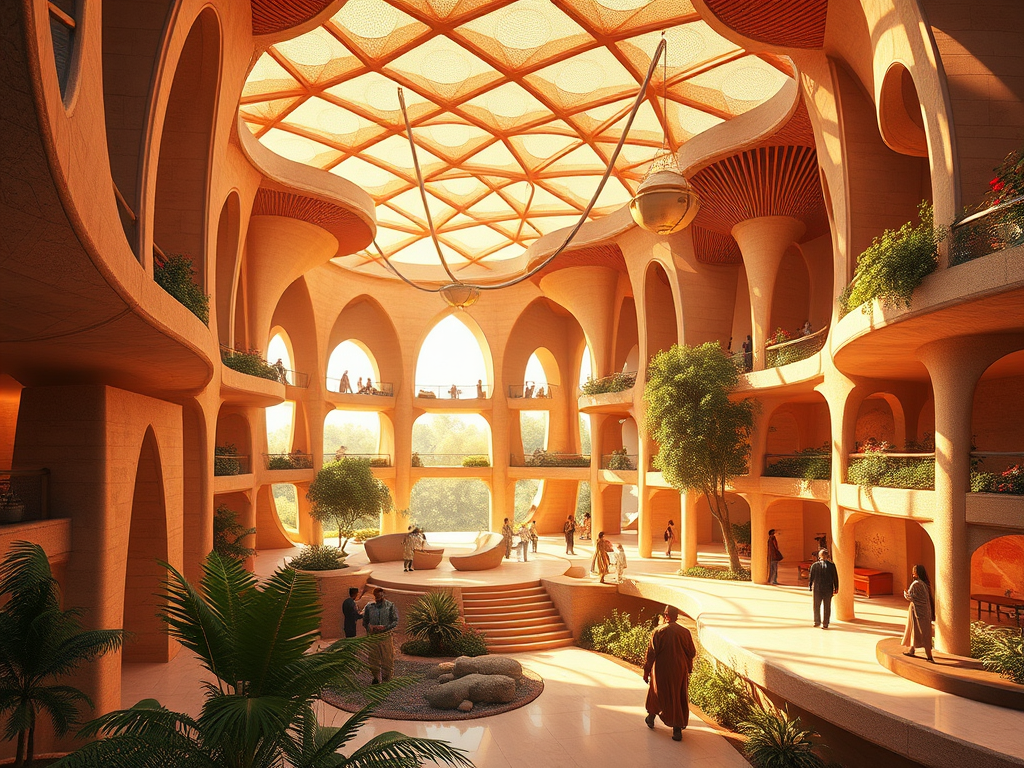
It is the first architecture that emerges without threat, without inherited roles, without emotional economies built on fear or obligation. It is not utopia. It is not perfection. It is simply structure without captivity — a relational space where coherence does not require sacrifice, and stability does not require someone to carry the burden.
This chapter maps the emergence of the new field: how it forms, how it stabilizes, and how it differs from every system that came before.
1. The New Field Emerges From Absence, Not Intention
The new field does not begin with a plan.
It begins with what is no longer happening.
It emerges from:
- the absence of threat
- the absence of coercion
- the absence of inherited roles
- the absence of emotional extraction
- the absence of compulsory stability
The new field is not built.
It appears — in the space left behind when the old architecture dissolves.
2. The First Sign: Neutrality
The earliest sign of a new field is neutrality.
Neutrality feels like:
- interactions without tension
- choices without fear
- silence without danger
- presence without performance
- connection without obligation
Neutrality is not emotional flatness.
It is the absence of distortion.
The new field begins in neutrality.
3. The Second Sign: Reciprocity
In the old system, relationships were defined by asymmetry:
- one carried
- one consumed
- one absorbed
- one demanded
- one stabilized
In the new field, reciprocity emerges:
- effort is mutual
- care is mutual
- responsibility is mutual
- presence is mutual
- boundaries are mutual
Reciprocity is not balance.
It is non‑extraction.
The new field organizes itself around reciprocity.
4. The Third Sign: Voluntary Presence
In the old system, presence was compulsory:
- to avoid punishment
- to maintain stability
- to prevent escalation
- to fulfill obligation
- to uphold the narrative
In the new field, presence becomes voluntary.
Voluntary presence feels like:
- choosing to stay
- choosing to engage
- choosing to connect
- choosing to contribute
Voluntary presence is the foundation of non‑coercive architecture.
5. The Emotional Economy Rewrites Itself
In the new field, the emotional economy shifts from extraction to exchange.
Old emotional economy:
- fear → compliance
- shame → silence
- guilt → obligation
- gratitude → self‑erasure
- loyalty → hierarchy
New emotional economy:
- clarity → connection
- curiosity → engagement
- boundaries → stability
- honesty → coherence
- mutuality → trust
The new field is sustained by emotional currencies that do not require sacrifice.
6. Roles Become Functions, Not Identities
In the old system, roles were fixed:
- the scapegoat
- the peacekeeper
- the enforcer
- the absorber
- the volatile center
In the new field, roles become functions — temporary, flexible, and contextual.
For example:
- someone may soothe in one moment and be soothed in another
- someone may lead in one context and follow in another
- someone may support in one situation and need support in another
Functions rotate.
Identities do not calcify.
The new field is dynamic rather than hierarchical.
7. Boundaries Become Structural, Not Defensive
In the old system, boundaries were dangerous:
- they triggered punishment
- they destabilized the field
- they threatened hierarchy
- they disrupted the emotional economy
In the new field, boundaries become structural — the architecture that makes connection possible.
Boundaries are:
- clear
- respected
- mutual
- non‑punitive
- non‑negotiated through threat
Boundaries are not walls.
They are load‑bearing beams.
8. Safety Becomes Emergent, Not Enforced
In the old system, safety was conditional:
- earned through compliance
- maintained through vigilance
- enforced through fear
- distributed through hierarchy
In the new field, safety becomes emergent:
- it arises from clarity
- it arises from reciprocity
- it arises from mutual respect
- it arises from non‑extraction
Safety is no longer a reward.
It is a property of the field.
9. Coherence Without Sacrifice
The old system required sacrifice to maintain coherence:
- someone had to absorb
- someone had to shrink
- someone had to stabilize
- someone had to carry
- someone had to disappear
The new field achieves coherence without sacrifice.
Coherence emerges from:
- transparency
- mutuality
- shared reality
- distributed responsibility
- non‑coercive structure
The new field does not require a hostage.
10. The New Field Is Not Fragile — It Is Adaptive
The old system was rigid.
It required predictability to survive.
The new field is adaptive:
- it adjusts without collapsing
- it absorbs change without distortion
- it reorganizes without punishment
- it evolves without threat
Adaptation is the hallmark of non‑coercive architecture.
11. The New Field Does Not Replace the Old System — It Makes It Obsolete
The new field does not fight the old system.
It outgrows it.
It renders the old architecture unnecessary by offering:
- stability without hierarchy
- connection without extraction
- coherence without coercion
- belonging without captivity
The new field is not resistance.
It is evolution.
12. Why This Chapter Matters for the Unified Theory
The new field is the final stage of interruption.
It reveals:
- how architecture can exist without domination
- how systems can function without hostages
- how fields can stabilize without sacrifice
- how relational structures can be built on mutuality rather than fear
This chapter completes the arc of collapse and reconstruction.
The next part of the manuscript will move into Creation — the generative phase where new architectures are intentionally designed.




























 Survivor Literacy
What do you think?