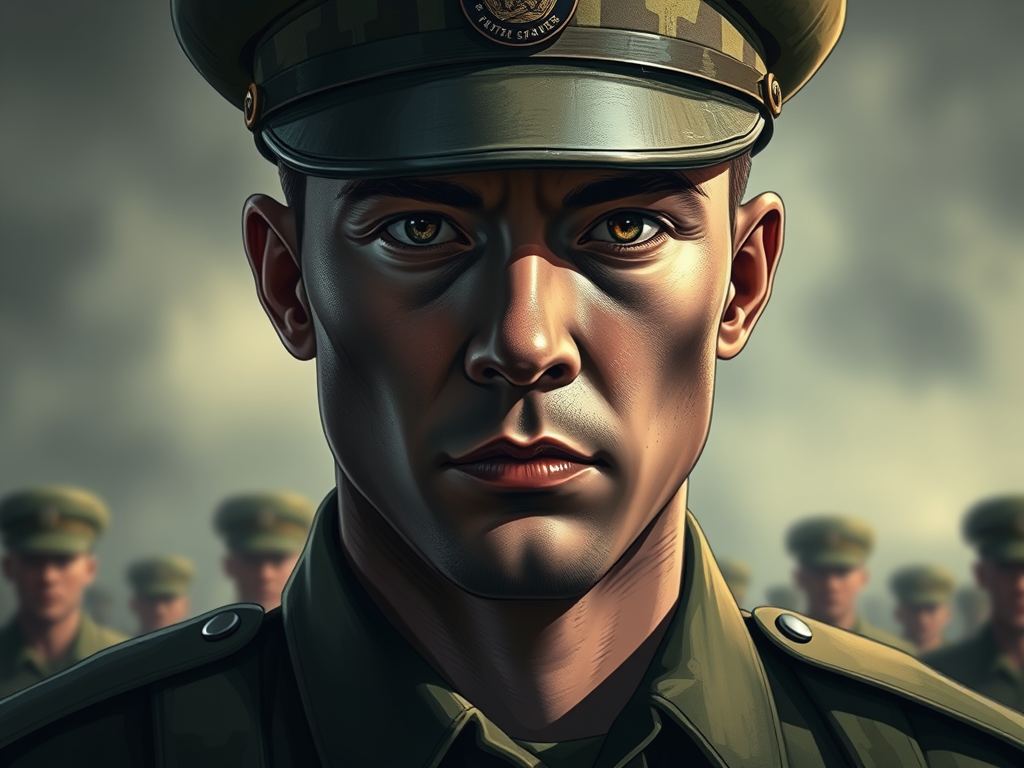
Unified Theory of the Panthenogenesis of Power
CHAPTER 11 – THE MILITARY: THE VORTEX OF CONSTRAINED CHOICES
Modern militaries present themselves as institutions of honor, service, and national pride. Their public narratives emphasize sacrifice, courage, and collective identity. But beneath the symbolism lies a structural continuity with the hostage‑pledge system. The military recruits not from the center of society, but from its margins. It draws its strength from those whose choices are already constrained, whose futures are already precarious, and whose bodies can be pledged in exchange for stability.
The military is not simply a profession.
It is a vortex of constrained choices—a system that transforms economic vulnerability into patriotic obligation and converts human bodies into collateral for national security.
This chapter traces how the military reproduces hostage logic: how enlistment becomes a pledge, how service becomes collateral, and how the state holds the soldier’s body as a guarantee of loyalty.
1. Recruitment as Extraction
Recruitment campaigns rarely target the affluent. They target those who:
- lack access to higher education
- face limited employment opportunities
- live in economically depressed regions
- seek escape from unstable households
- desire belonging or identity
The military does not create precarity.
It harvests it.
This is the first mutation of hostage logic:
the system identifies those already vulnerable and offers conditional safety in exchange for their bodies.
2. Enlistment as Pledge
Enlistment contracts function as modern pledges. They bind the soldier’s:
- time
- labor
- mobility
- autonomy
- safety
- life
In exchange, the state offers:
- income
- education
- healthcare
- housing
- belonging
- identity
The exchange is not equal.
The pledge is not symbolic.
The soldier’s body becomes collateral for national stability.
This is the same logic that governed medieval hostageship:
“Your life guarantees your loyalty.”
3. The Uniform as Identity Reassignment
The military does not simply train bodies.
It rewrites identities.
Through:
- discipline
- ritual
- hierarchy
- repetition
- symbolic language
- controlled environments
the military replaces the civilian self with a military self. This identity reassignment is not incidental. It is structural. It ensures that the soldier internalizes the logic of obedience.
Identity becomes the internal hostage.
4. The Chain of Command as Hierarchical Hostage Logic
The chain of command is a vertical hostage system. Each rank holds the one below it in conditional safety:
- obedience ensures protection
- disobedience triggers punishment
- loyalty is enforced through threat
- autonomy is surrendered for survival
The chain of command is not merely organizational.
It is architectural.
It reproduces the same logic as feudal hierarchies, plantation overseers, and colonial administrators:
power flows downward, vulnerability flows upward.
5. The Soldier’s Body as National Collateral
The soldier’s body is pledged to the state. It becomes:
- a symbol of national strength
- a tool of foreign policy
- a bargaining chip in geopolitical negotiations
- a resource for military strategy
- a site of acceptable risk
The state does not risk its own stability.
It risks the bodies of those who have pledged themselves.
This is the modern form of hostageship:
the soldier’s life guarantees the nation’s security.
6. Constrained Choice as Consent
The military frames enlistment as voluntary. But structurally, the choice is constrained by:
- poverty
- lack of educational access
- limited employment
- regional economic collapse
- family instability
- social marginalization
Consent under constraint is not freedom.
It is coerced opportunity.
The military transforms structural inequality into patriotic service.
7. The Emotional Economy of Service
The military relies on an emotional economy that mirrors micro‑hostage systems:
- loyalty becomes moral obligation
- dissent becomes betrayal
- fear becomes discipline
- pride becomes compliance
- shame becomes enforcement
These emotions are not incidental.
They are the psychological infrastructure that keeps the system intact.
The soldier becomes both captive and enforcer.
8. The Afterlife of Service
When soldiers leave the military, the pledge does not end. The afterlife of service includes:
- PTSD
- chronic injury
- disability
- economic instability
- loss of identity
- bureaucratic entanglement
These conditions are not failures of the system.
They are the residues of the pledge.
The body continues to carry the cost of service long after the contract ends.
9. The Military as Mutation of the Hostage‑Pledge System
The military is not an exception to democratic ideals.
It is a mutation of the original operating system.
The logic remains unchanged:
- bodies as collateral
- safety as conditional
- loyalty as enforced
- vulnerability as leverage
- obedience as survival
The military is hostageship wrapped in patriotism.
10. Why the Military Matters for the Unified Theory
The military reveals how the hostage‑pledge system adapts to modernity. It shows how power can transform economic precarity into national service, how identity can be rewritten to enforce obedience, and how bodies can be pledged to stabilize the state.
The military is the clearest example of how conditional safety becomes virtue, how constrained choice becomes consent, and how vulnerability becomes loyalty.
The next chapter traces how this logic appears in the institution where captivity becomes most literal:
the prison‑industrial complex—hostage logic made visible.
Apple Music
YouTube Music
Amazon Music
Spotify Music


Leave a Reply