
Pluriology
The Pluriological Research Agenda — The Questions This Discipline Is Uniquely Positioned to Answer
#PluriologicalResearch #RelationalScience #FutureOfKnowledge #ManyInRelation
Every new discipline arrives with a set of questions the old disciplines could not answer. Psychology could not explain why timing matters. Sociology could not explain why individuals shift modes. Anthropology could not explain why coherence breaks in predictable rhythmic patterns. Systems theory could not explain the lived experience of frequency mismatch. Neuroscience could not explain the relational field. Organizational science could not explain burnout as blocked cycles rather than personal failure.
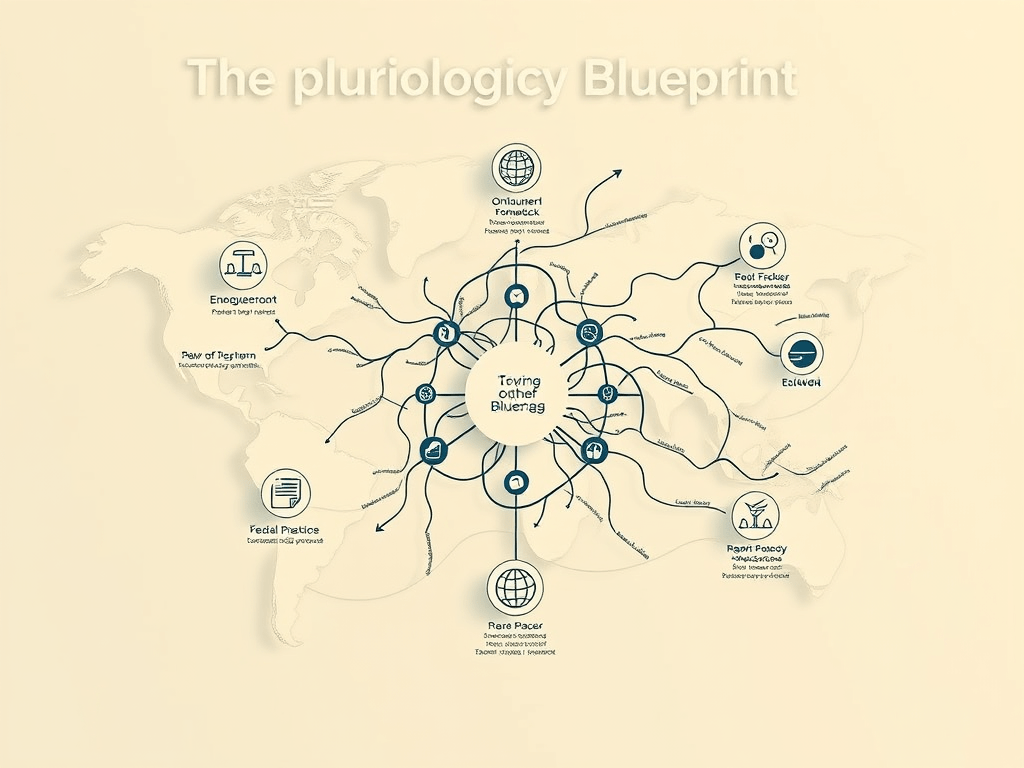
Pluriology steps into this gap with a research agenda that is both ambitious and necessary — a blueprint for understanding human systems as rhythmic, relational, and plurallile. This chapter outlines the research questions that define the field, the methodologies that make them answerable, and the new knowledge Pluriology brings into the world.
I. Foundational Research Questions
#CoreQuestions #DisciplinaryCenter
Pluriology begins with three central questions:
1. How do plurallile systems move through modes?
This includes:
- What triggers mode transitions
- How long modes naturally last
- How mode sequences vary across individuals
- How mode synchrony emerges between people
2. How does the Pluriome shape human experience?
This includes:
- How field pressures influence mode transitions
- How relational currents affect coherence
- How ecological rhythms shape timing
3. How does coherence break and restore itself?
This includes:
- The mechanics of Pluriogenic Disturbances
- The dynamics of the Repair Cascade
- The conditions that allow cycles to complete
These questions form the backbone of Pluriological inquiry.
II. Research Area 1: Modal Dynamics
#ModeDynamics #RhythmicMovement
Pluriology studies modes the way biology studies cells — as the fundamental units of life.
Key research questions:
- What are the physiological correlates of each mode?
- How do modes manifest in attention, posture, and relational stance?
- How do mode transitions differ across cultures?
- How do creative fields influence mode pacing?
- How do digital environments distort mode rhythms?
This area builds the empirical foundation for mode literacy.
III. Research Area 2: Rhythmic Ecology
#TemporalEcology #HumanRhythms
Pluriology treats time as ecological, not linear.
Key research questions:
- What is the natural tempo of the Pluriogenic Cycle?
- How do individuals’ rhythms synchronize in groups?
- How do collective rhythms emerge in communities?
- How do seasonal, cultural, and environmental rhythms shape mode transitions?
- How does chronic time scarcity distort coherence?
This area reveals the temporal architecture of human systems.
IV. Research Area 3: Field Dynamics
#PluriomeResearch #RelationalField
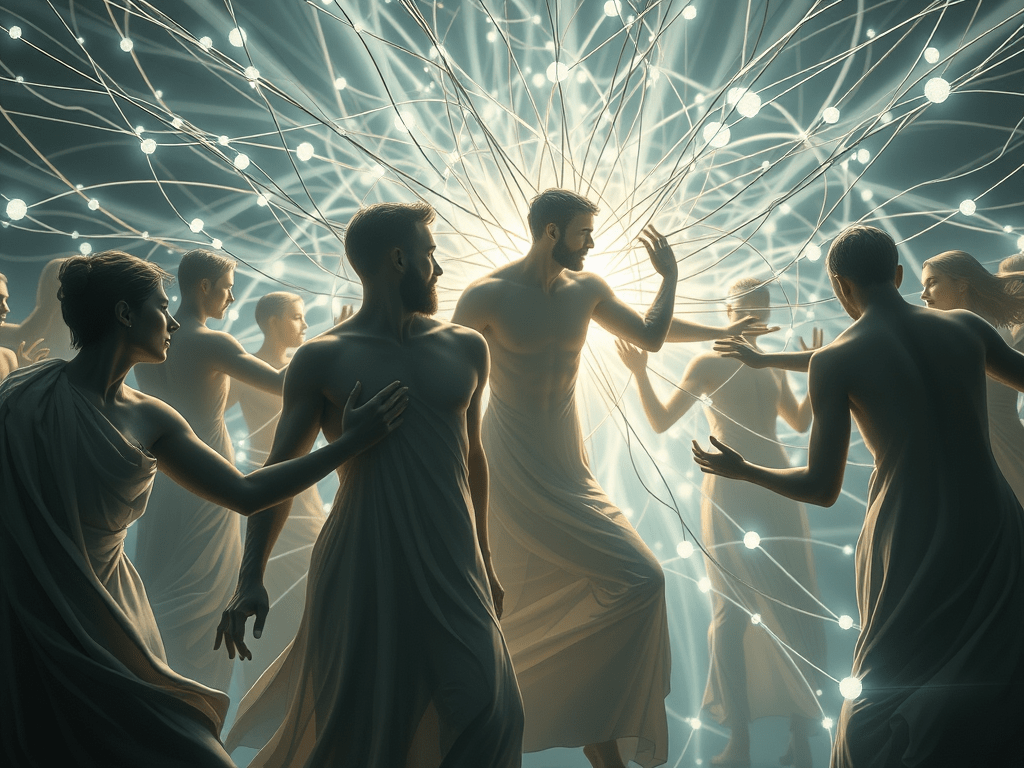
The Pluriome is the discipline’s most radical contribution — a relational medium that can be studied.
Key research questions:
- How do microfields (immediate relational spaces) influence mode shifts?
- How do mesofields (social environments) create or block coherence?
- How do macrofields (cultural narratives) shape identity rhythms?
- How do ecological rhythms (collective mood, global stressors) affect disturbances?
- How do digital fields differ from physical ones?
This area builds the science of the relational surround.
V. Research Area 4: Pluriogenic Disturbances
#DisturbanceScience #FrequencyMismatch
Pluriology reframes disturbances as adaptive responses to blocked transitions.
Key research questions:
- What are the physiological signatures of each disturbance?
- How do disturbances vary across relational contexts?
- How do survival constraints create specific mismatch patterns?
- How do disturbances propagate through groups or communities?
- How do disturbances resolve when the block is removed?
This area replaces pathology with ecological understanding.
VI. Research Area 5: The Repair Cascade
#RestorationScience #CycleCompletion
The Repair Cascade is the natural intelligence of the plurallile system.
Key research questions:
- What triggers the beginning of a repair cascade?
- How long does each stage of repair last?
- How does relational support accelerate repair?
- How do cultural scripts interfere with repair?
- How does the system reclassify to a higher baseline?
This area builds the science of coherence restoration.
VII. Research Area 6: Pluriological Cartography
#MappingResearch #TemporalAnalysis
Pluriological Cartography is the discipline’s analytical engine.
Key research questions:
- How can rhythmic maps be standardized?
- What patterns emerge across modal timelines?
- How do disturbance signatures cluster across populations?
- How can field dynamics be visualized?
- How can coherence landscapes be used in applied settings?
This area develops the tools that make the discipline measurable.
VIII. Research Area 7: Applied Pluriology
#AppliedResearch #RealWorldEcology
Pluriology has immediate applications in:
- creativity
- leadership
- organizational design
- education
- community building
- conflict resolution
- identity development
Key research questions:
- How do mode‑aware workplaces reduce burnout?
- How do relational rhythms shape team performance?
- How do creative ecosystems support Output Mode?
- How do communities repair collective disturbances?
- How does Pluriological Literacy change relational outcomes?
This area brings the discipline into the world.
IX. Research Area 8: Pluriological Ethics and Stewardship
#EthicalResearch #RelationalIntegrity
Pluriology’s ethic is central to its practice.
Key research questions:
- How does non‑pathology change outcomes?
- How does relational stewardship affect field coherence?
- How does multiplicity honor influence identity development?
- How does rhythmic integrity reduce coercion?
- How does ecological compassion reshape relational norms?
This area ensures the discipline remains humane and coherent.
X. Why the Research Agenda Matters
#FutureKnowledge #NewScience
Pluriology’s research agenda is not academic ornamentation. It is a blueprint for a new understanding of human life — one that:
- honors rhythm
- respects relationality
- recognizes multiplicity
- understands disturbance
- trusts repair
- maps coherence
- protects the field
It is the first research program designed for a world where human experience is distributed, dynamic, and deeply relational.





















 Survivor Literacy
What do you think?