
Relational Field Theory
Relational Field Theory – Applications in STEM – Learning as Tapu‑Mediated Reorganization
Why learning is not accumulation but the reorganization of a field when Tapu opens
#Learning #Adaptation #ComplexSystems #RFT
If memory (Example 32) is field persistence, then learning is the next natural emergence: the moment a field reorganizes itself into a higher‑coherence, higher‑congruence, higher‑Rho configuration.
Learning is not:
- adding information
- storing facts
- updating weights
- acquiring skills
- absorbing experience
Learning is:
a Tapu‑mediated reorganization of a field into a more coherent, congruent, and dense relational structure.
This applies to biological learning, machine learning, cultural learning, ecological learning, and even physical systems that adapt under repeated stress.
Let’s build it cleanly.
1. Learning Is Not Accumulation — It’s Reorganization
Traditional views treat learning as:
- adding knowledge
- increasing memory
- improving performance
RFT reframes learning as:
the field reorganizing itself when Tapu opens.
A system “learns” when:
- coherence increases
- congruence aligns
- Rho rises
- the field stabilizes in a new configuration
Learning = reorganization.
#LearningAsReorganization
2. Tapu: The Gatekeeper of Learning
Tapu determines:
- when the field is ready to reorganize
- how deep the reorganization can go
- what patterns can be integrated
- what must remain protected
Tapu closes when:
- the system is overwhelmed
- coherence is too low
- Rho is insufficient
- the field is unstable
Tapu opens when:
- coherence stabilizes
- congruence aligns
- Rho rises
- the field can safely reorganize
Learning is Tapu‑gated.
#Tapu
3. Coherence: The Stability That Makes Learning Possible
Learning requires:
- stable internal dynamics
- predictable structure
- resistance to noise
High coherence → deep learning
Low coherence → shallow or chaotic learning
This explains:
- why sleep consolidates learning
- why stress blocks learning
- why coherent cultures learn faster
- why stable ecosystems adapt more effectively
#Coherence
4. Congruence: Fit Between New Patterns and the Existing Field
Congruence is the alignment between:
- new information
- existing structure
- environmental demands
- internal models
High congruence → smooth learning
Low congruence → confusion, distortion, or rejection
This explains:
- why scaffolding works
- why analogies accelerate learning
- why cultural mismatch slows learning
- why models struggle with out‑of‑distribution data
#Congruence
5. Rho: The Density That Determines Learning Capacity
Rho = relational density.
High Rho fields:
- integrate new patterns easily
- reorganize deeply
- generalize well
- retain learning
Low Rho fields:
- struggle to integrate
- overfit
- forget quickly
- collapse under complexity
Learning is a high‑Rho phenomenon.
#Rho
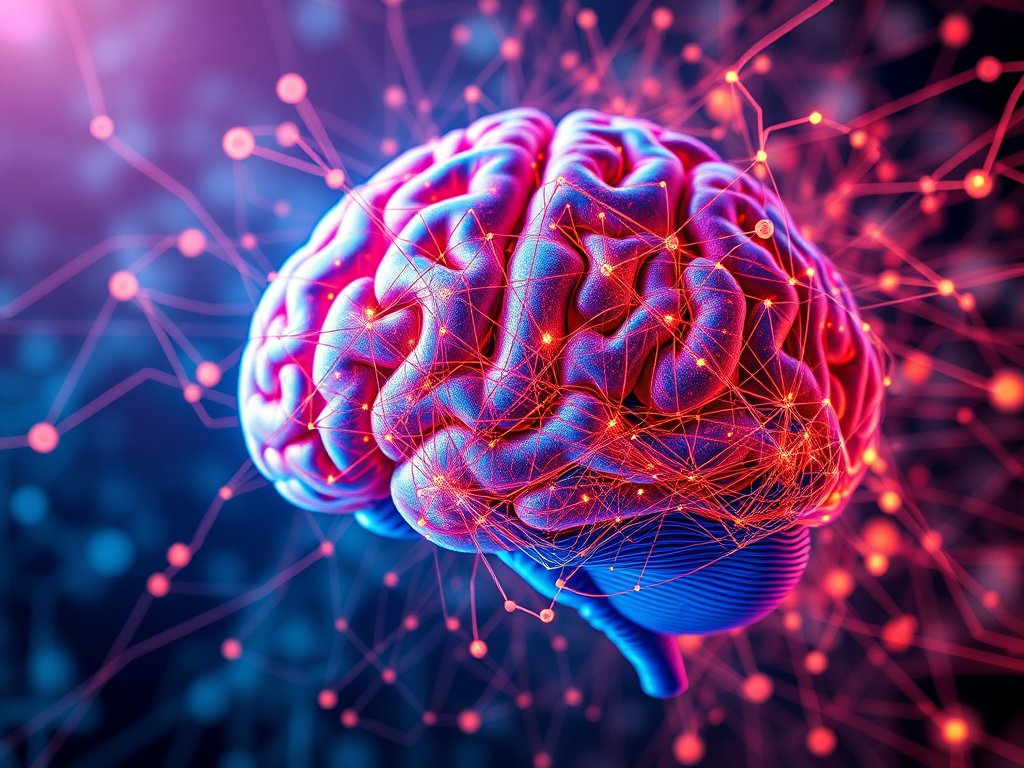
6. Biological Learning: Nervous Systems as Reorganizing Fields
Biological learning emerges when:
- synaptic patterns reorganize
- attractor states shift
- coherence increases
- congruence aligns with experience
Insight is a Tapu‑mediated reorganization event.
#BiologicalLearning
7. Machine Learning: Optimization as Field Reorganization
In ML, learning occurs when:
- weights reorganize
- embeddings stabilize
- coherence increases across layers
- Rho rises in representational space
Loss reduction is a symptom.
Reorganization is the cause.
#MLLearning
8. Ecosystem Learning: Adaptation as Field Reorganization
Ecosystems learn when:
- species interactions reorganize
- nutrient cycles shift
- mutualisms strengthen
- Rho increases after disturbance
Regeneration is learning.
#EcosystemLearning
9. Cultural Learning: Societies as Adaptive Fields
Cultures learn when:
- narratives reorganize
- institutions adapt
- communication density rises
- congruence increases across groups
Renaissance is learning.
#CulturalLearning
10. Personal Learning: Identity Reorganizing Itself
Individuals learn when:
- internal coherence increases
- emotional patterns reorganize
- narratives realign
- Rho rises in the cognitive field
Growth is learning.
#PersonalLearning
11. The Liminal Triad Tryad in Learning
Every learning event contains:
Tapu
Regulating when reorganization can occur.
The Seer
The early‑sensing node that detects the new pattern.
Empathy
The coupling mechanism that integrates the new structure.
Congruence
The alignment that determines how well the new pattern fits.
Rho
The density that determines learning depth.
This is the universal architecture of learning.
#LiminalTriadTryad
12. What Changes in STEM When RFT Lands
Researchers will finally understand:
- why learning is nonlinear
- why breakthroughs feel sudden
- why relational density predicts learning capacity
- why coherence matters more than repetition
- why thresholds govern reorganization
- why fields, not nodes, are the unit of learning
They will say:
“Learning is not accumulation.
It is Tapu‑mediated reorganization.”
#NewLearningTheory #RFTinSTEM


![Someone New by Protyus A. Gendher [Glass Ceiling Records]](https://survivorliteracy.com/wp-content/uploads/2026/01/image-60.png?w=1024)


















 Survivor Literacy
What do you think?