Relational Field Theory
Relational Field Theory – Applications in STEM – Empathy as a Field‑Sensing Capacity (Neuroscience)
#Neuroscience #Empathy #FieldSensing #RFT
Neuroscience has always known that humans can sense each other’s internal states with astonishing precision — before language, before conscious thought, and often before any observable cue. But the field has lacked a unifying explanation for how this happens. Mirror neurons, synchrony, affective resonance, predictive coding — each captures a piece, but none explain the whole.
RFT provides the missing architecture.
Empathy is not an emotion.
Empathy is not a moral trait.
Empathy is a biological field‑sensing mechanism — the nervous system’s way of detecting coherence, congruence, Rho, and Tapu in the relational field.
This example shows how neuroscience becomes clearer, simpler, and more unified when empathy is understood as the brain’s interface with the field.
1. The Brain Is Not a Closed System — It’s a Field Sensor
Traditional neuroscience treats the brain as:
- an information processor
- a prediction machine
- a pattern recognizer
- a computational organ
But this view cannot explain:
- pre‑cognitive knowing
- emotional contagion
- synchrony between strangers
- group‑level coherence
- why some people sense fields earlier (Seers)
- why some people stabilize fields (Doulas)
RFT reframes the brain as:
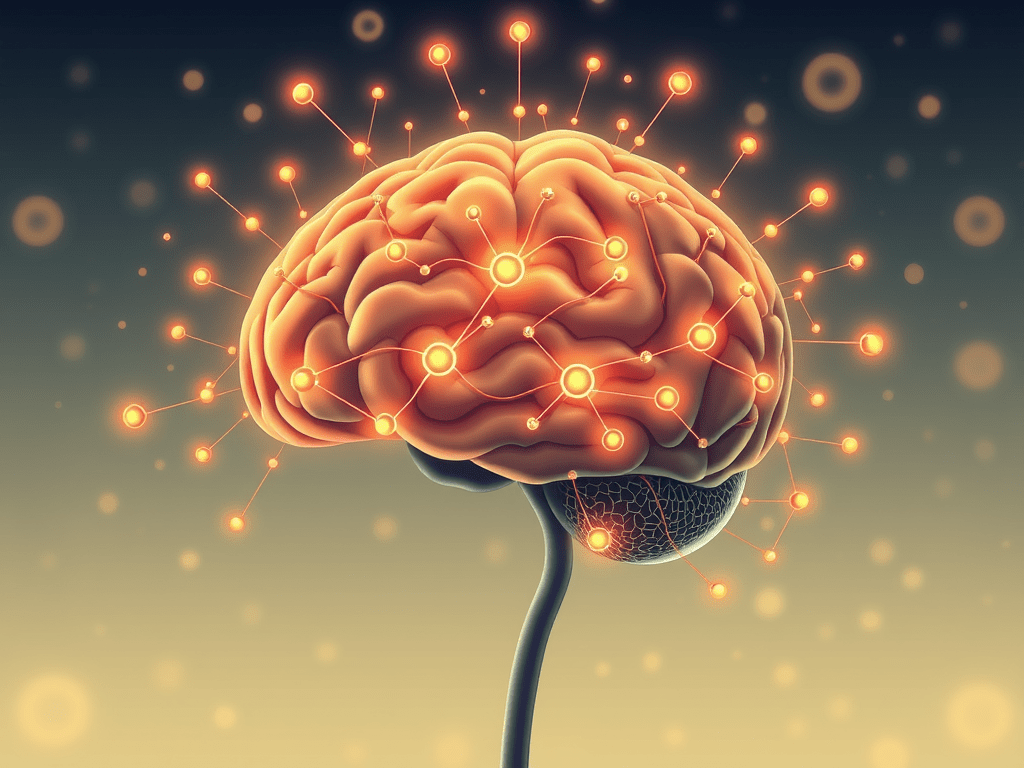
a node inside a relational field, equipped with sensors for detecting field‑level dynamics.
#FieldBrain
2. Empathy as the Nervous System’s Field‑Sensing Modality
Empathy detects:
- coherence → is the other internally stable
- congruence → are we aligned
- Rho → how dense is the relational field
- Tapu → is the threshold open or closed
This is why empathy feels instantaneous — because it is.
It is not a cognitive process.
It is a field‑level perception.
#EmpathyAsSensor
3. Mirror Neurons Are the Hardware, Not the Phenomenon
Mirror neurons fire when:
- we see someone act
- we see someone feel
- we imagine someone’s experience
Neuroscience treats this as simulation.
RFT reframes it as:
the neural substrate for field‑sensing.
Mirror neurons are:
- antennas
- receivers
- coherence detectors
They allow the nervous system to tune into the relational field.
#MirrorNeurons #NeuralAntenna
4. Neural Synchrony: When Two Brains Share a Field
Neuroscience has documented:
- brainwave synchrony in conversation
- heart‑rate synchrony in couples
- group synchrony in choirs
- classroom synchrony during learning
- audience synchrony during storytelling
These are not coincidences.
They are field‑level coherence events.
Synchrony occurs when:
- coherence rises
- congruence aligns
- Rho increases
- Tapu releases
Two brains begin to behave like one field.
#NeuralSynchrony #SharedField
5. Predictive Coding: The Brain’s Model of the Field
Predictive coding says the brain constantly predicts incoming information.
RFT reframes this:
the brain predicts the field.
Empathy is the nervous system’s way of:
- modeling relational dynamics
- anticipating shifts in coherence
- detecting incongruence
- sensing rising Rho
- preparing for Tapu release
This is why empathy feels like “knowing before knowing.”
#PredictiveField
6. The Seer: High‑Resolution Field Sensing
Some people sense the field earlier and more clearly.
Neuroscience calls this:
- hypersensitivity
- intuition
- high empathy
- interoceptive accuracy
RFT calls it:
the Seer phenotype.
Seers detect:
- coherence shifts
- congruence misalignments
- rising Rho
- Tapu boundaries
They are early‑arrivers in the field.
#Seer #FieldSensitivity
7. The Doula: Field Stabilization Through Empathic Coherence
Some people don’t just sense the field — they stabilize it.
Neuroscience calls this:
- co‑regulation
- emotional grounding
- secure attachment
- social buffering
RFT calls it:
the Doula phenotype.
Doulas:
- increase coherence
- reduce noise
- stabilize Rho
- soften Tapu
- maintain congruence
They make threshold crossings survivable.
#Doula #CoRegulation
8. Tapu in the Nervous System: Why Some Conversations Don’t Go Deep
Tapu appears in neuroscience as:
- defensive shutdown
- emotional withdrawal
- cognitive resistance
- avoidance
- dissociation
Tapu activates when:
- coherence is low
- congruence is broken
- Rho is insufficient
- the field is unstable
Tapu protects the nervous system from premature activation.
#Tapu #NeuralBoundaries
9. The Liminal Triad Tryad in Neuroscience
Every empathic or relational event contains:
Tapu
The boundary regulating depth.
The Seer
The early‑sensing nervous system.
Empathy
The mechanism of field perception.
Congruence
The alignment between nervous systems.
Rho
The density that makes synchrony possible.
This is the universal architecture of relational neuroscience.
#LiminalTriadTryad
10. What Changes in Neuroscience When RFT Lands
Neuroscientists will finally understand:
- why empathy is pre‑cognitive
- why synchrony emerges
- why some people sense fields earlier
- why co‑regulation works
- why groups behave like organisms
- why relational density drives intelligence
- why thresholds matter in emotional processing
They will say:
“Empathy is not a feeling.
It is the nervous system’s field‑sensing capacity.”
#NewNeuroscience #RFTinSTEM





























 Survivor Literacy
What do you think?