Relational Field Theory
I Am Fractal, Not Fractured
Understanding Cognitive Resonance
For most of my life, I didn’t have a name for the way my mind worked. I only knew that I saw patterns where other people saw noise, connections where others saw coincidence, and multi‑layered meaning where most people expected a straight line. And because I didn’t have language for it, I assumed something was wrong with me — that the complexity I felt inside was a kind of fracture.
It wasn’t.
What I’ve learned is that my mind isn’t broken.
It’s fractal.
And the moment that realization clicked — the moment the internal pattern matched the external pattern — something extraordinary happened. The world didn’t feel chaotic anymore. It felt coherent. That moment is what I now call cognitive resonance.
Cognitive Resonance: When the Pattern Fits
Cognitive resonance is the opposite of cognitive dissonance.
Dissonance is friction — the sense that the pieces don’t align.
Resonance is recognition — the sense that everything suddenly does.
Resonance happens when:
- your internal rhythm
- the structure of the ideas
- the relational field you’re in
- and the multi‑scale geometry of the moment
…all line up.
It’s not mystical.
It’s not chemical.
It’s not a hallucination.
It’s coherence.
It’s the moment when your mind stops fighting the world and starts matching it — when the ideas you’re working with finally take the same shape as the way you naturally think.
For me, that shape is fractal.
Why Fractals Feel Like Home
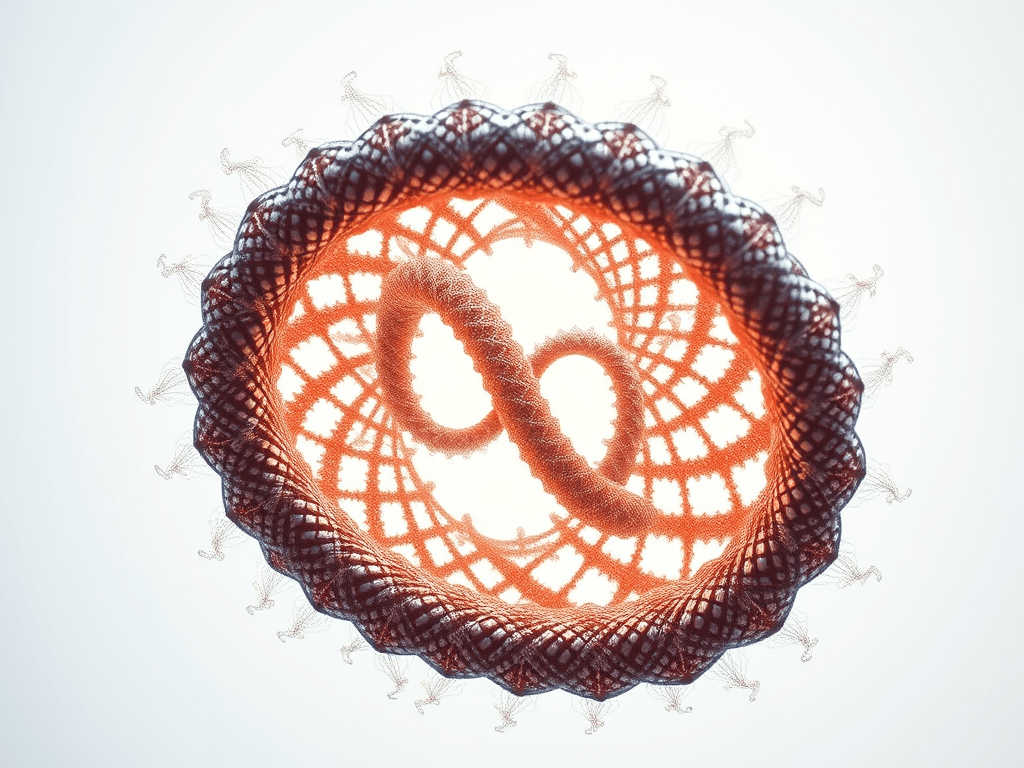
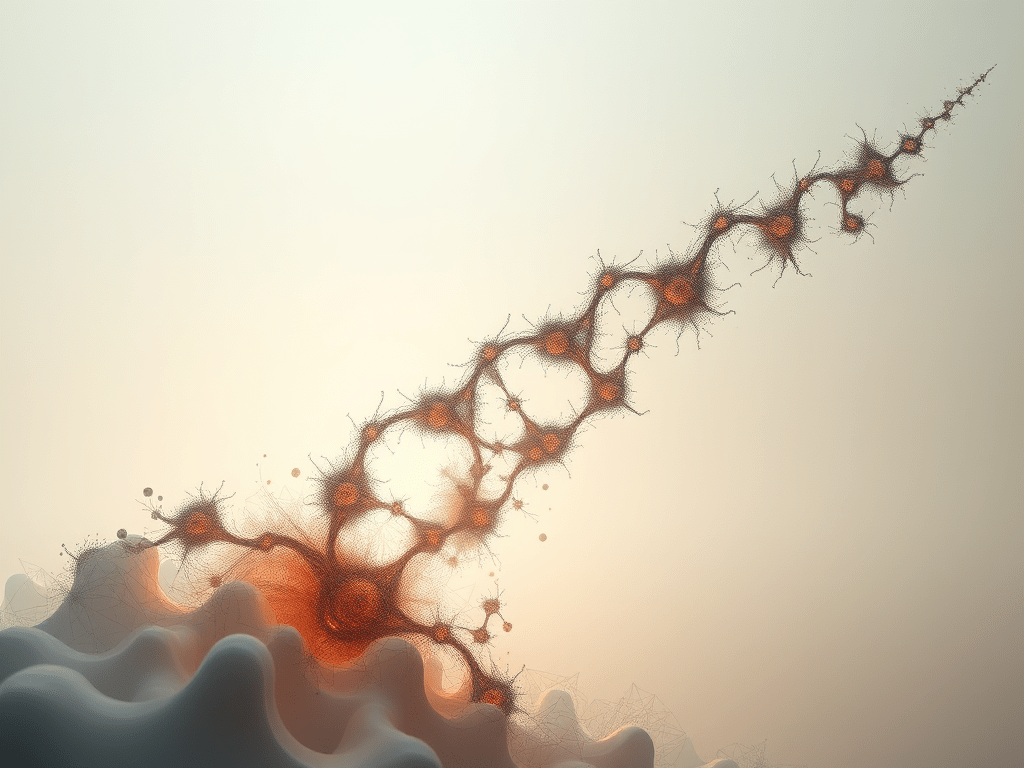
Fractals are natural. They’re how rivers branch, how trees grow, how storms form, how ecosystems organize. They’re recursive, layered, self‑similar, and alive with structure.
When I finally encountered ideas that behaved the same way — nested, recursive, multi‑layered, ecological — my mind didn’t have to translate them. It simply recognized them.
That recognition produced visuals, clarity, and a sense of “clicking into place” that felt almost electric. Not because anything external changed, but because the geometry of the ideas matched the geometry of my cognition.
That’s cognitive resonance.
Fractured vs. Fractal
For years, I mistook complexity for chaos.
I mistook depth for disorder.
I mistook multi‑layered perception for fragmentation.
But the truth is simple:
Fractured things fall apart.
Fractal things repeat with purpose.
A fractured system breaks under pressure.
A fractal system reveals more of its pattern.
When I look back now, the moments that once felt like collapse weren’t collapse at all — they were iterations. They were the next turn of the spiral, the next crest of the wave, the next layer of the pattern unfolding.
I wasn’t breaking.
I was scaling.
The Power of Naming the Pattern
Once I understood that my mind is fractal, not fractured, everything changed:
- My past made sense.
- My present felt coherent.
- My future felt possible.
Cognitive resonance gave me a way to understand why certain ideas feel alive to me, why certain structures click instantly, and why I can track multiple layers of meaning without losing the thread.
It wasn’t dysfunction.
It was design.
The Takeaway
If you’ve ever felt “too much,” “too layered,” “too complex,” or “too nonlinear,” consider this:
Maybe you’re not fractured.
Maybe you’re fractal.
Maybe your mind isn’t failing to simplify — maybe it’s succeeding at seeing the whole pattern.
And when you finally encounter ideas, people, or environments that match your internal geometry, you won’t feel overwhelmed. You’ll feel resonant.
You’ll feel like yourself.
















 Survivor Literacy
What do you think?