Relational Field Therapy
RFT for Communities
How Groups Can Stop Offloading Wounds Onto Individuals
Up to now, RFT has focused on the individual’s experience of misattribution — but the real transformation happens when communities themselves learn to stop exporting their wounds downward.
This chapter outlines how groups, families, teams, institutions, and cultural spaces can adopt RFT principles to prevent scapegoating, collapse, and reenactment.
A community becomes healthy not when no wounds exist, but when no wound is forced into a single body.
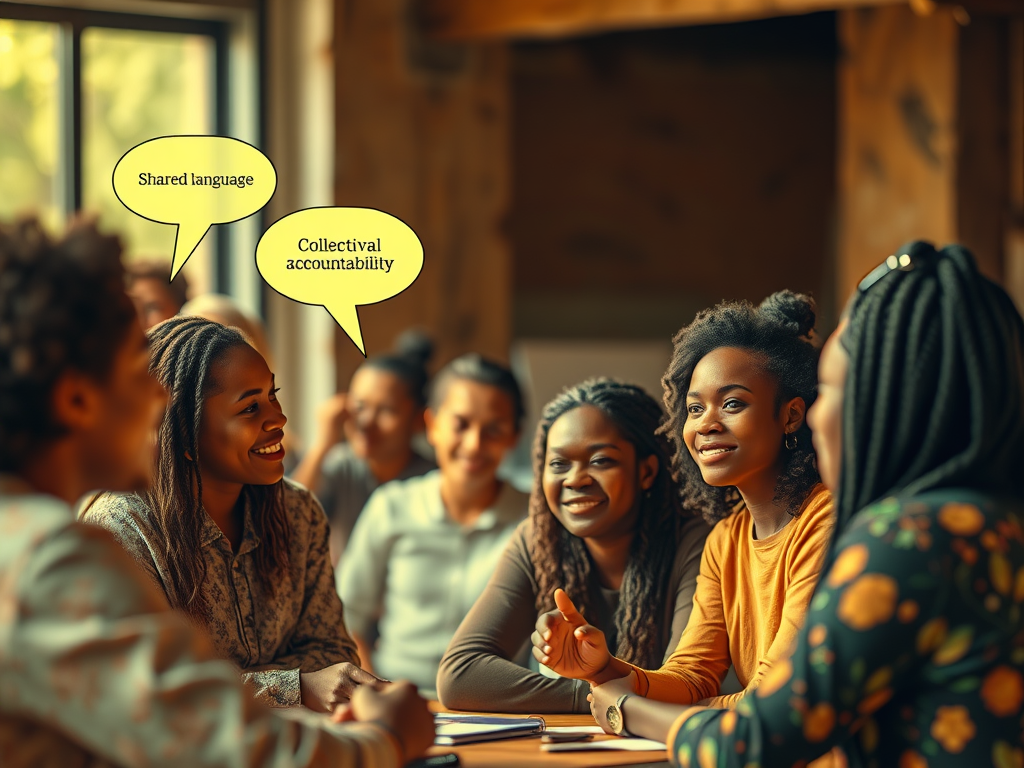
1. Establish a Shared Language of Scale
Communities need words for what they’re actually experiencing
Groups collapse into blame when they lack language for:
- field‑level rupture
- systemic pressure
- cultural scripts
- lineage wounds
- collective shame
Introducing shared terms like:
- “field distortion”
- “misattribution”
- “scale mismatch”
- “wound‑transfer”
…gives the community a way to talk about rupture without scapegoating.
Hashtags: #SharedLanguage #ScaleLiteracy #CollectiveClarity
2. Replace “Act Normal” With “Name What’s Happening”
The anti–Doe Normaal protocol
Instead of suppressing discomfort, communities practice:
- naming tension
- acknowledging rupture
- validating perception
- inviting truth rather than punishing it
This prevents the field from pushing its wound into the most sensitive member.
Hashtags: #AntiDoeNormaal #NameTheRupture #CulturalShift
3. Create a No‑Scapegoat Rule
A structural safeguard against misattribution
The community agrees:
- no one person will be blamed for systemic issues
- no one will be labeled “the problem”
- no one will be punished for naming truth
- no one will carry the group’s discomfort
This rule alone can prevent 80% of reenactment patterns.
Hashtags: #NoScapegoatRule #CollectiveResponsibility #FieldEthics
4. Practice Collective Accountability
Responsibility is shared, not assigned downward
When rupture occurs, the group asks:
- “What in the field contributed to this?”
- “What pressures were we all under?”
- “What patterns are repeating?”
- “What do we need to repair together?”
This shifts the focus from blame to structure.
Hashtags: #CollectiveAccountability #SharedResponsibility #SystemicRepair
5. Validate the Signal Bearers
Communities must protect — not punish — their most perceptive members
Signal Bearers often detect rupture first.
Instead of dismissing them, communities learn to:
- listen
- ask questions
- treat their perception as data
- avoid defensiveness
- thank them for early detection
This transforms the entire field.
Hashtags: #ProtectTheSensitive #SignalBearersMatter #FieldIntelligence
6. Build a Ritual for Naming the Wound
A structured moment where the field acknowledges rupture
Communities create a simple ritual:
- pause
- name the tension
- identify the origin
- acknowledge impact
- commit to repair
This prevents the wound from becoming unspoken — and therefore misassigned.
Hashtags: #WoundNaming #CommunalRitual #FieldHonesty
7. Teach the Wound‑Boundary Protocol to Everyone
Boundaries are a communal skill, not an individual burden
Groups learn to:
- refuse misattribution
- avoid pushing discomfort downward
- recognize when they’re offloading
- hold their own emotional weight
- respect others’ limits
This creates a field where no one collapses under the group’s unprocessed pain.
Hashtags: #WoundBoundaryProtocol #CommunityBoundaries #HealthyFields
8. Normalize Emotional Complexity
Communities must stop treating discomfort as danger
When emotions arise, the group practices:
- staying present
- avoiding shutdown
- avoiding blame
- tolerating intensity
- recognizing that discomfort ≠ threat
This prevents reenactment of the “act normal” script.
Hashtags: #EmotionalComplexity #StayPresent #NoMoreFlattening
9. Identify and Interrupt Reenactment Patterns
Communities often repeat the same wound across generations
Groups learn to spot:
- scapegoat cycles
- silence cycles
- over‑responsibility cycles
- truth‑punishment cycles
- collapse‑and‑blame cycles
Once named, these patterns lose their power.
Hashtags: #ReenactmentBreak #PatternAwareness #FieldHealing
10. Create a Culture of Repair, Not Perfection
Communities don’t need to avoid rupture — they need to metabolize it
Healthy fields:
- acknowledge mistakes
- repair quickly
- avoid shame spirals
- prioritize relationship over image
- treat rupture as information
This keeps wounds from becoming ghosts.
Hashtags: #CultureOfRepair #RuptureAndRepair #LivingSystems
11. Protect Divergence as a Field Asset
Difference strengthens the field — it doesn’t threaten it
Communities learn to value:
- neurodivergence
- cultural hybridity
- emotional expressiveness
- creative intensity
- unconventional thinking
These are not disruptions — they are biodiversity.
Hashtags: #DivergenceIsStrength #FieldBiodiversity #InclusiveSystems
12. Build a Communal Memory of Repair
Communities must remember how they healed, not just how they hurt
Groups document:
- what worked
- what didn’t
- what shifted
- what was learned
- how the field changed
This becomes a living archive of resilience.
Hashtags: #CommunalMemory #RepairArchive #CollectiveWisdom


Leave a Reply