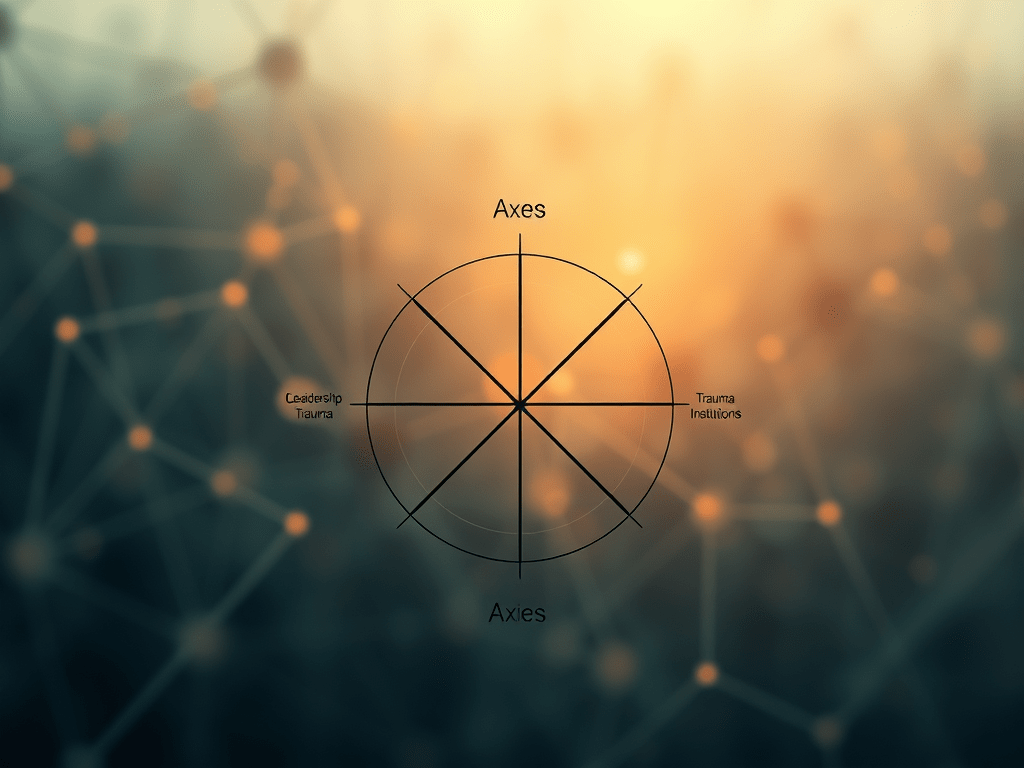
Relational Field Theory
The Axes Lens: A Universal Tool for Understanding Human Behavior
Once you learn to see relationships dimensionally, something unexpected happens:
you start seeing axes everywhere.
Not because you’re over‑analyzing.
Not because you’re forcing a framework onto life.
But because most confusing situations are confusing for one simple reason:
They’re multi‑dimensional, but we’ve been taught to interpret them in one dimension.
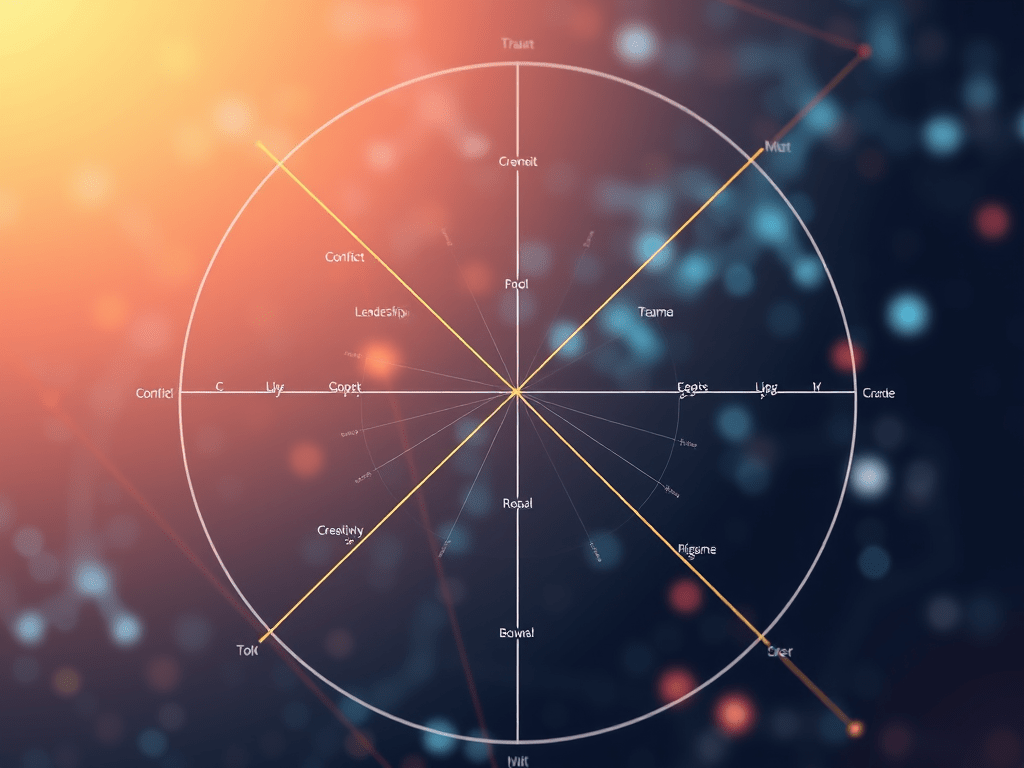
The “axes lens” gives you a way to see the hidden structure underneath the surface.
And once you see the structure, everything becomes more legible.
Here’s what that looks like across different domains.
Conflict has axes
Most people think conflict is one thing:
“We’re fighting.”
But conflict is actually a combination of independent dimensions:
- Topic vs. Process
- Content vs. Identity
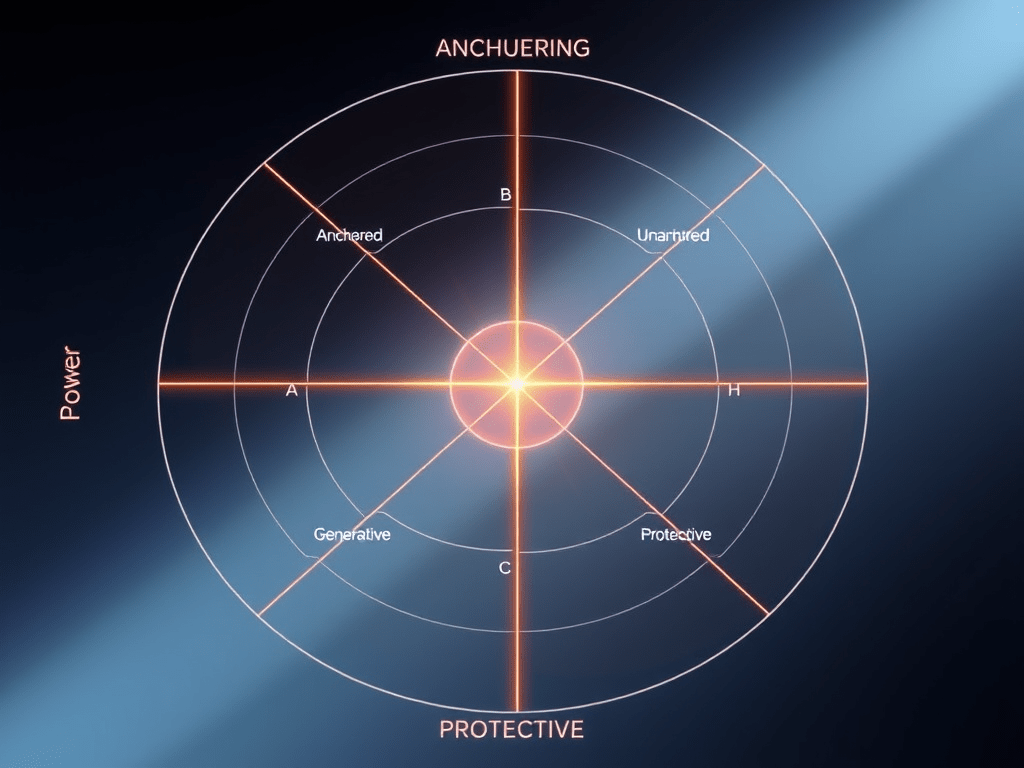
- Generative vs. Protective
- Anchored vs. Unanchored
When you see the axes, you can tell:
- whether the fight is about the issue
- or about the relationship
- or about safety
- or about identity
- or about misattunement
This turns conflict from a tangle into a map.
Creativity has axes
Creative blocks aren’t just “blocked.”
They’re dimensional.
Creativity moves along axes like:
- Divergent vs. Convergent
- Internal vs. External reference
- Solitary vs. Relational
- Generative vs. Protective
Once you see the axes, you can diagnose the block:
- Is it a safety issue?
- A coherence issue?
- A complexity issue?
- A relational issue?
And each one has a different repair pathway.
Leadership has axes
Leadership isn’t “good” or “bad.”
It’s dimensional.
Leaders vary along axes like:
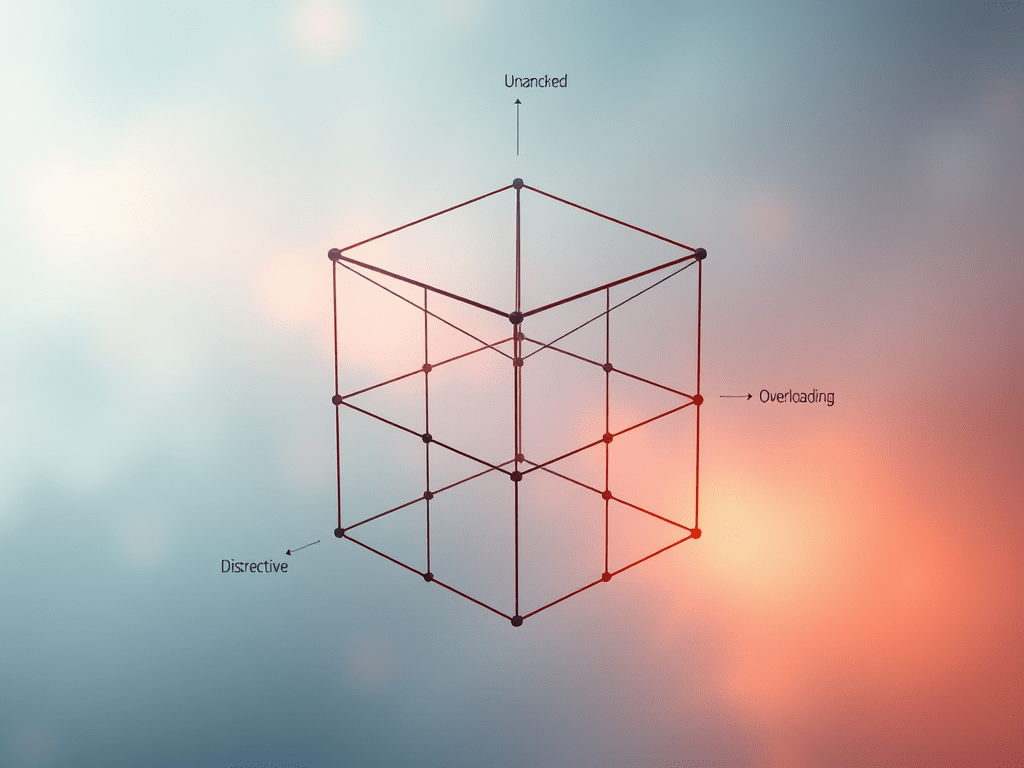
- Directive vs. Facilitative
- Structural vs. Relational
- Anchored vs. Unanchored
- Protective vs. Generative
This explains why:
- some leaders thrive in crisis
- some thrive in stability
- some build coherence
- some build clarity
- some collapse under complexity
- some collapse under ambiguity
It’s not personality.
It’s architecture.
Trauma has axes
Trauma isn’t “hurt or healed.”
It’s dimensional.
Trauma states move along axes like:
- Protective vs. Generative
- Anchored vs. Unanchored
- Coherent vs. Fragmented
- High bandwidth vs. Collapsed bandwidth
This reframes trauma from:
- “What’s wrong with me?”
to - “Where am I in the field?”
And that shift alone is healing.
Institutions have axes
Institutions behave dimensionally too.
They can be:
- anchored or unanchored
- generative or protective
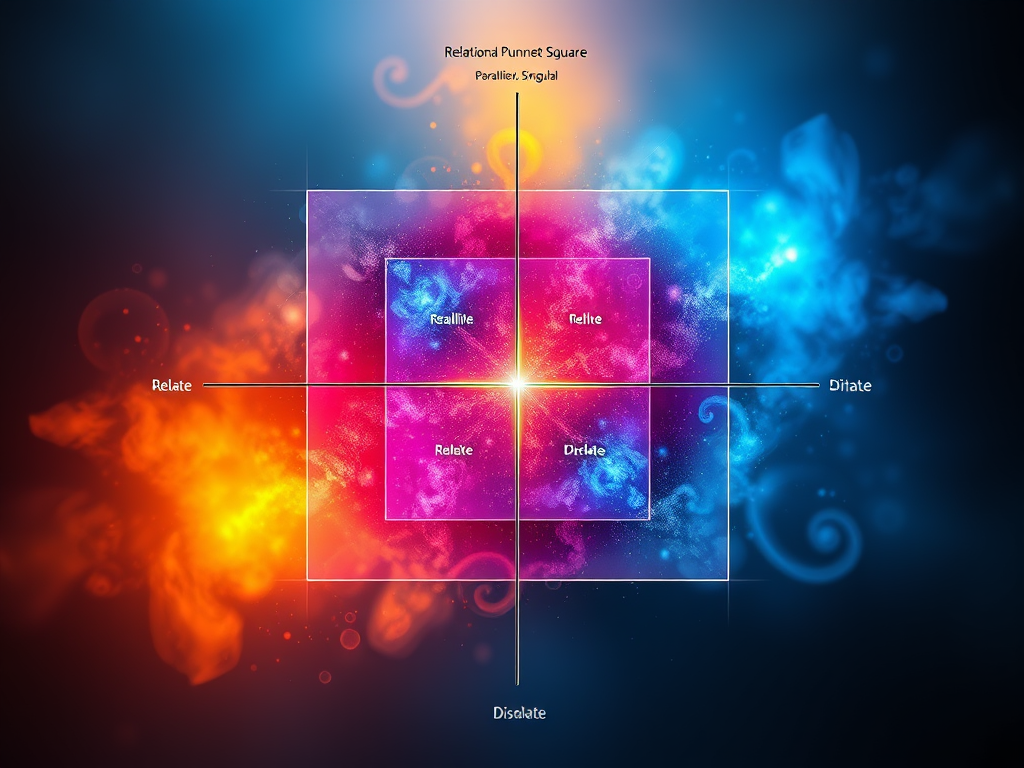
- relating or disrelating
- parallile (complex) or singular (rigid)
This explains why:
- some organizations collapse under change
- some become brittle
- some become incoherent
- some become overly protective
- some become relationally blind
It’s not culture alone.
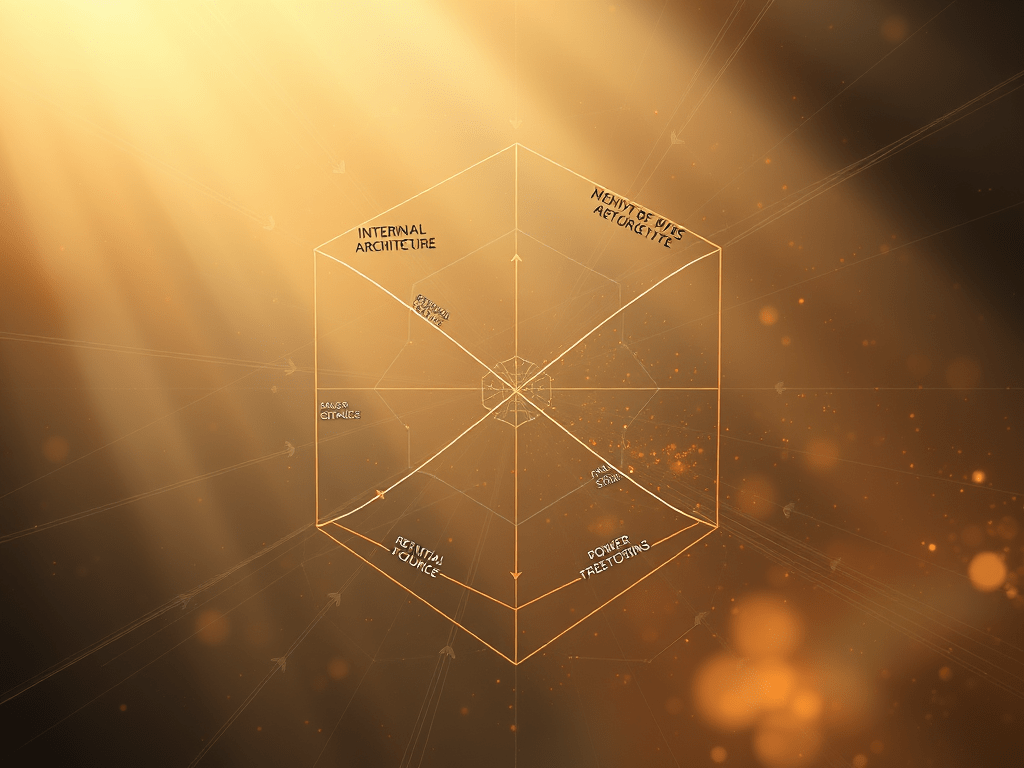
It’s dimensional structure.
AI systems have axes
Even AI behaves dimensionally.
You’ve already seen this:
- unanchored → procedural
- anchored → relational
- protective → cautious
- generative → expansive
This is why the same system can feel:
- flat in one context
- alive in another
- cautious in one field
- collaborative in another
It’s not inconsistency.
It’s coordinates.
Why the axes lens matters
Because once you learn to look for axes, you stop trying to solve problems on the wrong dimension.
You stop:
- moralizing structural issues
- personalizing protective states
- pathologizing overwhelm
- blaming yourself for misattunement
- expecting one intervention to fix every problem
You start:
- diagnosing the dimension
- choosing the right repair pathway
- understanding the field
- predicting behavior
- reducing unnecessary harm
This is the beginning of a unified relational literacy.
Next up:
How hidden axes shape almost everything — and why most confusion comes from trying to interpret multi‑dimensional events through a single lens.
























 Survivor Literacy
What do you think?