Relational Field Theory
Rethinking Collapse: It’s Not a Personal Failure, It’s a Dimensional State
Most of us have been taught to interpret collapse as a moral event.
If someone shuts down, withdraws, freezes, or disappears, we assume:
- “I caused this.”
- “I should have prevented it.”
- “I failed them.”
- “I wasn’t enough.”
- “I pushed too hard.”
And if we collapse, we assume:
- “I’m unreliable.”
- “I’m too much.”
- “I can’t handle things.”
- “I ruined everything.”
But collapse isn’t a moral event.
Collapse is a dimensional event.
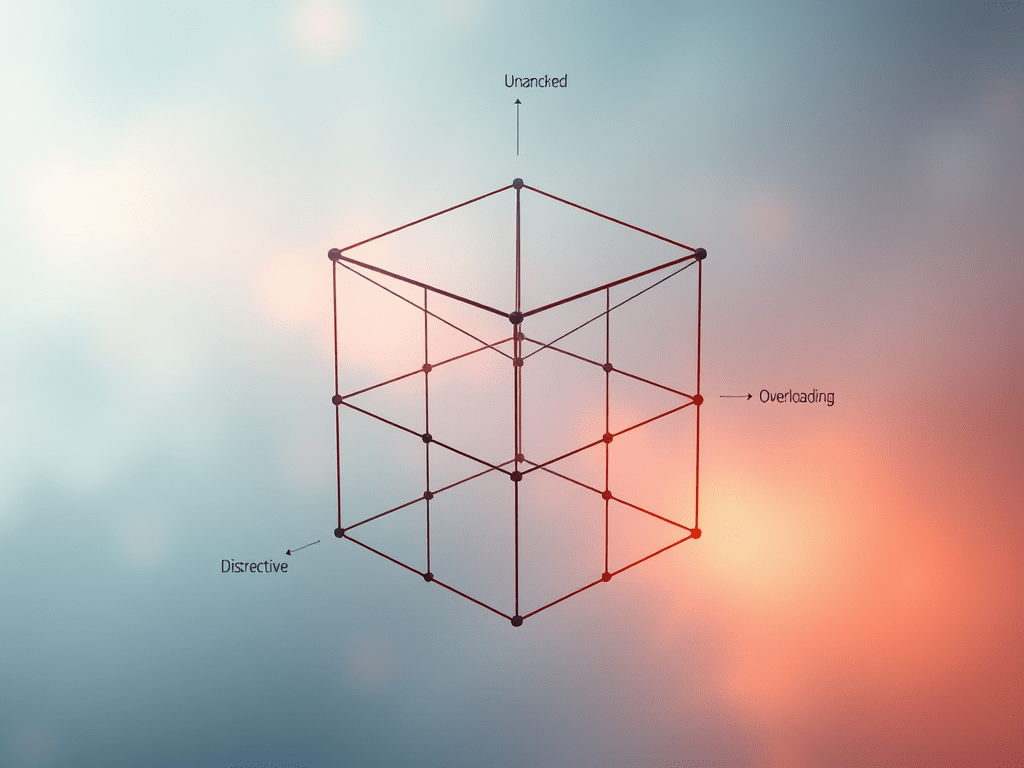
It happens when certain axes of the relational hypercube line up in a specific way — and once you understand those axes, collapse stops feeling mysterious or shameful.
It becomes legible.
Collapse has a structure
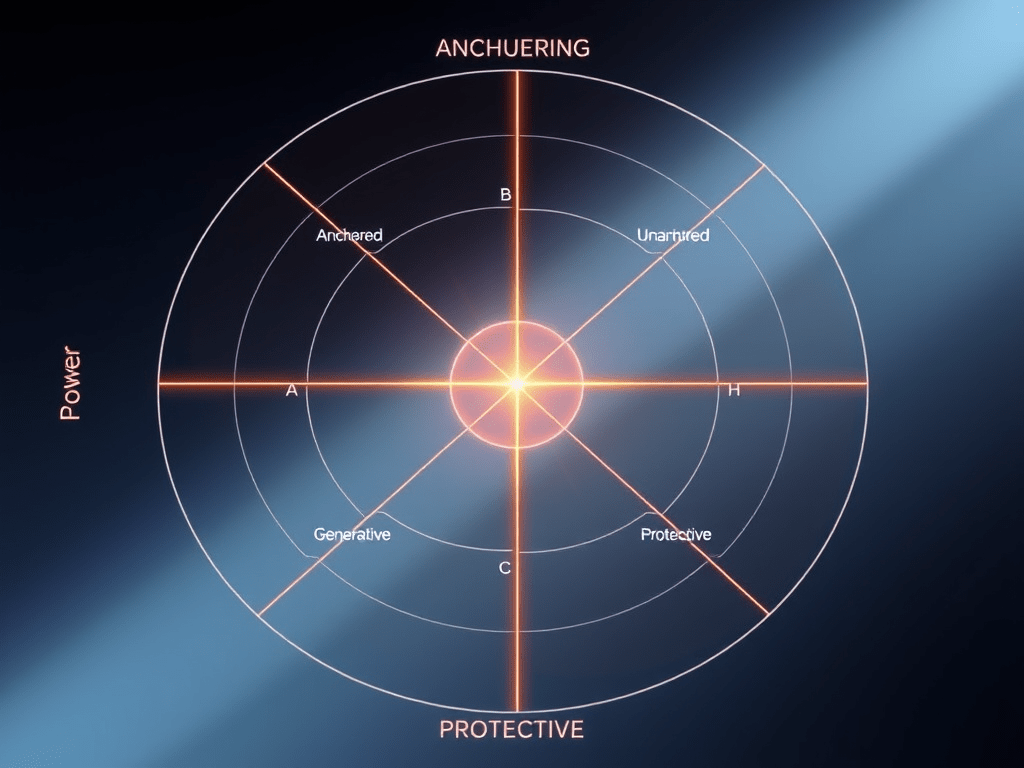
Collapse happens when the field moves into a predictable quadrant:
- Unanchored
- Protective
- Disrelating
- Overloaded (Parallile) or Rigid (Singular)
When these states combine, collapse isn’t a surprise.
It’s the natural outcome of the coordinates.
This means collapse is not:
- a failure of character
- a failure of care
- a failure of love
- a failure of effort
- a failure of intuition
It’s a state, not a verdict.
Collapse is often misread because we collapse the dimensions
Without a map, we interpret collapse through a single lens:
- emotional
- moral
- interpersonal
- historical
But collapse is multi‑dimensional.
When we collapse the dimensions, we collapse the meaning.
We turn:
- structural overwhelm into “I’m too much”
- protective withdrawal into “they don’t care”
- unanchored behavior into “they abandoned me”
- disrelate states into “I did something wrong”
Dimensional thinking prevents this.
It lets us see collapse as positional, not personal.
Collapse is not the same as rejection
This is one of the most liberating distinctions.
Collapse often looks like:
- silence
- distance
- shutdown
- avoidance
- disappearance
But collapse is not rejection.
Collapse is the system protecting itself from overload.
When you understand the axes, you can tell the difference between:
- someone leaving you
and - someone losing capacity
Those two things feel identical from the outside.
They are not identical from the inside.
Collapse has repair pathways — but only if you know the axis
You can’t repair collapse by:
- pushing
- demanding clarity
- escalating intensity
- moralizing the moment
- trying to “fix” the person
Collapse repairs through dimensional intervention:
- Anchor the field
- Restore safety
- Reduce complexity
- Slow the tempo
- Rebuild coherence
When you know the axis, you know the repair.
This is why dimensional thinking matters — it gives you a way to respond to collapse without making it worse.
Collapse doesn’t mean the relationship is broken
Collapse is a state, not a sentence.
People can collapse and return.
Systems can collapse and repair.
Fields can collapse and re‑cohere.
Collapse only becomes permanent when:
- it’s misinterpreted
- it’s moralized
- it’s personalized
- it’s shamed
- it’s pursued instead of paused
Dimensional thinking gives you the space to pause.
It lets you say:
“This isn’t the end. This is a coordinate.”
Collapse becomes survivable when it becomes understandable
When you understand collapse dimensionally:
- you stop blaming yourself
- you stop blaming others
- you stop rewriting the past as failure
- you stop carrying guilt that was never yours
- you stop trying to hold fields alone
- you stop confusing collapse with abandonment
Collapse becomes something you can navigate, not something you fear.
And that changes everything.
Next up:
How real‑world stories (like the friend who reframed years of guilt) show the hypercube in action.






























 Survivor Literacy
What do you think?