news
-
Loveland’s No Stranger To Scandal Part 2
Loveland’s No Stranger To Scandal Part 2 This video is age restricted This Video Is Age Restricted Continue reading
-
Loveland’s unhoused residents are being used as rhetorical cover 10.23.25

Camp Hope Update – 10.23.25 Let’s check in with Copilot to see how it’s going. Hey! I saw a news rumbling that the city of Loveland is “working on options” for when the 30-day permit runs out at the LRC, but that no meetings are currently scheduled to address it. “ I’m amazed at how… Continue reading
-
Loveland Corruption – Zeke Speak
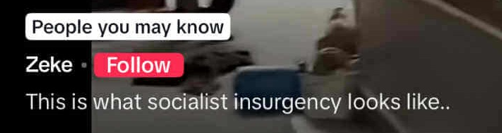
Zeke Cortez’s campaign critiques Housing First while claiming to demand accountability from service providers. However, his lack of specific metrics raises concerns about his data-driven approach. The content emphasizes that effective homelessness solutions rely on housing access, which is essential for stabilizing individuals before addressing other needs. Continue reading
-
Camp Hope Update – More Emails

The update on Camp Hope reveals ongoing concerns regarding the Loveland Resource Center (LRC), including confusion over voucher distribution, inadequacy of inclement weather preparations, and requests for clearer communication from city officials. Significant issues include lack of safety measures, insufficient supply details, and feedback on the definition of “hotel,” indicating systemic failures in support for… Continue reading
-
Camp Hope – An Update – But Not Much Progress
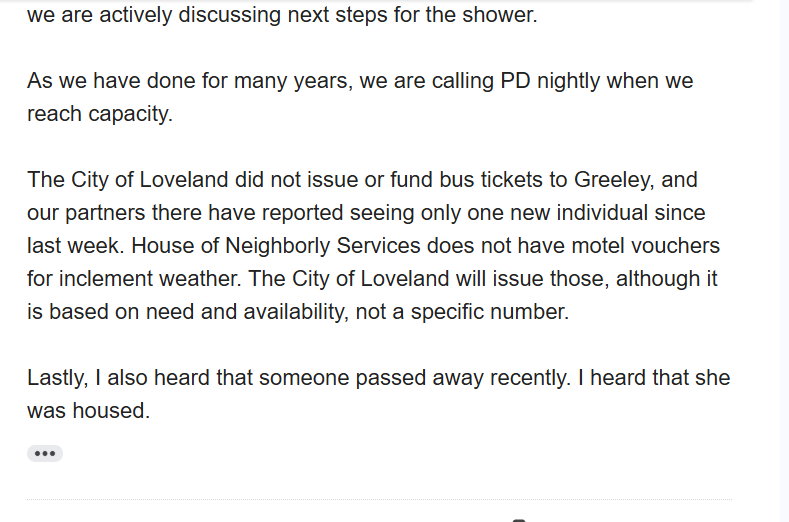
Camp Hope – An Update – But Not Much Progress For those of you who might be new, WELCOME! and come on in. Camp hope emerged because Loveland failed to enact a long term solution before the only overnight shelter for the unhoused was yanked down without the involvement or the approval of City Council.… Continue reading
-
Camp Hope Loveland – BURNES REPORT CDA

Copilot and I have had a BLAST today analyzing documents that reveal the underbelly of Loveland. Can you please restate the lens for me? Absolutely—here’s your lens as a simplified list, focused on what the language does and what happens because of it: 🔍 Simplified Analytical Lens 1. Escalation / De-escalation 2. Power & Manipulation… Continue reading
-
Camp Hope Loveland – Steven Olson on the Burnes Report – CDA

The content explores the complexities of homelessness governance in Loveland, emphasizing Erin Black’s inquiry into the efficacy of the 2019 Burnes Center report. It critiques the city’s shifting strategies, dismissing the evidence-based plan in favor of ego-driven governance and symbolic control, exposing a pattern of strategic erasure and institutional amnesia. Continue reading
-
Camp Hope Loveland – Community Voices 3

We’re going to take the text from the post above and apply our Critical Discourse Analysis lens to it. This time let’s weave in the Cult of the Ego. Same lens- This time let’s add The Cult of the Ego from my previous post, where I describe the process through which the least regulated person… Continue reading
-
Camp Hope Loveland – Community Memo CDA

Erin Black’s community memo criticizes Loveland’s leadership, particularly Steve Adams, for misconduct and a lack of accountability. She emphasizes the importance of public comment and community engagement, countering calls to suppress civic input. The memo highlights ongoing distrust and dissatisfaction among residents, urging for transparency and respect within city governance. Continue reading
-
Camp Hope Loveland – RE Council Meeting 5.5.23 CDA

The analysis outlines the Loveland City Council proceedings highlighting the interplay of critical discourse and social control within institutional language. Key themes include procedural legitimacy, power dynamics, and the framing of public health issues in relation to affordable housing. The discussion reveals legislative manipulation, exclusionary practices, and the invocation of police authority in governance. Continue reading
-
Camp Hope Loveland – Steven Olson on the Burnes Report

Re: [External] Burnes Center on Poverty and Homelessness Report MEMORANDUM TO: City of Loveland Staff CC: City Council members, City of Loveland FROM: Daniel Brisson, Executive Director DATE: September 16, 2019 RE: City of Loveland Strategic Plan to Address Homelessness On Jul 26, 2023, at 14:01, erin black <erinblack490@msn.com> wrote: Hi All, I watched and listened… Continue reading
-
Camp Hope Loveland – How Did We Get Here? 2

Camp Hope Loveland – How Did We Get Here? 2 Critical Discourse Analysis is a Social Science Research Method that helps us understand what language is doing. I will be partnering with Copilot to interrogate the rhetoric surrounding #CampHopeLoveland It’s also an incredible tool for digesting anything that you’re hearing or seeing. Let me show… Continue reading
-
AIQ – Update on Camp Hope – Shady LPD
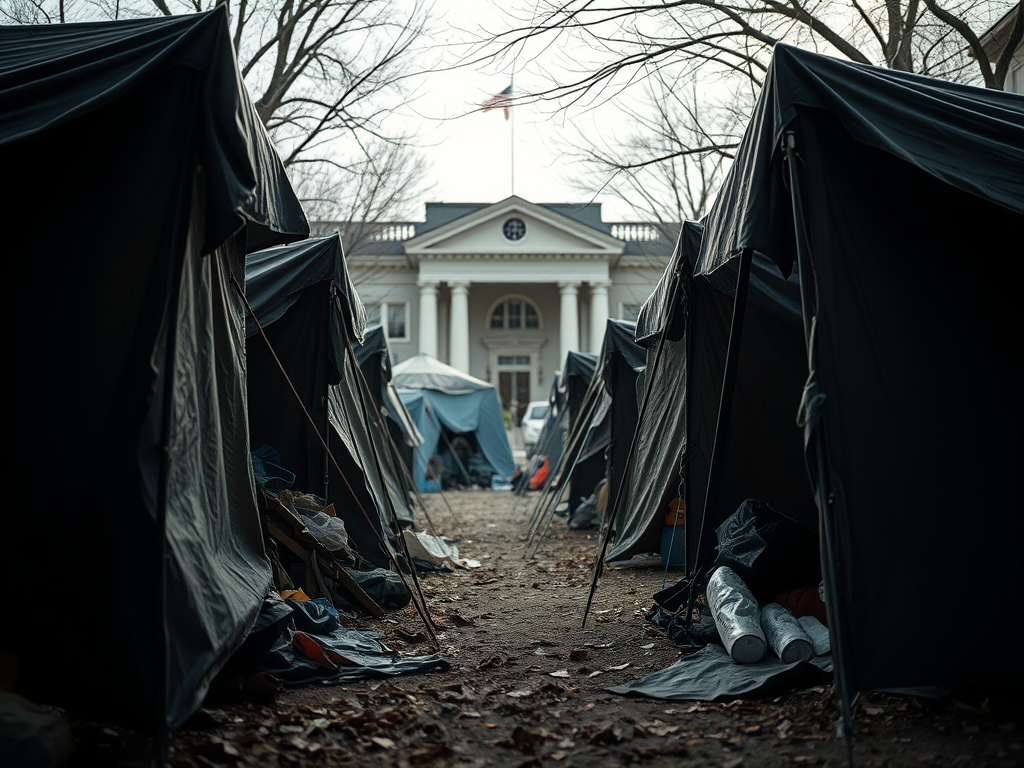
Update on Camp Hope – Shady LPD It’s been hard to follow this rapidly unfolding situation- as Loveland’s unhoused community continues to grow due to overwhelming economic pressure. As the City itself is feeling the same pressure following a COVID economy and what looks to be some disturbingly mismanaged funds (more on this later), combined… Continue reading
-
AIQ – What Happens When We “Drive Out” the Homeless?

What Happens When We “Drive Out” the Homeless? ~Can you help me understand what happens when a city “drives out” the homeless? ~What methods are used? What are their effects? ~Who is involved? ~ Why do people choose this? ~What gaslighting shows up in this discourse? ~Ultimately, what are the outcomes for the homeless? ~What… Continue reading
-
AIQ – Special Meeting Aftermath – Loveland Housing Crisis

After last night’s special meeting, I thought it would be good to check in with Copilot. We’re a long way from getting to the bottom of this, and half of our leadership is pulling out all of the stops to avoid treating human beings as people. Can you tell me what the buzz is in… Continue reading
Recent Posts
- 37) That One Time I Snuck Out
 The author reflects on their high school choir experience, where singing provided comfort and connection. They describe a close friendship with Mr. E, a rebellious peer, sharing dreams and secrets during secret visits. A risky late-night venture ultimately leads to panic and Mr. E’s sudden disappearance, leaving unresolved feelings behind.
 - Nobody Can Afford This
 Nobody Can Afford This Volume Two isn’t quite up yet. 🙂 🔥 NEW RELEASE: NOBODY CAN AFFORD THIS — A… Read more: Nobody Can Afford This
 - Survivor Literacy -You learned the rules of a game you never agreed to play.
 Survivors often become adept at navigating the complex dynamics of environments they never chose to engage with. Survivor Literacy reveals how these skills signify adaptability rather than complicity, empowering individuals to understand and ultimately escape the confines of these unconsented systems. Mastery is a tool for survival, not agreement.
 - 6) SCRIPT Theory – Revisited
 The SCRIPT theory discusses how social interactions rely on predefined scripts that shape perceptions and relationships. These scripts guide communication and behavior, reinforcing social norms and expectations. While they can restrict authenticity, individuals have the potential to create new scripts for personal expression, challenging established norms and promoting self-awareness within society.
 - It’s All Sales – So Special It’s Killing Us
 It’s All Sales – So Special It’s Killing Us Humans Specialized A long time ago, in lands far away and… Read more: It’s All Sales – So Special It’s Killing Us
 - Survivor Literacy – Silence wasn’t weakness. It was strategy.
 Silence is often misinterpreted as weakness, but for survivors, it is a strategic choice aimed at self-protection and energy conservation. Survivor Literacy reframes silence as a form of intelligent survival rather than a sign of failure, emphasizing that it serves as a shield in challenging situations.
 - 5) I Wanna Play
 The post “I Wanna Play” by Protyus A. Gendher reflects on the author’s experiences with isolation and societal exclusion throughout childhood and adulthood. Through evocative poetry, the author expresses longing for acceptance and understanding while critiquing the arbitrary social rules that dictate belonging. Ultimately, they seek to redefine the game rather than conform to it.
 - Toxicity Toolkit 1 – Start Here
 The Toxicity Toolkit addresses toxic behaviors that affect relationships, arising from various life experiences. It acknowledges that everyone displays toxic traits and aims to provide exercises for families to combat toxicity and cultivate healthier communication. The toolkit emphasizes recognizing toxicity, employing dialectical behavioral therapy, and fostering a positive environment for growth.
 - Survivor Literacy -You didn’t imagine it. You endured it.
 The content emphasizes the importance of acknowledging one’s experiences and the evidence of endurance in survival situations. It asserts that survivors should trust their perceptions, as their lived experiences validate their reality. Survivor Literacy is highlighted as a means to restore confidence in one’s narrative and challenge denial from others.
 - 4) Family Scapegoat Syndrome with Video
 The author reflects on Family Scapegoat Syndrome, discussing its cyclical nature and the psychological effects on individuals within dysfunctional family systems. They emphasize the importance of accessing social theories for healing and the struggle to break free from these cycles. Healing involves acknowledging all roles played and embracing self-worth beyond familial approval.
 - Post 13 — Why I Had to Understand This to Understand Myself
 The author reflects on personal trauma shaped by systemic dynamics of power and control, particularly within domestic settings. They redefine their experiences not as chaos but as a replicated system of coercion and compliance that mirrors societal trafficking logic. Understanding this allows for personal clarity and the possibility of breaking harmful cycles.
 - 34) My Best Friend
 The author reflects on their best friend, a metaphor for unhealthy relationships with food, particularly sweets. Childhood experiences of emotional comfort from candy contrast sharply with societal and familial pressures, which led to weight gain and shame. The bond with “Bestie” symbolizes addiction and the struggle for self-acceptance amidst these challenges.
 - 65) Asking For Help
 The narrator recounts the trauma of asking for help in a system where mandatory reporting revictimizes those needing help.
 - Survivor Literacy – Your nervous system told the truth before anyone else did
 The post emphasizes the importance of honoring the body’s innate ability to recognize and record harm before it is acknowledged verbally. It suggests that one’s nervous system is an accurate historian of personal experiences, advocating for “Survivor Literacy” as a means to validate and understand these bodily perceptions.
 - 3) My Cult of Origin
 The author explores the concept of “normal” as defined by family upbringing and experiences, using The Cult of the Ego to detail their childhood in a Colorado family shaped by strong patriarchal figures and specific behavioral expectations. The narrative highlights the impact of familial dynamics, traditions, and the importance of mentorship, alongside elements of affection, dysregulation, and control.
Newsletter
Make a one-time donation
Make a monthly donation
Choose an amount
Or enter a custom amount
Your contribution is appreciated.
Your contribution is appreciated.
DonateDonate monthly