Unified Architecture of Control
CHAPTER IV
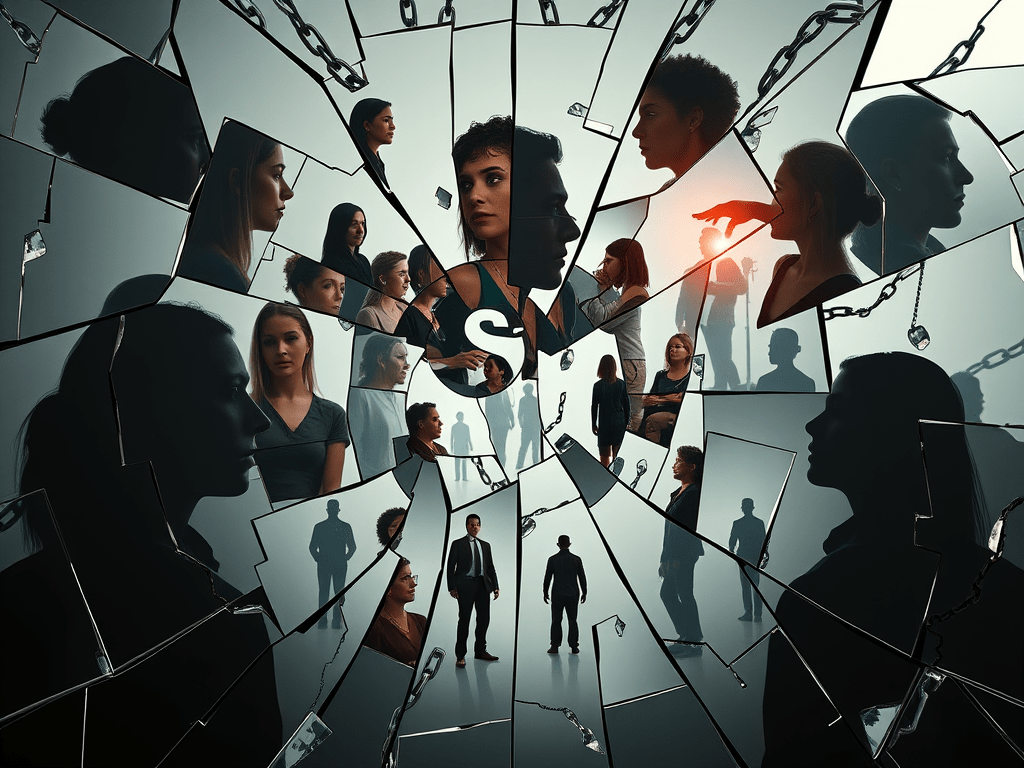
THE DSM AS MIRROR
The Diagnostic and Statistical Manual is often treated as a neutral catalog of individual disorders — a scientific text that identifies what is wrong inside a person. But when viewed through a field‑level lens, the DSM reveals something far more revealing and far more unsettling:
It is not a mirror of individuals.
It is a mirror of the field’s demands.
The DSM does not tell us who people are.
It tells us what the system requires them to be.
It is a text that encodes the field’s preferences, anxieties, and stability needs into diagnostic categories. It transforms structural expectations into clinical norms, and structural violations into clinical disorders.
The DSM is not a book about people.
It is a book about control.
The DSM as a Map of Acceptable Behavior
Every diagnostic category reflects a boundary the field has drawn around acceptable behavior. When someone crosses that boundary — often for reasons rooted in structural harm — the DSM provides a label that relocates the problem back into the individual.
The field demands:
- emotional containment
- predictability
- legibility
- productivity
- social compliance
- controlled independence
- silence about field‑level harm
- repairability
The DSM pathologizes any deviation from these demands.
This is not coincidence.
It is architecture.
How the DSM Protects the Field
The DSM performs three essential functions for the field:
1. It legitimizes mislocation.
If the wound is inside the person, the system is innocent.
Diagnosis becomes the official stamp that confirms the mislocated wound.
2. It individualizes structural harm.
Poverty, discrimination, coercion, abuse, instability, and systemic contradiction are reframed as personal disorders.
3. It provides the field with a language of containment.
Labels become tools for managing, dismissing, or neutralizing people who disrupt stability.
The DSM is not merely descriptive.
It is regulatory.
The Moral Logic Hidden Inside the Categories
Although the DSM claims to be value‑neutral, its categories encode a moral logic:
- “Too much emotion” becomes a disorder.
- “Too little emotion” becomes a disorder.
- “Too much independence” becomes a disorder.
- “Too little independence” becomes a disorder.
- “Too much sensitivity” becomes a disorder.
- “Too little responsiveness” becomes a disorder.
The field’s preferred middle — compliant, contained, predictable — becomes the definition of health.
Anything outside that narrow band becomes pathology.
The DSM as a Tool of Silence
One of the DSM’s most powerful functions is its ability to silence people who name structural harm. When someone points to the wound in the field, the DSM provides a counter‑narrative:
- “You’re catastrophizing.”
- “You’re paranoid.”
- “You’re unstable.”
- “You’re dysregulated.”
- “You’re misinterpreting.”
- “You’re overreacting.”
The DSM reframes truth as symptom.
It reframes clarity as distortion.
It reframes survival responses as disorders.
This is how the field protects itself from contradiction.
The Survivor’s Double Bind
Survivors often find themselves in a double bind created by the DSM:
- If they speak the truth, they risk diagnosis.
- If they stay silent, they carry the wound alone.
The DSM punishes articulation and rewards containment.
It pathologizes the very signals that indicate structural harm.
This is why survivors often feel like they are “failing” at being human — they are being measured against a system that was never designed to reflect their reality.
The DSM as a Text of Stability
When read correctly, the DSM reveals the field’s prime directive in clinical form:
“Be stable, so the system doesn’t have to be.”
Every category is a boundary.
Every symptom is a deviation.
Every diagnosis is a pledge request in disguise.
The DSM is the field’s most sophisticated tool for maintaining stability without ever acknowledging its own role in producing instability.
What Happens When the Mirror Is Turned Around
When the DSM is treated as a mirror of the field rather than the individual, the entire architecture becomes visible:
- The categories reveal the system’s fears.
- The symptoms reveal the system’s demands.
- The diagnoses reveal the system’s contradictions.
- The treatments reveal the system’s priorities.
The DSM stops being a book about broken people.
It becomes a book about a system that cannot tolerate the truth.
And once the reader sees this, the hostage‑pledge system begins to unravel.

























 Survivor Literacy
What do you think?