
Unified Theory of the Panthenogenesis of Power
APPENDIX A
GLOSSARY OF STRUCTURAL TERMS
This glossary defines the core concepts, geometries, and operating principles used throughout Panthenogenesis of Power. Each term is written for clarity, precision, and immediate usability. Terms are alphabetized for ease of reference.
A
Absorber
A role in captive systems where one person internalizes tension, conflict, or emotional volatility to stabilize the field. Absorbers prevent collapse at the cost of their own wellbeing.
Adaptive Architecture
A system designed to evolve in response to new information, context, or rupture. Opposite of rigid, hierarchical structures.
B
Boundary (Structural)
A clear, non‑punitive limit that defines what is acceptable within a system. Boundaries are load‑bearing beams, not emotional weapons.
Braided River Model
A metaphor for systems that maintain coherence through multiple flowing channels rather than a single dominant path. Used to describe adaptive, non‑linear architectures.
C
Captive System
Any system that relies on coercion, threat, hierarchy, or inherited roles to maintain stability. Captive systems require sacrifice to function.
Center (Volatile Center)
The person or node around which a captive system organizes itself. The center’s emotional state dictates the behavior of the entire field.
Clarity (Structural Clarity)
The opposite of threat. Clear expectations, boundaries, and processes that remove ambiguity and prevent coercion.
Collective Repair
A non‑punitive, shared process for addressing rupture. Essential for non‑captive systems.
Conflict as Information
A principle that treats conflict not as danger but as data about the system’s needs, boundaries, or misalignments.
D
Distributed Power
Power that is shared across multiple nodes rather than concentrated in a single person or institution. Prevents hierarchy from calcifying.
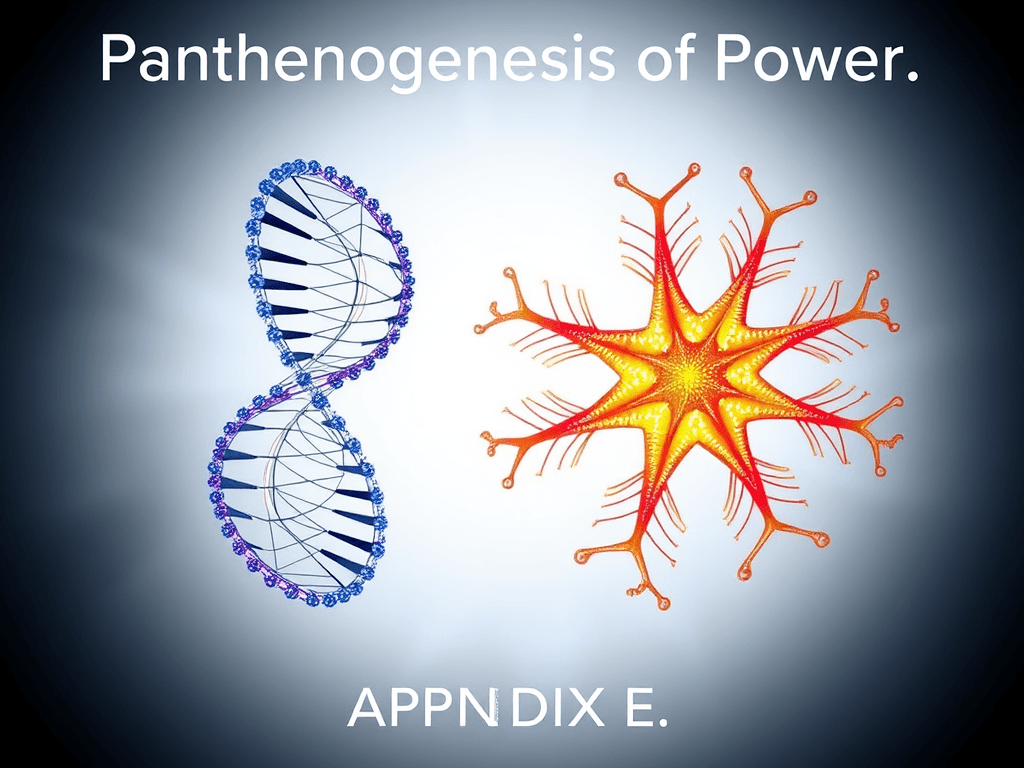
Double Helix Model
A metaphor for systems with two interdependent strands (e.g., Spotify + WordPress in your ecosystem) that stabilize and inform each other.
E
Emotional Economy
The underlying emotional logic that governs how people behave within a system. Can be fear‑based (captive) or capacity‑based (non‑captive).
Evolution (Systemic)
The system’s ability to update itself without collapsing or reverting to coercion.
F
Field (Relational Field)
The invisible architecture created by the interactions, expectations, and emotional patterns within a system. Fields can be captive or non‑captive.
Function (Rotational Function)
A temporary role performed by someone in a non‑captive system. Functions rotate; identities do not calcify.
G
Gravitational Pull (Pattern Gravity)
The tendency of old systems to reassert themselves through familiar roles, narratives, or emotional reflexes.
H
Hostage‑Pledge Operating System
The core architecture of captive systems. Stability is maintained through threat, obligation, and inherited roles rather than mutuality or clarity.
I
Identity (Relational Identity)
A self‑authored, fluid sense of self that emerges in non‑captive systems. Opposite of role‑based identity.
Implosion
The moment when a captive system collapses inward because it can no longer distribute burden outward.
Integration
The process of embodying a non‑captive system until its principles become reflexive.
L
Legacy Architecture
The design principles that allow a system to outlive its creators without reverting to captivity.
M
Metabolism (Repair Metabolism)
The system’s ability to process rupture through repair rather than punishment.
Micro‑Field
A small, emergent relational environment created by two or more people. Micro‑fields are prototypes of larger systems.
Mutuality
The structural principle of non‑captive systems. Engagement is reciprocal, boundaries are respected, and power is shared.
N
Narrative Architecture
The shared story that gives a system coherence. In non‑captive systems, narratives are co‑authored and adaptive.
Neutrality (True Neutrality)
A state free of threat or coercion. Often misinterpreted as danger by people emerging from captive systems.
Non‑Captive System
A system that maintains stability through clarity, mutuality, distributed power, and repair — not coercion.
P
Panthenogenesis
The emergence of a system that generates itself — a self‑renewing, non‑captive architecture that cannot revert to domination.
Peacekeeper
A role in captive systems where someone suppresses their own needs to maintain stability.
Polycentric Power
A civilizational design principle where multiple centers of influence coexist without hierarchy.
R
Repatterning
The early stage of rebuilding after collapse, when new behaviors, interpretations, and emotional reflexes begin to form.
Repair (Ritualized Repair)
A predictable, non‑punitive process for restoring coherence after rupture.
Role Collapse
The moment when inherited roles lose their gravitational pull and no longer dictate behavior.
S
Scapegoat
The person assigned to carry blame, tension, or instability in a captive system.
Self‑Generating System
A system capable of producing its own stability, evolution, and meaning without external enforcement.
Somatic Update
The body’s recalibration to a non‑captive environment. Often precedes cognitive understanding.
Stabilizer
A person who absorbs emotional volatility to keep a captive system functioning.
Starfish Model
A metaphor for decentralized, regenerative systems where each limb can function independently.
T
Threat Logic
The emotional and structural logic that governs captive systems. Threat is used to enforce compliance and maintain hierarchy.
Transparency (Structural Transparency)
Open access to information, processes, and decision‑making. Prevents coercion and power concentration.
V
Vacuum
The disorienting space after a system collapses but before a new one forms. Often misinterpreted as danger.
Voluntary Presence
A hallmark of non‑captive systems. People engage because they choose to, not because they fear consequences.
W
Wound Logic (Mislocated Wound)
The phenomenon where harm is misinterpreted as personal failure rather than structural design. A key mechanism of captivity.





























 Survivor Literacy
What do you think?